



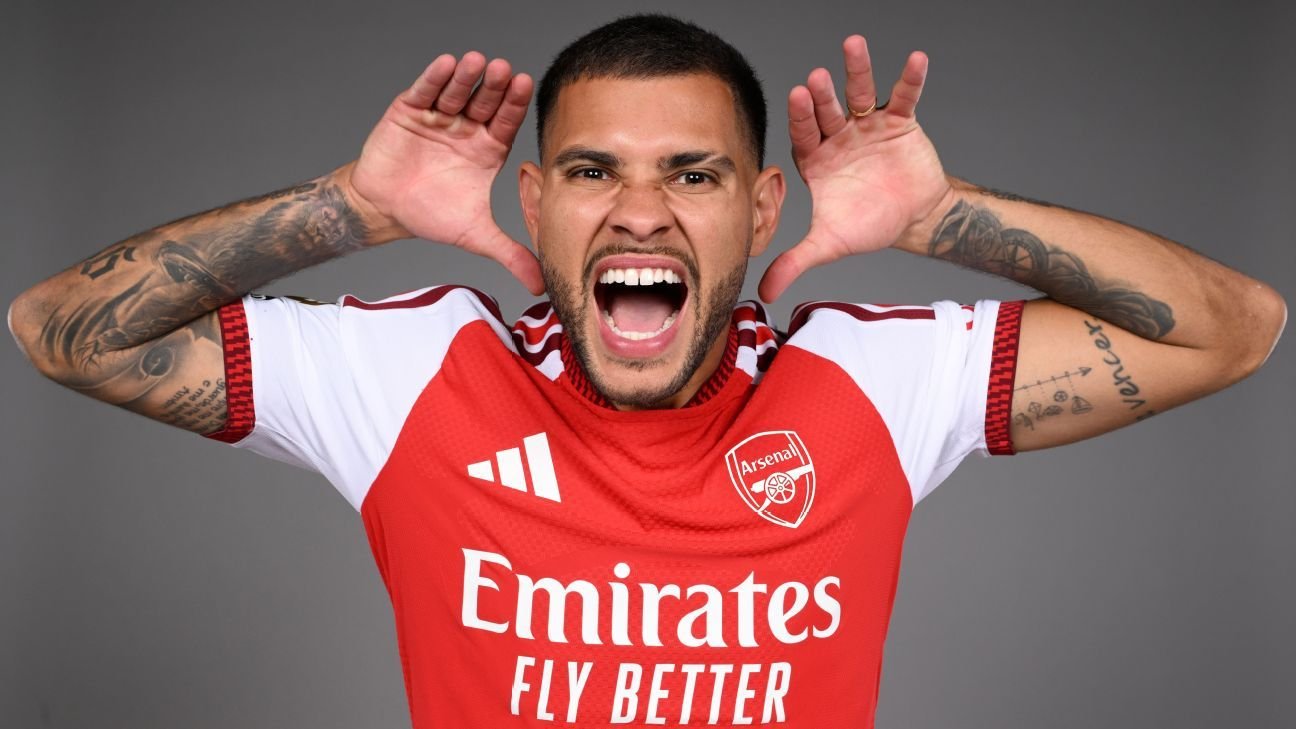
Arsenal has secured the signing of Newcastle United midfielder Bruno Guimarães, recognized as one of the leading players in his role within the Premier League. However, questions arise about where this new £75 million acquisition will fit into an already talented, title-winning squad.
Guimarães made a name for himself as a reliable first-team player in Brazil during his early 20s at Athletico Paranaense, before transferring to Lyon in January 2020 for a reported €20 million. Initially at 22, he took some time to adapt to the French Ligue 1, but by his first complete season, it was clear he would draw attention from larger leagues.
Ultimately, Newcastle signed him in January 2022, investing €40 million plus add-ons, exactly two years after his European debut.
At St James’ Park, Guimarães became known as one of the most dependable central midfielders in the Premier League. Initially brought in as a tireless, defensively oriented player, he evolved into a more rounded midfielder. This transformation was evident last season when he netted nine Premier League goals, marking the highest tally of his career.
Now, he faces a new challenge in London with the reigning English champions.
Position
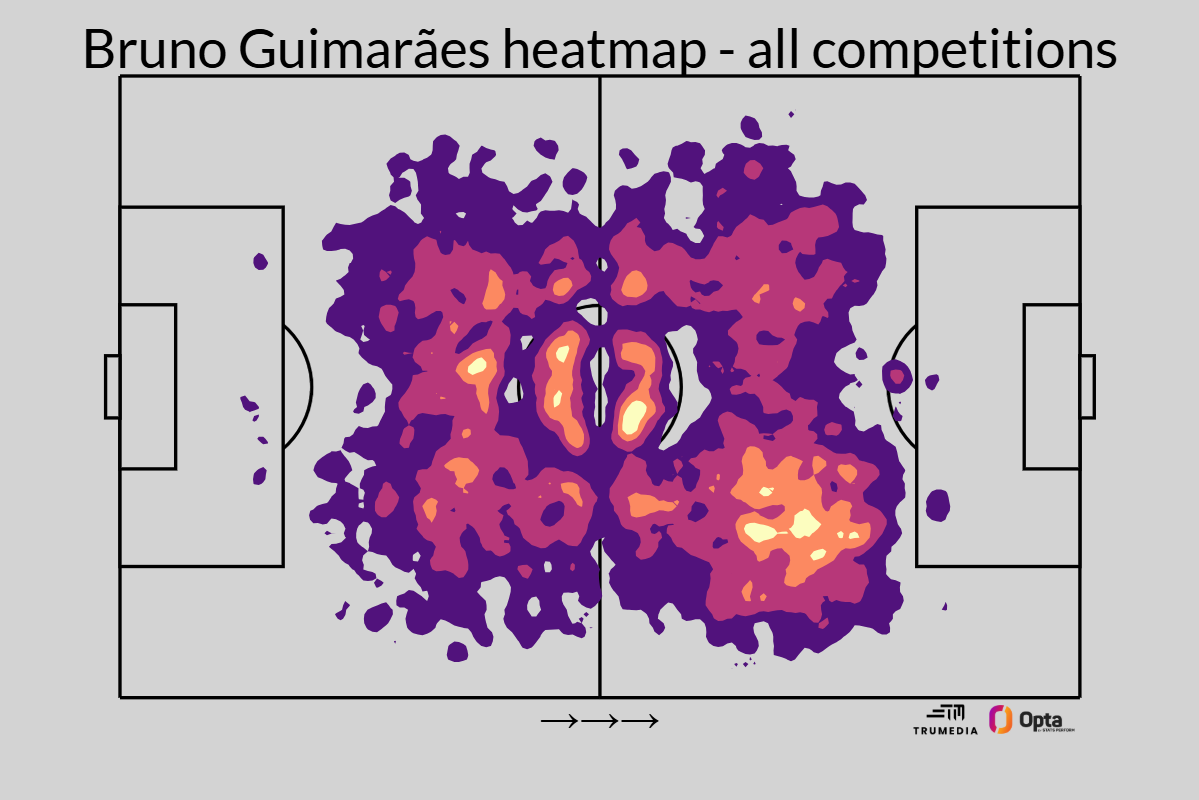
Although Guimarães is capable of playing as a deep-lying No. 6 midfielder, his recent performances suggest he excels in a box-to-box No. 8 role. This position allows him to engage in the buildup while not being solely focused on shielding the defense.
Defensively, he plays with a more proactive approach than a standard holding midfielder, actively pressing opponents and competing for loose balls while also contributing offensively. He often served as a crucial player in possession for Newcastle, frequently dropping deep to receive the ball under pressure, but his instinct was to push play forward through vertical passes, dribbles, or combinations in tight spaces. His ability to make late runs into the penalty area has also increased his goal-scoring threat.
With Sandro Tonali taking on the No. 6 responsibilities, Guimarães enjoyed greater freedom to roam within the midfield trio at Newcastle, allowing him to press aggressively and contribute in attacking positions. Nevertheless, he remained prepared to revert to a holding position when necessary, a quality that undoubtedly appealed to Arsenal manager Mikel Arteta.
Brazil utilized him in a similar manner during the World Cup, positioning him slightly higher on the pitch, either alongside a more defensive player or as one of the advanced midfielders within a 4-3-3 setup.
Strengths
Guimarães stands out due to his impressive range and frequency of actions. Among midfielders in the Premier League, only Manchester City‘s Elliot Anderson matches his distinctive blend of quality and work rate. Guimarães not only excels in maintaining possession from deep and evading pressure while carrying the ball, but also makes significant contributions in the final third.
His capability to receive the ball under pressure is crucial to his playing style; he actively seeks the ball in congested areas, relying on his solid first touch and spatial awareness to evade defenders. Additionally, he adeptly uses his body and athletic skills to draw contact and escape challenges.
His overall distribution is also among the best for Premier League midfielders; he often seeks to break through pressure or progress play with speedy, accurate short and medium passes. For long passes, he successfully found a teammate with 62% of his 2.2 attempts on average per game last season, a standout figure in the league.
Although Guimarães is not the fastest player, his close control, natural strength, and swift changes of direction enable him to navigate around defenders effectively. Once positioned higher up the pitch, his dribbling poses a serious threat in the attacking phase (0.4 key passes per 90 minutes), and this added freedom has also enhanced his goal-scoring potential. Last season, he scored a career-high nine Premier League goals, making him Newcastle’s top league scorer—highlighting his ability to finish in various ways, including penalties, headers, and long-range strikes.
His work ethic and physical presence are key components of his game. Rarely does he deliver a subpar performance, and he maintains excellent fitness, contributing to his availability throughout the season. His remarkable stamina allows him to uphold intensity, while his ability to draw fouls—evidenced by being the second-most fouled player in the Premier League with 2.3 fouls per 90 minutes—often provides Newcastle with relief from pressure.
Areas for Improvement
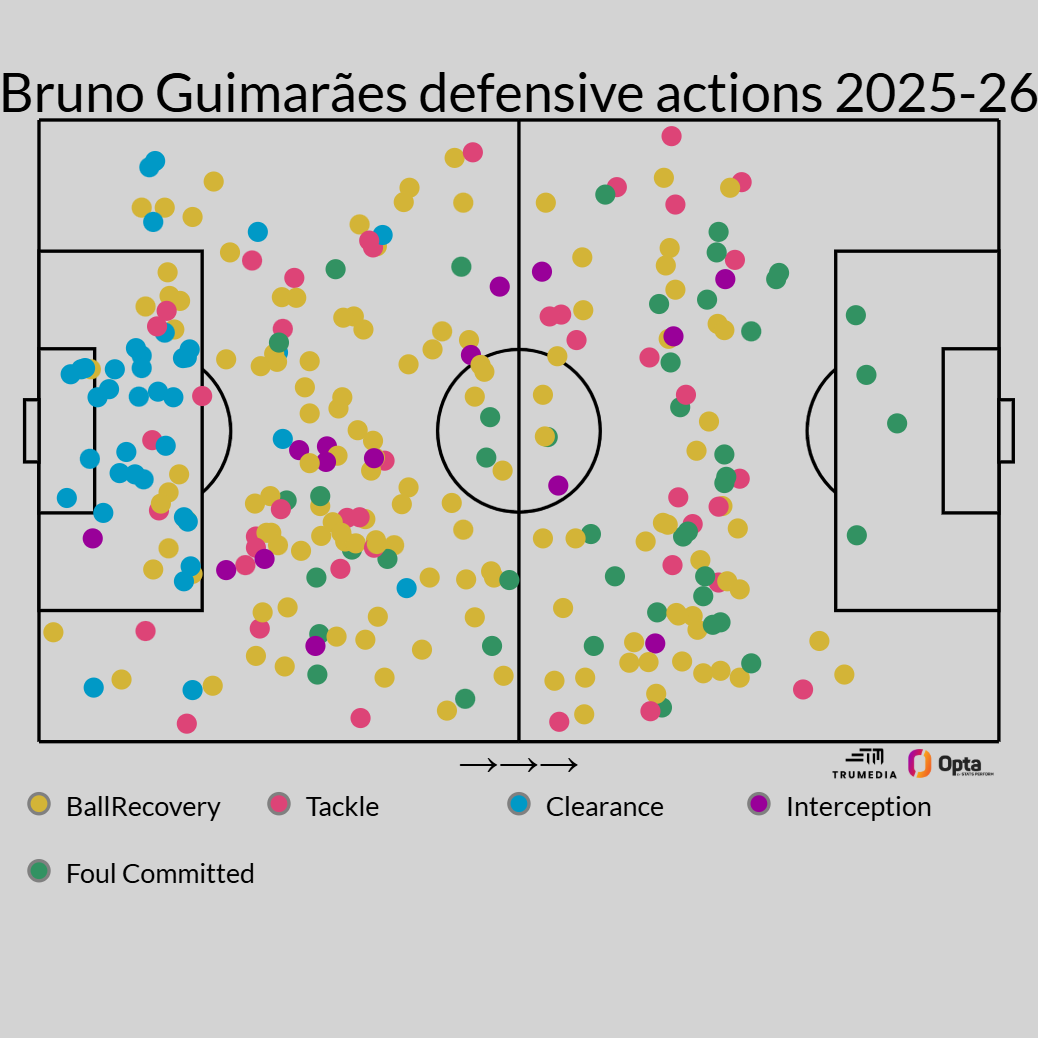
At 28, Guimarães is largely a well-rounded midfielder, which is why Arteta pursued him as part of a “win-now” strategy. Any further development is likely to be slight. The focus now will be on integrating him into Arsenal’s tactical framework, as well as addressing some of the preventable yellow cards he receives when emotions run high during matches.
Additionally, exercising caution in pressing could reduce the spaces left behind him, while being more judicious with ambitious passes would help avoid unnecessary turnovers, without compromising his progressive play.
Other Clubs in the Mix
Juventus had been long-time admirers, while Paris Saint-Germain and Manchester United were frequently mentioned as potential suitors.
Projected Fit at Arsenal
Guimarães enhances what is already one of Europe’s most cohesive and well-balanced midfield units, taking over from Christian Nørgaard, who has moved to Everton.
While Martín Zubimendi typically plays as a positional No. 6, characterized by discipline and minimal movement outside his designated zone, Guimarães is a more dynamic, aggressive player who excels in carrying the ball forward, effectively breaking lines with his passing, and winning duels.
His ability to resist pressure and control the pace of the game offers Arteta a more versatile rhythm option in his 4-2-3-1 formation.
With the potential for more tactical flexibility, Arteta may deploy Guimarães in advanced positions, providing unpredictability alongside Declan Rice, while Zubimendi remains behind. Although this strategy might impact Martin Ødegaard’s role and the playing time of young talents like Myles Lewis-Skelly and Ethan Nwaneri, the titleholders deserve credit for adding depth, quality, and variety to their already strong squad.