



In reflection on the three prior World Cups held in North America, South America boasts an impeccable record.
Brazil triumphed in Mexico 1970, while Argentina emerged victorious at the same venue 16 years later. Brazil again claimed the trophy in the USA in 1994, which sets an intriguing stage for this year’s tournament.
– Ancelotti’s choice of Neymar for Brazil reflects a gamble that could pay off
– Neymar headlines Ancelotti’s intriguing Brazil World Cup roster
– Assessing Argentina’s readiness to defend their World Cup title
It would be misleading to claim that South American teams will be playing on home turf in the upcoming weeks. The distance from Buenos Aires to Mexico City is greater than that from London to Mumbai. North America is vast, though some players from South America may experience a sense of familiarity.
Traveling fans may face challenges, but teams like Colombia and Brazil can look forward to strong support from local communities. Participating in the 2024 Copa América in the U.S. has equipped these teams with valuable insights, offering them a slight advantage over unacclimated opponents.
However, the path ahead remains difficult.
Did the U.S. heat aid the South Americans in 1994? Perhaps so. Brazil needed a penalty shootout to defeat Italy, with Sweden and Bulgaria rounding out the podium. Meanwhile, top European teams are undeniably stronger in 2026 compared to 32 years ago.
Spain has made significant progress since 1994, and both France and England were unable to qualify during that time. Notably, Brazil’s campaigns since their last win in 2002 have prematurely ended in the knockout stages against European teams.
If South America falters, it will not be from a lack of relevant experience. National team play on the continent operates under a World Cup-to-World Cup rhythm, allowing time for a new coach to settle in, followed by 18 qualifying matches interspersed with a Copa América. While many teams qualify for the finals (six out of ten, with another team contending in intercontinental playoffs), qualifying in South America is fiercely competitive, with no easy matches. This rigorous schedule prepares teams thoroughly for the tournament.
Nonetheless, two South American teams seem to have hit their peak a bit too soon.
Under coach Néstor Lorenzo, Colombia enjoyed a 28-game unbeaten streak that began in March 2022 and lasted until the 2024 Copa América final. However, their form has faltered since then, and they enter North America with their morale shaken after a heavy defeat against what was effectively the French reserve team.
Uruguay also reflects on the Copa América as a decisive moment. Marcelo Bielsa appeared to be an ideal choice for a team needing a generational shift. Early signs were promising with a strong core suited to his high-pressing tactics, highlighted by a memorable away victory against Argentina and a commanding win over Brazil.
However, things soon deteriorated. With Luis Suárez‘s retirement from international duty, scoring opportunities dried up. Recent performances have seen Uruguay struggling to cross the halfway line, culminating in a disheartening 5-1 defeat to the United States in November.
Despite their current low phase, Uruguay may pose a danger. Historically, this team responds well under pressure, and the World Cup format allows them—and Colombia—some room to find their footing.
Conversely, two other South American squads are entering the tournament with momentum.
Paraguay returns to the World Cup for the first time since 2010. After a disappointing Copa América two years prior, they appeared to be on the verge of missing out again. However, the arrival of Gustavo Alfaro—as the third coach of the cycle—transformed their fortunes, despite minimal changes in players.
Alfaro instilled structure and confidence, reviving their traditional defensive solidity while showcasing talent from players like Diego Gómez and particularly Julio Enciso. Alfaro has emerged as something of a national hero, with high hopes for his team’s performance in the tournament.
Ecuador may be seen as dark horses, boasting a compelling case for impact in the tournament. Having debuted in the World Cup in 2002, their ongoing player development initiatives have positioned them as an emerging force, recently highlighted by their performance in the UEFA Champions League.
With Paris Saint-Germain‘s Willian Pacho on one flank and Arsenal‘s Piero Hincapié on the other, it’s clear why Ecuador sports a commendable defensive record. Ahead of their final warm-up against Guatemala, they are unbeaten in 18 matches.
While such unbeaten streaks often falter at the World Cup, few teams will relish the prospect of facing Ecuador. However, a contemporary need for goals remains, as the squad leans on veteran Enner Valencia. Fortunately, the tournament format might allow them to advance with a strong defensive base.
This expectation brings us to the two major South American powerhouses, for whom anything less than championship glory is deemed a failure.
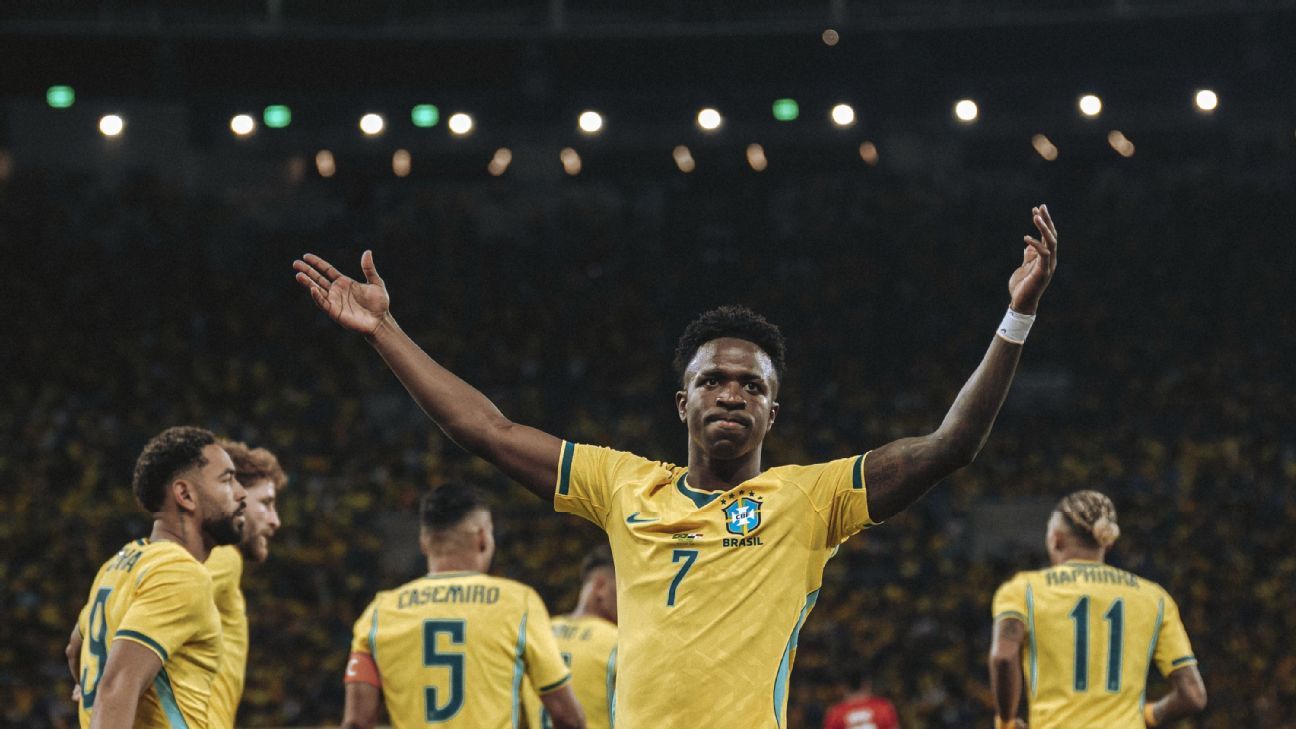
Brazil’s coach, Carlo Ancelotti, has extended his contract through 2030—ensuring stability should they falter in North America, where negotiations might have been more challenging otherwise. However, time has been limited for him to implement his vision, and his squad remains an enigma—an understanding further complicated following a 6-2 friendly win against Panama.
While the 6-2 scoreline suggests an effortless outing, the reality speaks to more undercurrents. Brazil appeared disjointed during the first half, strongly featuring their starters while struggling to find flow, impacting their midfield’s influence. A shift in strategy after halftime saw the addition of another midfielder, leading to improved ball control and ultimately a surge in goals.
Ancelotti expressed uncertainty after this encounter, understanding that it’s better to address these concerns in a friendly just before the tournament begins. Brazil, therefore, continues to evolve, with a precarious midfield yet an impressive array of attacking options.
The reigning champions, Argentina, possess a tested formula bolstered by only a few new faces. This squad, which previously secured victory in Qatar, followed that success with a Copa América win and a strong qualification record.
Whereas other teams scramble to establish their identities, Argentina’s focus shifts to maintaining cohesion throughout eight matches. Although there may be signs of age, particularly as Lionel Messi approaches 39 and their defense feels somewhat vulnerable, remaining unchanged since the Qatar campaign.
Argentina is poised to dazzle during the tournament, brimming with mid-range players capable of crafting beautiful moments on the pitch. The question looms: will those exquisite displays suffice to claim a second consecutive trophy? The challenge appears steeper than any previously faced in North America.