



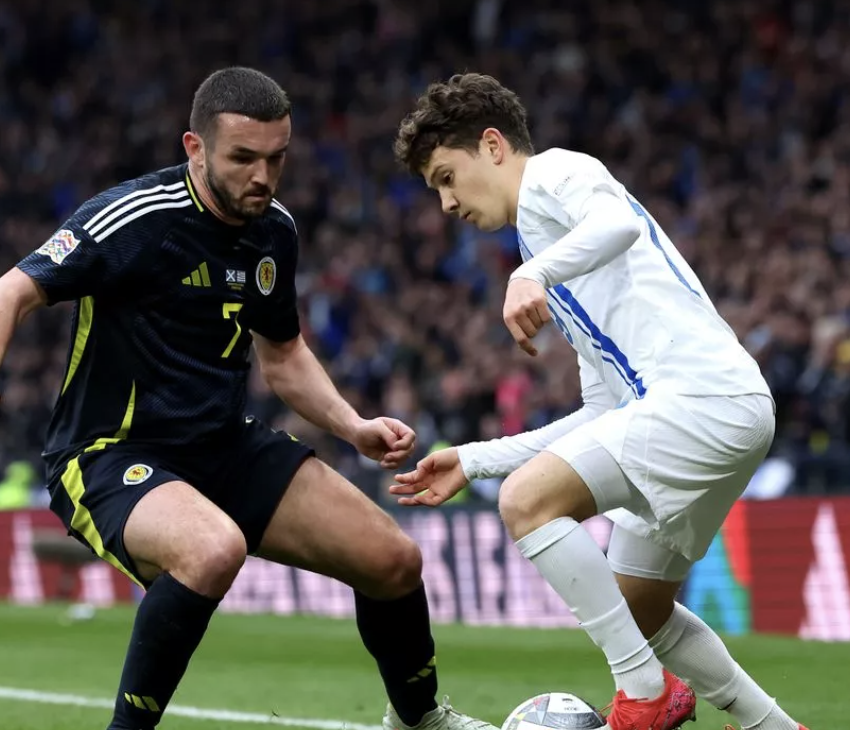
Chelsea’s Transition Accelerates with Increased Interest in Konstantinos Karetsas
Chelsea finds itself in a pivotal and sensitive phase following the departure of Enzo Maresca. With a caretaker head coach now in charge, the club aims to stabilize its operations during this critical juncture, both on and off the field. While immediate concerns focus on maintaining stability, recruitment efforts are ramping up. Notably, Konstantinos Karetsas has emerged as a key figure in Chelsea’s transfer discussions, as reported by The Mirror.
Advertisement
The change in coaching staff inevitably shifts Chelsea’s priorities, timelines, and power dynamics, yet the club remains committed to its long-term goal of acquiring elite young talent. At just 18, Karetsas is already being compared to Europe’s most sought-after teenage forwards, drawing keen interest from the club as they reassess their strategies during this transitional period.

Photo IMAGO
Caretaker Role Alters Chelsea’s Focus
While appointing a caretaker manager is not typically part of Chelsea’s ideal scenario, it signals a broader effort to reset after a challenging period. Internally, the emphasis is on continuity rather than disruption. Daily coaching is being stabilized, and recruitment teams are diligently working within a framework that aligns with Chelsea’s medium and long-term objectives.
Advertisement
This framework prioritizes age, growth potential, and resale value. Chelsea believes that cultivating high-potential prospects offers a sustainable pathway to compete at the top level of the Premier League. Despite the uncertainty regarding management, this philosophy is steadfast, and Karetsas is seen as a player who can thrive regardless of who is at the helm in the coming months.
Karetsas’ Profile Attracts Elite Interest
Karetsas has seen a swift ascent through the ranks, representing Greece internationally after being born in Belgium. The attacking midfielder has garnered a reputation for his technical prowess and maturity. Primarily operating between the lines, he combines close ball control with intelligent movement, effectively impacting matches without needing to dominate possession.
Chelsea’s scouting network has been closely observing his development, noting his composure in tight situations and his readiness to take charge in the attacking third. While comparisons to top-tier playmakers are commonplace, the internal focus remains on his versatility. Karetsas effortlessly drifts wide, drops deeper to connect play, or makes late runs into the box—all attributes that align with the fluid attacking structures Chelsea is looking to implement.
Advertisement
Chelsea’s Youth-Centric Recruitment Approach Endures
Despite managerial ambiguity, Chelsea’s recruitment department continues to operate autonomously. The club’s model enables potential signings to be evaluated independently of any coaching appointments, ensuring that prospects like Karetsas align with a broader sporting vision.
It is acknowledged that pursuing Karetsas would be viewed as an investment rather than a quick fix. Chelsea is willing to exercise patience, whether it involves integrating him gradually into the first team or exploring pathways for his development that maximize his potential. The caretaker setup does not significantly alter this perspective, although it may affect the timing and negotiation processes.
Financially, Chelsea remains aware of the competitive landscape across Europe. Interest in Karetsas extends beyond England, and with his profile rising with each international appearance, the club faces pressure to transition from admiration to action swiftly.
Advertisement
Balancing Immediate Challenges with Long-Term Goals
For fans, the lack of a permanent manager understandably raises questions about the club’s direction. However, internally, Chelsea is committed to a calm approach. The caretaker phase is seen as a bridge rather than a crossroads, with recruitment strategies formulated to withstand individual coaching changes.
Signing Konstantinos Karetsas embodies an opportunity Chelsea is eager to seize, irrespective of the matchday manager. His potential addition would highlight the club’s dedication to building a cohesive squad that can evolve together, rather than merely responding to urgent pressures.
As Chelsea maneuvers through this transitional phase, the next few weeks will reveal how effectively they can balance immediate performance needs with long-term ambitions. What is evident is that the managerial shift has not dampened the club’s enthusiasm for acquiring elite young talent. In fact, it has underscored the urgency of making sound decisions, both on the pitch and in the transfer market.