



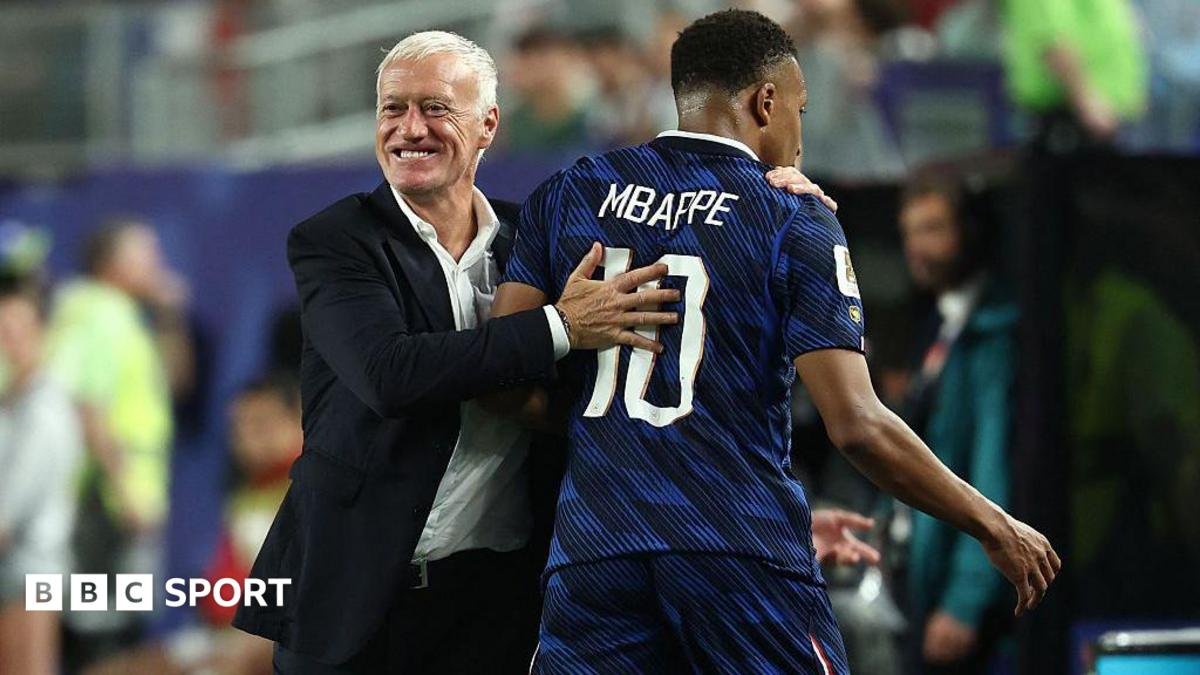
It’s hard to contest the idea that France boast the strongest squad in international football. Yet guiding a team packed with stars is rarely straightforward.
Plenty of clubs have shown how easily talent-rich sides can falter under the weight of big personalities and sky-high expectations. Since taking charge in 2012, Didier Deschamps has repeatedly refreshed his teams and extracted maximum value from France’s deep talent pool.
Perhaps most impressively, he often fine-tunes mid-tournament, adjusting game by game to find winning formulas that have delivered a World Cup or come very close.
That familiar pattern seems to be unfolding at this World Cup as well. Deschamps has zeroed in on getting the best from his attacking options, with a particular emphasis on Kylian Mbappe.
Now 27, Mbappe wants to influence build-up play rather than just sprint in behind as he did so devastatingly at 19 during France’s 2018 triumph. The central task this time is fitting him as a number nine while keeping the rest of the team in sync.
In qualifying, Deschamps relied on a quirky but coherent setup—on paper a lopsided 4-2-4 or a 4-2-3-1. Hugo Ekitike started on the left, while Mbappe dropped deep and drifted wide toward him. From there, either Ekitike from the wing or Dembele from a more traditional 10 spot could attack the center-forward space, with Michael Olise on the right.
For the World Cup opener against Senegal, France lined up similarly, with Desire Doue stepping in for the injured Ekitike.