



For the Iran squad, simply being part of the World Cup Finals was a tense achievement after months of uncertainty. Their journey in North America now teeters on a knife-edge, dependent on the outcome of an agonizingly suspenseful 24 hours. This uncertainty was highlighted during a heart-stopping seven-minute stoppage that felt like an eternity.
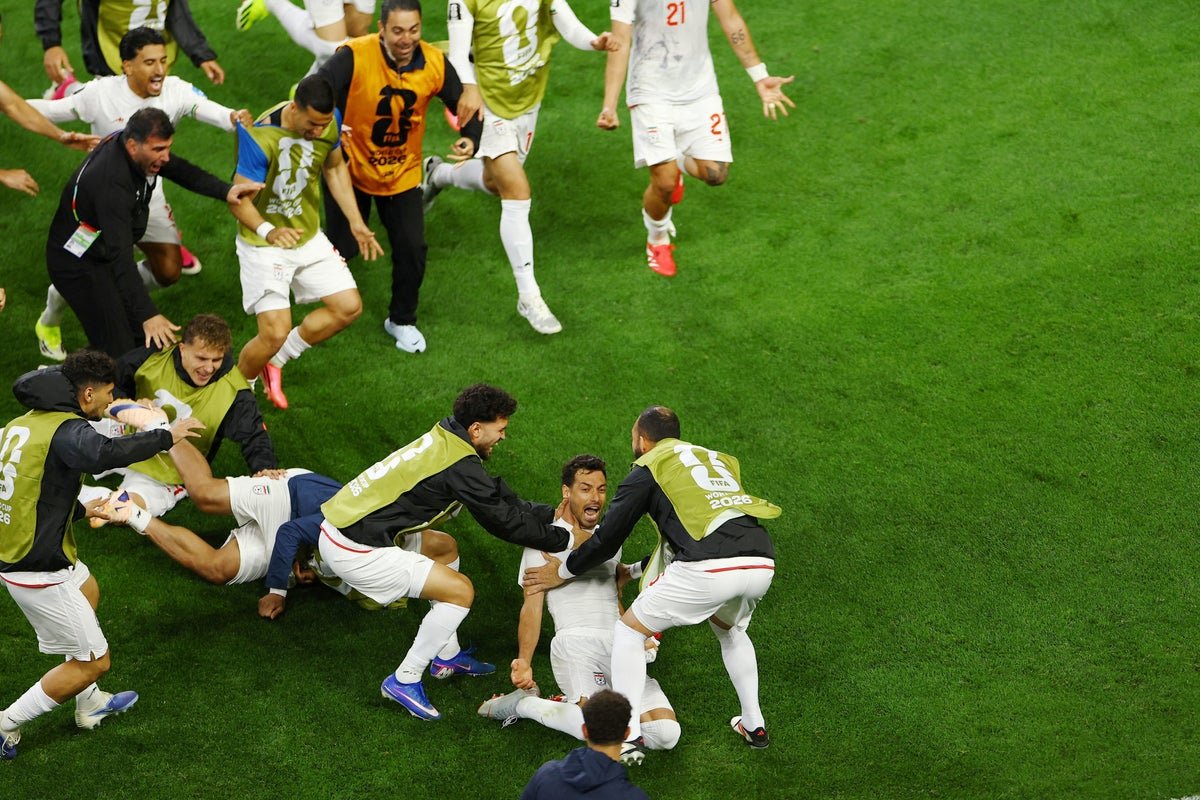
For West Ham in May mirrored Iran’s experience in June with last-minute hopes dashed in the most heartbreaking fashion. It felt like time stood still in the Egypt penalty area when Iran’s defender Shojae Khalilzadeh found the net and celebrated with his ecstatic teammates. However, the joy was short-lived as Polish referee Szymon Marciniak called for a review, invoking the dreaded VAR.
Despite the narrow offside decision against Khalilzadeh, Iran’s near-victory was still within grasp. A promising shot from Ramin Rezaeian was denied by a heroic block; Saeid Ezatolahi struck the crossbar with a header. Moments later, the referee signaled the end, and what could have been a second-place finish and a match against Australia in Dallas slipped into an agonizing state of uncertainty instead.

Khalilzadeh’s stoppage-time strike looked to have clinched second place for Iran (Reuters)

The goal was ruled out for offside, giving Egypt a guaranteed spot in the knockouts (Reuters)
To gain some perspective, the squad managed to participate in the tournament against tremendous odds. Amidst a nation at war with the co-hosts and ongoing protests against their regime, they emerged from Group G unbeaten: three matches, three draws, and a goal difference of zero. Will that be enough to advance? It’s uncertain.
By Saturday night, Amir Ghalenoei and his squad will know if they’re extending their stay in Tijuana or heading home. In their match against Egypt, a victory would have secured progress, but they fell agonizingly short after a valiant effort.
Meanwhile, Egypt advances in second place, having seen Belgium secure a decisive four-goal victory over New Zealand to claim the top spot. Mo Salah and his teammates will face the Socceroos next, while Iran currently stands sixth in the rankings for third place, with hopes of facing Switzerland in Vancouver on Thursday.
However, with three groups still left to be decided, everything could change rapidly. The new tournament format introduces a level of unpredictability that could alter outcomes quickly.
This match was highly anticipated as the first-ever World Cup Pride match, organized by Seattle’s local Pride+ Match Advisory committee to coincide with the city’s annual Pride Weekend and the anniversary of the Stonewall Riots. However, the atmosphere lacked the expected vibrancy, with a noticeable absence of rainbow flags both en route to Lumen Field and inside the stadium, which holds 68,000 spectators.
Instead of a colorful celebration of Pride, the scene was filled with peaceful protests. Outside the Quality Athletics gastropub on South King Street, there was an anti-Iranian regime demonstration, alongside an anti-Israel small-sided football match nearby, marked with pro-Palestine banners. Just a little further down, protesters distributed leaflets denouncing former President Trump. Contrasting views were represented as a Christian preacher passionately shared his message amidst a backdrop of pre-revolutionary Iranian flags.
Amidst all of this, thousands of Egyptian fans celebrated their first-ever World Cup victory, creating a festive atmosphere filled with joy. Remarkably, the event unfolded without violent incidents, a relief for the Seattle Police Department overseeing the situation.

Protests against the Iranian regime took place before the match (Getty)
Despite the protests, it was essential to remember that a high-stakes international football match was unfolding. Did the game live up to the buildup? Undoubtedly, it did.
Egypt, aiming for a historic top-group finish in their World Cup journey, took the lead within five minutes as midfielder Mahmoud Saber seized on a loose ball after Iran’s goalkeeper Alireza Beiranvand spilled a tame shot from Salah, allowing a left-footed effort to slip through his grasp and find the back of the net.
Iran quickly responded with their own attack. Captain Mehdi Taremi flicked the ball past Egypt’s defender Mohamed Abdelmonem in the penalty area, prompting referee Marciniak to award a penalty. Egypt’s keeper, Mostafa Shobeir, dived correctly to keep Taremi’s effort at bay.

Ramin Rezaeian equalised for Iran after a frantic opening 15 minutes (Getty)
Fortunately for Taremi, three minutes later he saw his team level as Shobeir could only deflect a powerful left-footed shot from Milad Mohammadi right into the path of the advancing Rezaeian, who converted from a tight angle, making it 1-1 within the first fifteen minutes.
As the game continued, the stakes for both teams escalated. As Belgium found their rhythm against New Zealand, while Egypt’s Trezeguet made key plays, and Rezaeian had another chance but missed.
As the match progressed into the second half, Iran felt the pressure to create a moment of history. The intensity of the game grew, culminating in Taremi’s header ricocheting off the crossbar just before stoppage time; however, a foul was called against the Iranian team. It appeared to be their final opportunity, but fate had other plans.
Then came the unforgettable stoppage-time drama that only football can deliver. Yet, the familiar disappointment arrived: the reality that the VAR system had intervened. For better or worse, Iran will find out what that means for them in the coming days.