



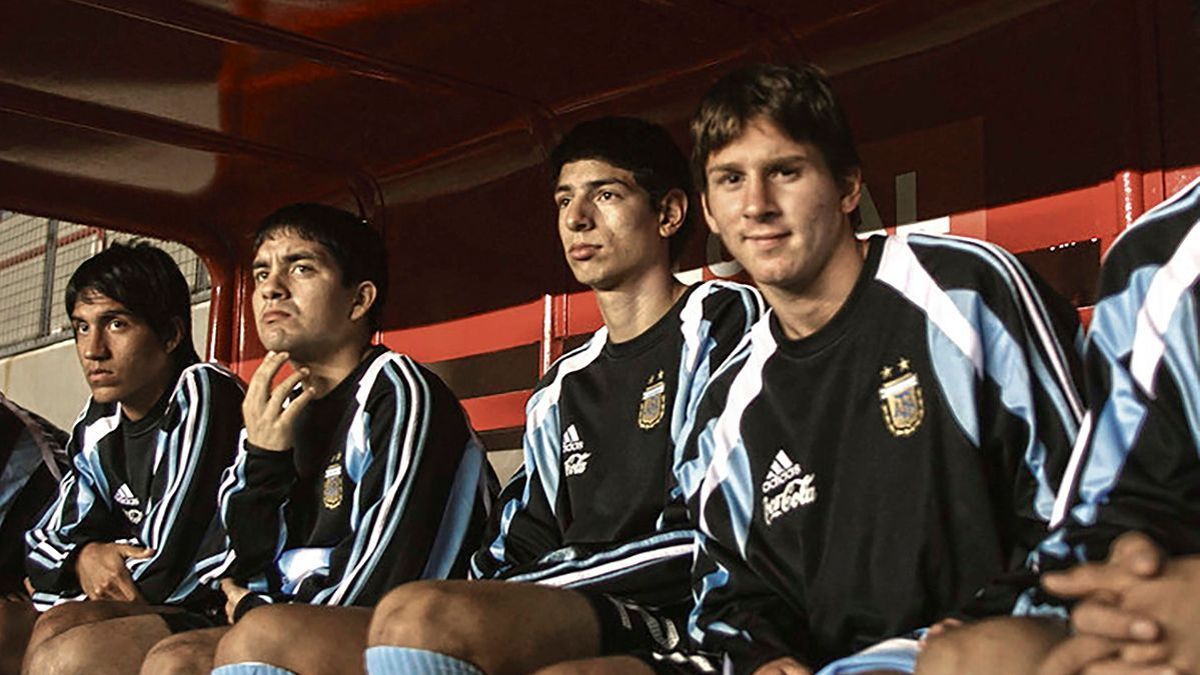
Imagine how the last two decades of international football would have changed if Lionel Messi had chosen to represent Spain instead of Argentina?
For Messi, the thought of not representing his homeland was never on the table. However, there was a pivotal moment early in his career, before he found fame in Argentina, when Spain attempted to secure his allegiance to La Roja.
As soon as Spain became aware of the exceptional talent of the long-haired teenager from Rosario excelling in Barcelona‘s academy, the Argentine Football Association (AFA) was thrown into a state of panic.
This led to an extraordinary series of events involving a highlight reel of Messi on VHS, frantic phone calls to everyone with the last name Messi, frequent misspellings of his name, and a hastily organized match to ensure Argentina secured his commitment.
– Watch ‘Messi: The Forgotten Tape’ on ESPN+ (U.S.)
As part of a new documentary, ESPN interviewed those involved in Messi’s first international call-up, revealing new insights into the story that ultimately saw the eight-time Ballon d’Or winner lead La Albiceleste to their third FIFA World Cup win in 2022.
Editor’s Note: All direct quotes from interviewees were originally in Spanish and have been translated.
Spain’s Ambitious Pursuit
Messi arrived in Barcelona at the age of 13 in 2000, quickly establishing himself as an extraordinary talent at the La Masia academy. Coaches Alex García and his teammate Víctor Vázquez were baffled by the lack of interest from Argentina. Spain’s youth coach Ginés Meléndez tasked them with persuading Messi to represent La Roja. The same sentiment was echoed by Messi’s early agent, Horacio Gaggioli.
García: Messi came to Barcelona with his father. He was alone, away from family, but his determination to succeed as a professional footballer was evident. From day one, we recognized he was destined to become the best.
Vázquez: His speed of thought and game awareness were exceptional. He was unlike anyone we had seen from the great generation of ’87.
García: Players like [Gerard] Piqué and Cesc [Fàbregas] were getting called up, yet Messi was overlooked. I mentioned this to Meléndez, the national team coach, hoping he might want to represent Spain.
Meléndez: I was scouting young talent across the country when Messi caught my eye. He was part of an incredible generation at Barcelona, and I envisioned how unstoppable we could be with him on our side.
Thus began a collective effort to convince Messi, under the radar, without upsetting the Argentine Federation, as [AFA president] Julio Grondona had ties with [Royal Spanish Football Federation] president Ángel María Villar.
Vázquez: On one occasion, while reminiscing after matches, I must have asked Leo: “Have you ever thought about playing for us?”
García: I suggested, “Wouldn’t you prefer to play for Spain rather than remain alone while everyone else is away?”
Meléndez: I reminded them: “Tell him he can switch until he’s 21, so he still has options.”
Gaggioli: I handled numerous calls asking if he could play for Spain. I often replied: “We need to consult him and his family, but he’s certainly capable.” Yet, Messi was steadfast about playing for Argentina and Barcelona.
The Mixtape That Changed Everything
In late 2002, Argentina’s coach Marcelo Bielsa and assistant Claudio Vivas were in Barcelona for a review of their senior players. Gaggioli took this chance to introduce Messi to them through a video that showcased his skills.
Marcet: Gaggioli approached me and said, “We need to ensure the Argentine youth teams know about Leo, as the Spanish national team is vying for him.” I gathered clips of his goals and playmaking and had it converted to a VHS tape.
Gaggioli: This was initiated by Messi’s dad, Jorge, who encouraged me to get footage to share with the Argentine coaches during their visit to Barcelona. I eventually met with Vivas at their hotel.
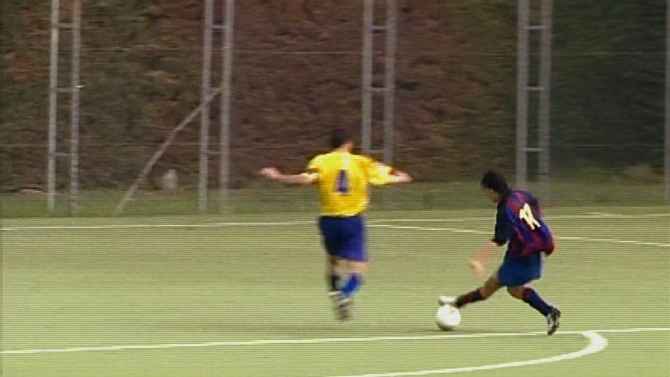
3:00
How a VHS tape introduced Lionel Messi to Argentina
To showcase Lionel Messi’s talents, a highlight tape was created to persuade Argentina’s coaches to take notice. Stream “Messi: The Forgotten Tape” on ESPN+.
Vivas: Upon renewing his contract, we traveled across Europe to connect with players. During our stop in Barcelona, we received a tip about Messi.
Gaggioli: “You need to watch this boy at Barça,” I told him. I even provided footage as Spain was actively trying to recruit Messi.
Vivas: The footage highlighted Messi’s exceptional dribbling skills, and I was astounded at how talented he was.
Missed Opportunities at the World Cup
As the VHS reached Hugo Tocalli, the coach for Argentina’s youth teams, the U17 World Cup loomed. However, Tocalli opted not to include Messi in the squad, a decision that many believe cost Argentina his earlier involvement.
Eliceche: It took two months for the tape to reach Argentina because Bielsa’s team had been abroad. Upon their return, Vivas quickly met with Tocalli to discuss Messi.
Tocalli: With just fifteen days to go before the World Cup journey, Vivas shared the VHS. I watched it repeatedly and could sense Messi’s electrifying speed.
Vivas: I urged Tocalli not to let such talent slip away.
Tocalli: Ultimately, we didn’t take him because our team had been practicing together for two years. I didn’t want to disrupt that for a new player.
Meléndez: In 2003, we faced Argentina in the semifinals of the World Cup.
Tocalli: We lost 3-2 after being ahead 2-0. Messi could have made a difference there.
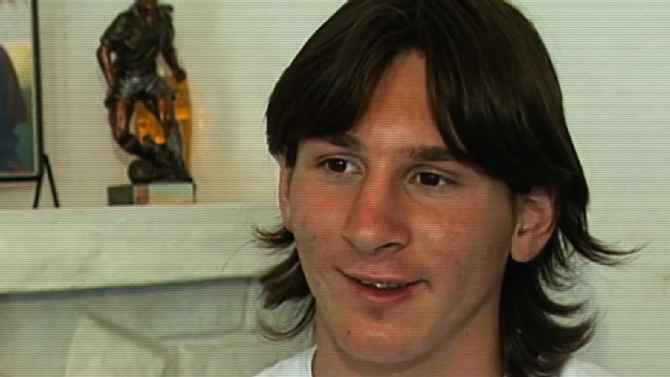
1:40
Young Messi’s Dreams: ‘Winning a World Cup would be amazing’
In a 2004 interview, a young Messi expressed his ambition to win the World Cup for Argentina. Stream “Messi: The Forgotten Tape” on ESPN+.
Eliceche: After the match, during a dinner with both federations, Messi’s name was mentioned.
Tocalli: It was devastating to learn from a chef that Spain would have been champions if they had Messi. It was a realization that we had missed something massive.
Eliceche: Even a chef recognized the oversight in not recruiting Messi.
Tocalli: That night, my mind raced, and I reached out to Grondona to arrange Messi’s inclusion in our national team promptly.
The Match to Secure Messi
Back in Buenos Aires, Tocalli began taking steps to prevent Messi from joining Spain. A friendly match was hastily organized, even bringing in referees to meet official FIFA requirements.
Souto: Tocalli tasked me with finding the Barcelona player, and I initially forgot his name. I thought he was called Leonardo!
Eliceche: Back then, we really didn’t know much about him until his debut with Barcelona’s senior squad.
Souto: The search was daunting. I even had to use a payphone and went through the Yellow Pages in Rosario to contact his family.
Souto: When I finally connected with Messi’s father, Jorge’s first words were, “Finally, you’ve remembered my son! He wants to play for Argentina.”
Eliceche: The initial call to AFA mistakenly misspelled his name as “LEONEL MECCI.”
Tocalli: Two matches were organized for Messi in June 2004 — one against Paraguay and another against Uruguay. They were specifically arranged for him.
Eliceche: Argentina was in urgent need of an official match to secure Messi’s commitment to the federation.
Brazenas: I received a unique assignment to officiate a match with exigent FIFA requirements. They needed to make sure Messi played.
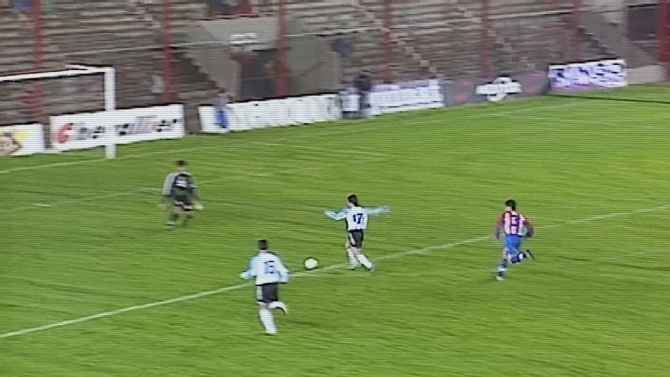
3:42
How Argentina arranged an entire match just for young Lionel Messi
Argentina orchestrated a friendly match against Paraguay to facilitate Messi’s debut and secure his international future. Stream “Messi: The Forgotten Tape” on ESPN+.
Eliceche: The match showcased a U20 Argentina squad against Paraguay’s U23 team, and everything was orchestrated around Messi’s debut. The game was even broadcasted live, in the stadium where Diego Maradona made his debut, on the anniversary of Argentina’s past World Cup victory.
Brazenas: I was amazed by how everything was organized without a glitch. When Messi finally stepped onto the field, it was clear he was special.
Almerares: He came on as an attacking midfielder and quickly showcased his brilliance.
Brazenas: He glided past everyone effortlessly.
Almerares: He was heading towards the goal. Everyone was taken aback by his skills.
Tocalli: At that moment, it was clear: “This kid is different.”
Zabaleta: His goal was a turning point; we all recognized his remarkable talent.
Eliceche: This was the moment when everyone began to see Messi’s potential as someone destined to leave a mark on football.
Tocalli: For me, it was a huge relief. Losing a talent like Messi would have been devastating for my career.
What Could Have Been?
In a different reality, Messi may have been part of the Spain squad that claimed consecutive UEFA European Championships and the FIFA World Cup from 2008 to 2012. Perhaps they would have achieved even more with him in their ranks. Yet, we would have missed out on one of football’s greatest narratives, culminating in his ultimate success with Argentina just four years ago.
Almerares: That match against Paraguay was pivotal. What if he had represented Spain? Argentine football history would be different. We have relished every moment of Messi in our national colors. It was a defining moment that culminated in us becoming world champions.
Vivas: Looking back, I believe destiny would have led Messi to Argentina regardless.
García: The million-dollar question remains: What if he had played for Spain?
Vázquez: At the youth level, we would have been champions. With the senior team, alongside Xavi [Hernández] and [Andrés] Iniesta, we would have won even more championships. No doubt about it.
Meléndez: We weren’t mistaken. The moment Messi arrived, we recognized his extraordinary talent. While I would have been overjoyed had he played for us, the joy of witnessing his World Cup triumph with Argentina is incomparable. But I cannot help but think, had he played for us, we could have claimed more World Cups.
Eventually, we conceded that by the time he took the field for Argentina, we recognized it was a lost cause — especially at the 2005 U20 World Cup, where Argentina defeated Spain 3-1, with Messi scoring one of the goals.
Tocalli: And it all began with a VHS tape.