



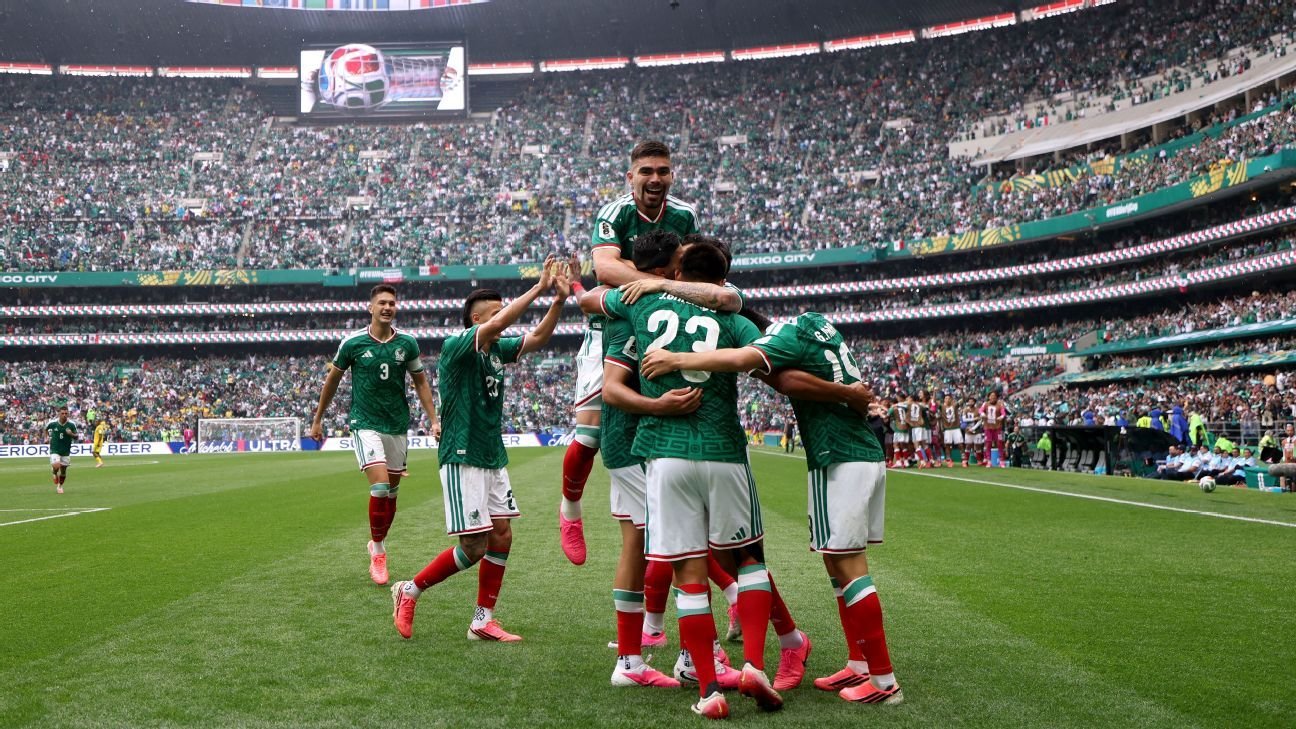
MEXICO CITY — As the Mexican national anthem filled the air at Estadio Azteca, I joined many others in shedding tears of joy.
My emotions swelled with pride as I witnessed a historic moment for the sport: Mexico becoming the first nation to host three FIFA World Cups. I was quietly overwhelmed as I remembered my Mexican grandmother, a longtime supporter of both the sport and El Tri, who had passed away just before the tournament began. Surrounded by a festive atmosphere, I felt the powerful connection between generations both past and present as the event unfolded before my eyes.
Forty years earlier, while Mexico triumphed in their World Cup opener against South Africa with a 2-0 scoreline, coach Javier Aguirre was not on the sideline, but rather on the field as a player during the previous tournament hosted in 1986.
“These players are young,” Aguirre remarked after the match, reflecting on both his players and his own World Cup experience. “They needed to live this moment.”
In 1986, Mexico’s national team reached the quarterfinals, matching their best performance from their inaugural hosting in 1970. Those quarterfinal appearances established a new standard for Mexican soccer, igniting hope in a country eager to ascend the ranks of the sport.
However, the following decades brought stagnation.
Between 1994 and 2018, Mexico suffered through six consecutive uninspiring round-of-16 exits at the World Cup. In 2022, they faced embarrassment with a group-stage elimination.
But on Thursday, in the opening match of the 2026 World Cup? Returning to familiar ground? The atmosphere was a heartfelt celebration of hope not seen in years.
Before the opening whistle, fans spontaneously launched thousands of giveaway paper sombreros into the air. This joyful act set the tone for a surprising display from the hosts.
Julián Quiñones followed suit by igniting the match with an early goal in the ninth minute, causing the Azteca to erupt in cheers and more flying sombreros.
“It’s an intense atmosphere; it makes your legs shake a bit,” Aguirre mentioned. “When players transition from the training center [CAR] to the stadium, they feel it—it creates a powerful emotional state.”
For countless fans, the Estadio Azteca has been a sanctuary, each visit steeped in hope for moments like this. Those hopes—shared by supporters no longer with us—were nearly fulfilled when Raúl Jiménez secured a 2-0 lead in the second half, solidifying the win.
Yet, like any good celebration, the match had its chaotic moments. The second half saw three red cards—two for South Africa and one for Mexico’s starting defender César Montes. The question of who will fill Montes’ spot in Mexico’s next group game against South Korea looms, casting a bittersweet shadow over the victory.
Aguirre remarked that Edson Alvarez is the likely candidate “to play center back” in Montes’ absence.
Nevertheless, the hosts must remain grounded. Even with a full line-up, South Africa struggled to make an impact, showing excessive caution that allowed Mexico to control the match.
Regardless, a win for Mexico sparked jubilant celebrations, with music reverberating and ecstatic fans embracing one another. The unrestrained joy was evident throughout the stands and concourses.
One fan stood out, wearing a knockoff World Cup shirt I’d seen in a downtown shop. It read: “World Cup Legacy 86-26,” showcasing an image of a father and son, one in a No. 86 jersey and the other in a No. 26.
As we look ahead, the question remains: will a similar legacy unfold following Mexico’s emotional and triumphant victory?