



The Long Wait for Redemption in Congolese Football
Football enthusiasts in the Democratic Republic of Congo (DRC) have been eagerly anticipating the chance to amend the disappointments of their isolated World Cup journey in 1974.
That year marked many global events: US President Richard Nixon’s resignation amid the Watergate scandal, the invention of the Rubik’s Cube, and Muhammad Ali’s famed victory over George Foreman in the Rumble in the Jungle, held in Kinshasa, DRC’s capital.
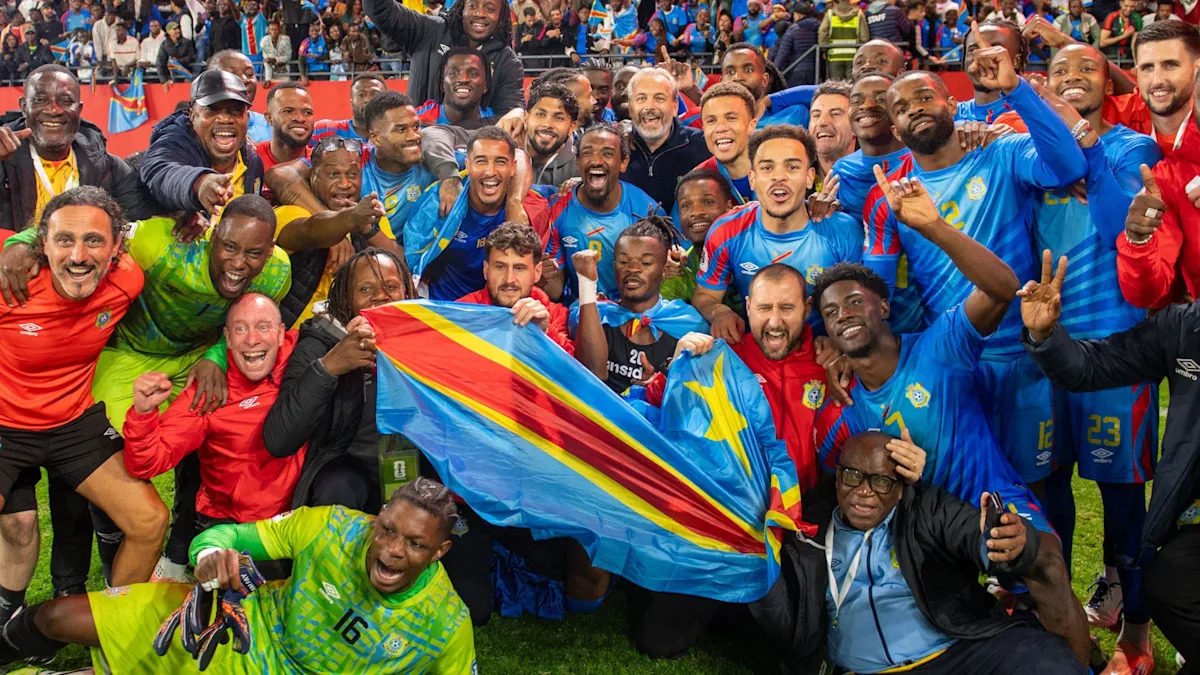
A win for the Leopards in Tuesday’s intercontinental play-off against Jamaica would put an end to their 52-year wait, securing Africa’s tenth spot at this year’s World Cup in Canada, Mexico, and the USA.
For Burnley defender Axel Tuanzebe, this match is “definitely the biggest game” of his football career, a sentiment echoed by former captain Gabriel Zakuani, who called it “the biggest game in our history.”
A victory would be celebrated by over 110 million people in the DRC and a large global diaspora, who hope for a better outcome than the team’s previous experience in West Germany, where they represented Zaire. That campaign began with a disheartening 2-0 loss to Scotland and spiraled into a 9-0 defeat against Yugoslavia, culminating in a humiliating 3-0 loss to Brazil that created one of the World Cup’s most infamous moments.
British commentator John Motson encapsulated the bewilderment when Mwepu Ilunga, a right-back, charged out of the wall during a Brazilian free-kick and kicked the ball away, leading to a yellow card. This incident tarnished the reputation of African football, implying players were unfamiliar with the rules.
“We were not a bad team,” recalled Mohamed Kalambay, one of the goalkeepers from the 1974 squad, in a 2022 interview. He emphasized their rightful place as one of the few African teams to reach the World Cup.
The team’s dismal performance, coupled with darker allusions to unpaid bonuses and threats of violence, have been cited as factors in their underachievement. Now, a new generation aims to forge their own memorable moments and lay those ghosts to rest.
A win would land them in a group with Portugal, Uzbekistan, and Colombia, with Zakuani, now an assistant coach for the DRC’s Under-20 team, stressing the importance of making an impact: “We want to compete and make history, not just be part of the event.”
Football’s Role in Uniting a Nation
In 1974, Zaire became the third African nation to qualify for the World Cup, after Egypt (1934) and Morocco (1970).
Since then, the DRC, Africa’s second-largest country, has watched smaller nations like Ghana, Senegal, and Tunisia thrive on the world stage. This disparity is attributed to ongoing corruption, political instability, and persistent conflict, which have defined the country’s history since it gained independence from Belgium in 1960.
The 1974 team, then reigning champions of the Africa Cup of Nations (Afcon), had the backing of President Mobutu Sese Seko, a dictator whose regime spanned three decades, during which he amassed considerable wealth, some of which went towards football.
“We visited the presidency, and he wanted to encourage us,” Kalambay reminisced, recalling how Mobutu gifted houses and cars to the Afcon-winning squad.
Since then, the DRC has not returned to the Afcon final. Sports journalist Jean-Jacques Akengelaka noted the deep impact of Mobutu’s legacy on the country’s football infrastructure, mentioning how facilities have been ravaged and governance has suffered.
In the wake of Mobutu’s ousting, two Congo wars (1996-2003) further devastated the nation, involving multiple African countries and resulting in millions of casualties. Even now, violence persists in eastern regions controlled by rebel groups like M23.
During the semi-finals of the 2023 Afcon, the current squad used the occasion to advocate for peace, highlighting the conflict’s toll. The players demonstrated during the national anthem, covering their mouths with one hand and pointing like a gun with the other.
Newcastle forward Yoane Wissa expressed hope that their strong performance provided some joy to those affected by violence, while Tuanzebe described football as a rejuvenating force for the nation.
Freddy, a football enthusiast from Bukavu, shared his sentiment that while not everyone sees football in that light, the majority view it as a critical unifying element. However, due to the dangerous conditions in Bukavu, where moving out at night can be perilous, fans plan to watch the Jamaica match at home.
A Moment Beyond Football
The Leopards secured their spot in the FIFA intercontinental play-offs by finishing second to Senegal in their qualifying group and navigated through a competitive four-team African play-off, triumphing over Cameroon and then defeating Nigeria on penalties.
Recruiting talents from the diaspora has played a crucial role in the team’s advancement, a strategy successfully employed by various African nations, including Cape Verde, which recently qualified for its first World Cup.
Players like Tuanzebe and fellow defender Aaron Wan-Bissaka, both former England youth internationals, have welcomed the opportunity to represent their heritage. Wan-Bissaka noted the pride in representing his Congolese roots, having grown up in that cultural environment.
Among the current squad, ten were born in France, five in Belgium, two in Switzerland, and one in England, with only two players, Meschak Elia and Fiston Mayele, having played domestically in Congo.
“A significant number of talented players leave at a young age due to the lack of organized training centers and quality facilities,” Akengelaka explained, highlighting the challenges faced in developing local talent.
The 2022-23 Linafoot season was left unfinished after the government ceased funding for travel expenses, leaving clubs unable to function. The national football federation has been without an elected president since 2021, leading to instability.
Despite millions being funneled into sponsorship deals with clubs like Barcelona, AC Milan, and Monaco, many lament that resources should bolster Congolese football instead.
“We’re privileged to have everything we need,” Tuanzebe acknowledged, hoping their performances could resonate with the nation. “This is much more than just football; it’s about creating a legacy, a moment in history we will forever cherish.”