



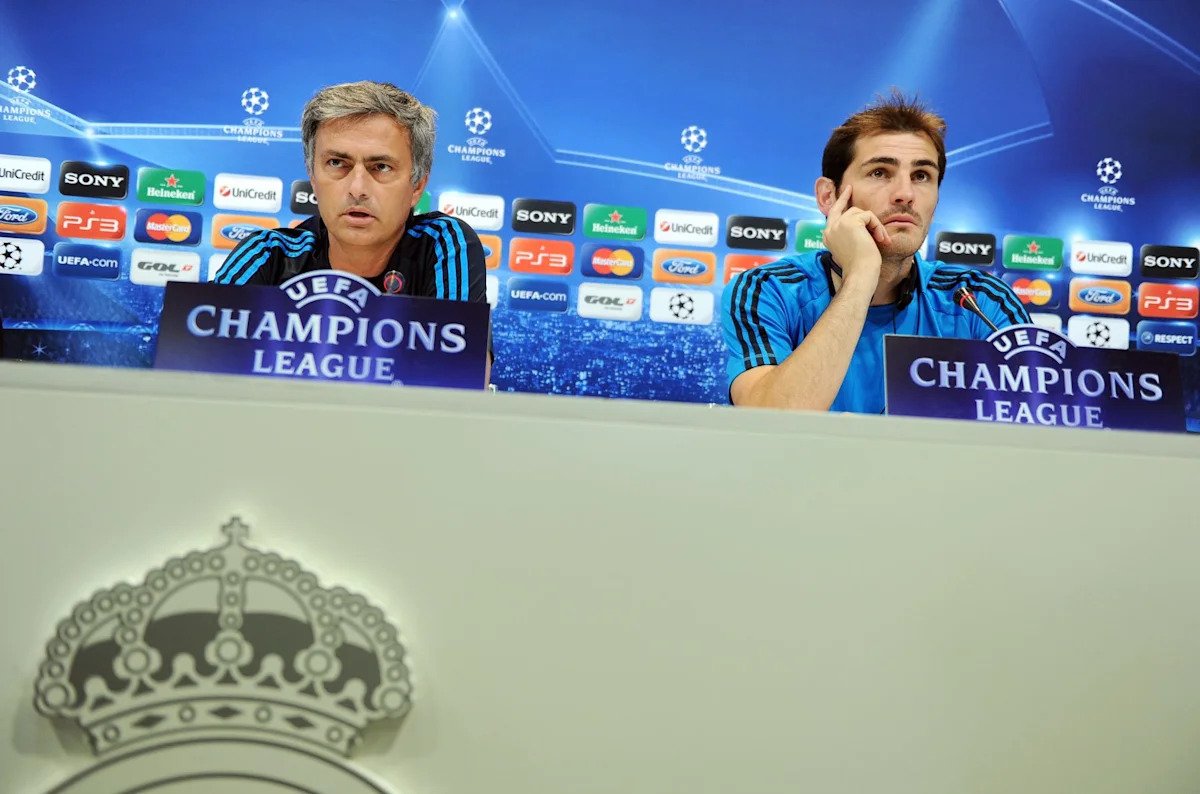
Few chapters of José Mourinho’s tenure at Real Madrid are as contentious as his relationship with Iker Casillas.
More than ten years after Mourinho’s departure from the Santiago Bernabéu, the tension between the Portuguese coach and the club icon has resurfaced.
Advertisement
Netflix’s recent three-part documentary on Mourinho, which debuted on August 11, has reignited discussions around one of the most challenging periods of his initial spell at Real Madrid.
Casillas and Mourinho have shared vastly different narratives regarding events within the Madrid dressing room.
Their relationship became severely strained as Mourinho challenged the influence of veteran players, while Casillas found himself torn between his duties as captain of Real Madrid and that of the Spanish national team.
This conflict led to a noticeable division in the locker room.
Casillas on the Challenges of His Relationship with Mourinho
It’s crucial to note that the tension extended beyond mere team selection; Mourinho’s style of management created friction around training, match preparation, and, notably, clashes with Barcelona.
Advertisement
Casillas faced unique challenges as he shared the Spain locker room with several Barcelona players whom he competed against at the club level, especially during a period when the El Clásico rivalry was at its peak.
Reflecting on that time in the Netflix documentary, Casillas expressed the difficulty of being caught between opposing factions.

“That situation was complicated because you were the captain of both Real Madrid and the Spanish national team.
“You faced teammates who were rivals on the field but then your allies in the national team. I found that dynamic uncomfortable and made my views known to the manager,” he recounted.
Advertisement
Mourinho’s perspective on the incidents diverges significantly.
The Portuguese believed that the rivalry between Real Madrid and Barcelona required a completely different mindset from his players.
He insisted that the combative nature of their encounters should be preserved, even if the same players were set to come together for the national team afterwards.
Mourinho stated, “I told them: ‘This is Barcelona versus Real Madrid. When you’re with the national team, you can greet each other affectionately, but not now.
“This is a battle. There are standards I won’t tolerate, and when my authority is undermined, it causes problems.’
Advertisement
The Deteriorating Dynamic: Mourinho, Casillas, and the Split in the Locker Room
The relationship further soured as Casillas became embroiled in discussions regarding training schedules and match preparations.
Mourinho recounted three pivotal conversations he had with the goalkeeper, each shaping his perception of the players.

“The first conversation revolved around Casillas requesting more days off for players returning from international duty.
“The second conversation was about requesting a later training start time due to traffic concerns in Madrid.
Advertisement
“And in the third conversation, he expressed a preference for minimizing hotel stays, suggesting that the team meet directly on match day to head to the stadium.” It quickly became clear to me that the players were being coddled.”
The most significant conflict arose when Diego Lopez took over as goalkeeper.
For someone who had been a pivotal figure in Real Madrid’s history, being benched was bound to ignite strong reactions.
Sami Khedira, one of Mourinho’s key players during his Madrid tenure and now an assistant coach, described a grim atmosphere behind the scenes.
Advertisement
“Iker was a Real Madrid legend, beloved by the fans… Mourinho sidelined him and refused to communicate with him; he even spoke negatively about him to the press.
“The locker room turned into a nightmare. Following that, the rapport between José and numerous players – like Cristiano and many Spanish international players – deteriorated.
“These players were vital to the locker room environment, which eventually became toxic,” he elaborated.