



-

T.J. Quinn
Multiple Authors
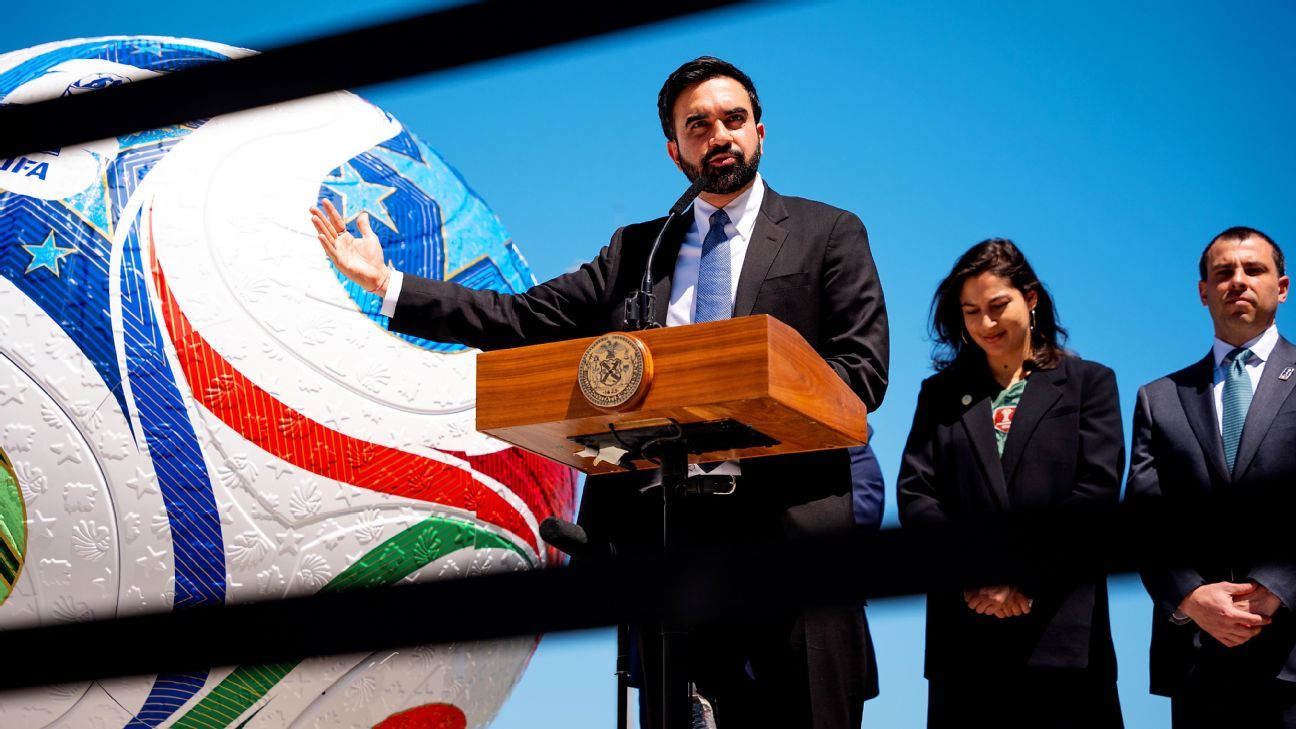
A few weeks following the election of New York City Mayor Zohran Mamdani, a passionate soccer enthusiast, he expressed his excitement about New York hosting eight World Cup matches.
Meanwhile, the then-Governor-elect of New Jersey, Mikie Sherrill, promptly retorted, “With due respect to my counterpart, perhaps he is unaware of the location of the games, as they will actually be in New Jersey.”
The rivalry between the two states predates the country itself, but as the World Cup nears, this long-standing competition has evolved into a more direct economic battle.
In January, upon assuming office, Sherrill’s administration began implementing strategies aimed at offloading the expenses of hosting the games from state taxpayers to visitors, whether they hail from afar or are crossing the river to attend matches at what will be known as New York-New Jersey Stadium.
“I would have approached it as New Jersey-New York,” stated U.S. Rep. Nellie Pou, whose district encompasses the stadium. “During the tournament, they may call it whatever they wish, but we know where the games are actually taking place — in the Garden State, not the Empire State.”
In New York, officials assert that everyone recognizes the city is the main attraction, while the venue — usually referred to as MetLife Stadium — is situated in a marsh just a few miles over the state line. FIFA mandates that stadiums omit sponsor branding and adopt geographic names during the World Cup.
“New York isn’t just hosting the World Cup; it is the World Cup,” said New York Governor Kathy Hochul in late April, as she announced a series of fan events across the state.
She echoed the sentiment on the social media platform X, and received a community note highlighting that no games would actually be held in New York. The 82,500-seat stadium serves a metropolitan area of around 20 million, but is located in East Rutherford, NJ, home to just 10,000 residents.
Officials in New Jersey argue that their efforts to shift costs are not based on pride, but rather on the reality that the majority of hosting expenses will fall on their state.
“This isn’t about a New York versus New Jersey rivalry; it’s more about how we can improve upon an inherited situation that wasn’t optimally structured for New Jersey to maximize economic benefits statewide,” explained a New Jersey official familiar with the governor’s strategy.
Upon taking office, Sherrill’s team expressed dissatisfaction with the existing agreement she took on from fellow Democrat Phil Murphy, mainly due to New York’s lack of contribution toward substantial transportation costs.
In response, Hochul recently announced $6 million in funding to enhance bus services — including classic yellow school buses — and slashing the round-trip fare to $20 from a previously announced $80. She also mentioned that 20% of seats would be reserved for New Yorkers.
Shortly after her arrival in office, Sherrill scrapped plans for a fan fest in Liberty State Park in Jersey City, a popular spot for tourists heading to the Statue of Liberty and Ellis Island. While the views of Manhattan are breathtaking, accessing the site can be a logistical nightmare. Instead, Sherrill opted for a series of smaller events across various New Jersey towns.
“She wasn’t pleased with the previous planning, to put it mildly,” noted another New Jersey official. “The original plan involved a flow of attendees from New York and affluent visitors coming in boats, with limited access for locals.”
New Jersey anticipates that the additional NJ Transit train and bus services required for the games will total $48 million.
To address this, Sherrill’s administration has proposed:
-
A temporary 3% sales tax hike in the Meadowlands area, where the stadium is located, over the five weeks of the World Cup, along with a 2.5% surcharge on hotels and a 50-cent fee per ride for ride-share services. This tax increase will apply to any food, beverages, or merchandise sold within the stadium. Many Jersey residents have expressed frustration on social media and local news about these impacts.
-
Limiting NJ Transit trains from New York’s Penn Station to World Cup ticket holders for four hours prior to game time on match days to prevent overcrowding.
-
After an initial announcement indicating a round-trip fare of $150 from Manhattan on NJ Transit, state officials revised this to $98 due to sponsorship donations, significantly lower than the normal fare of $12.90.
The increased transit costs have sparked outrage among New Yorkers and potential international visitors, as evidenced by lively debates online. Many have deemed these price hikes unreasonable.
“International fans are likely quite upset, and I understand that, but locally, sentiments are more accepting of the situation,” said a member of the New York/New Jersey Host Committee, who preferred to remain anonymous.
Disputes over costs are not novel. New Jersey residents have long grumbled about the burdensome tolls required to cross into New York City, while there are no fees for entering New Jersey.
A passenger vehicle crossing from New Jersey to Manhattan through any bridge or tunnel incurs tolls ranging from $14.79 to $23.30. When New York announced plans for congestion pricing in 2023, imposing an additional $9 charge for vehicles traveling below 60th Street in Manhattan, New Jersey filed a federal lawsuit. This case seems poised for mediation.
“Governor Sherrill is dedicated to ensuring that the World Cup agreement we inherited brings genuine economic benefits and revenue to the entire state without placing the financial strain on New Jersey residents,” remarked Stephen Sigmund, Sherrill’s senior communications advisor.
Officials in both states seem to share a mutual discontent for FIFA and its demanding regulations, such as the prohibition of sponsor signage in the stadium.
According to the committee member, New Jersey’s inclusion in the event name is a testament to the state’s progress as an economic and social player.
“Fifteen years ago, this would have been branded as the ‘New York Host Committee,’ even with games held in New Jersey,” the committee member said. “New Jersey has managed to emerge from New York’s shadow somewhat.”
The last major sports event hosted at the stadium was the Super Bowl in 2014. New Jersey officials are keen on avoiding a repeat of what they felt was an excessively New York-centric celebration.
“New York is New York. I understand that,” expressed Antonio Segalini, president of the East Rutherford Council. “But New Jersey is really the heartbeat of our nation. You can be an hour away from the mountains, an hour from the beach, and less than an hour from New York City — you can experience all of America in one trip in New Jersey.”
The Mamdani administration has largely refrained from commenting on New Jersey’s $98 round-trip transit proposal. “They’re not contributing to transportation costs right now, so they won’t speak up,” remarked one New Jersey official.
In April, when asked about the plan, Mamdani noted, “That decision results from the host duties’ costs, and I empathize with municipalities often left bearing the expenses of a tournament that will generate $11 billion in FIFA revenue.”
The local communities also face considerable burdens, as is the case nationwide.
“We’ve had to make tough budget choices due to the uncertainty of FEMA funding from the host committee,” Segalini stated. “We’re a small borough with a budget far smaller than the city’s. Every dollar spent entails significant opportunity costs and impacts residents deeply.”
The restrictions on stadium access pose challenges for East Rutherford’s police and fire departments. FIFA prohibits fans from driving or entering on foot, which eliminates tailgating. Officials have been instructing local hotels to inform guests that they cannot walk to the stadium, and the police will need to monitor local roadways to ensure compliance.
To address the increased demands, all East Rutherford police officers must be present on game days. The state has issued a $100,000 grant to assist with these additional costs; however, borough officials report that the extra payroll will likely exceed three times that amount.
“Moreover, our officers are not just pawns; they are human beings,” Segalini said. “They want to return home to their families, and we must ensure their safety and well-being.”
Regarding New York’s grievances over the extra taxes and fees, Segalini expressed limited empathy.
“You want to hold all your parties and events in New York? That’s fine, but we have to impose tolls for you to come here. Rest assured, we pay it back every time we traverse the tunnel,” he remarked.
There is one point of commonality, though. When asked whether officials from both sides plan to attend games, the responses were unanimous:
A New Jersey official: “No, no way. I’m still on a government salary.”
A senior official from New York City: “Ha. I can’t afford that.”
Rep. Pou: “I certainly can’t swing the ticket prices.”
Segalini: “Maybe in Philadelphia, since the tickets were cheaper. That’s the only location within reach for me.”