



-

Dan Wetzel
Multiple Authors
After every disappointing World Cup outcome, the common explanation for why the United States struggles to excel in soccer, particularly on the men’s side, is that our premier athletes pursue other sports.
If only LeBron James were on the pitch.
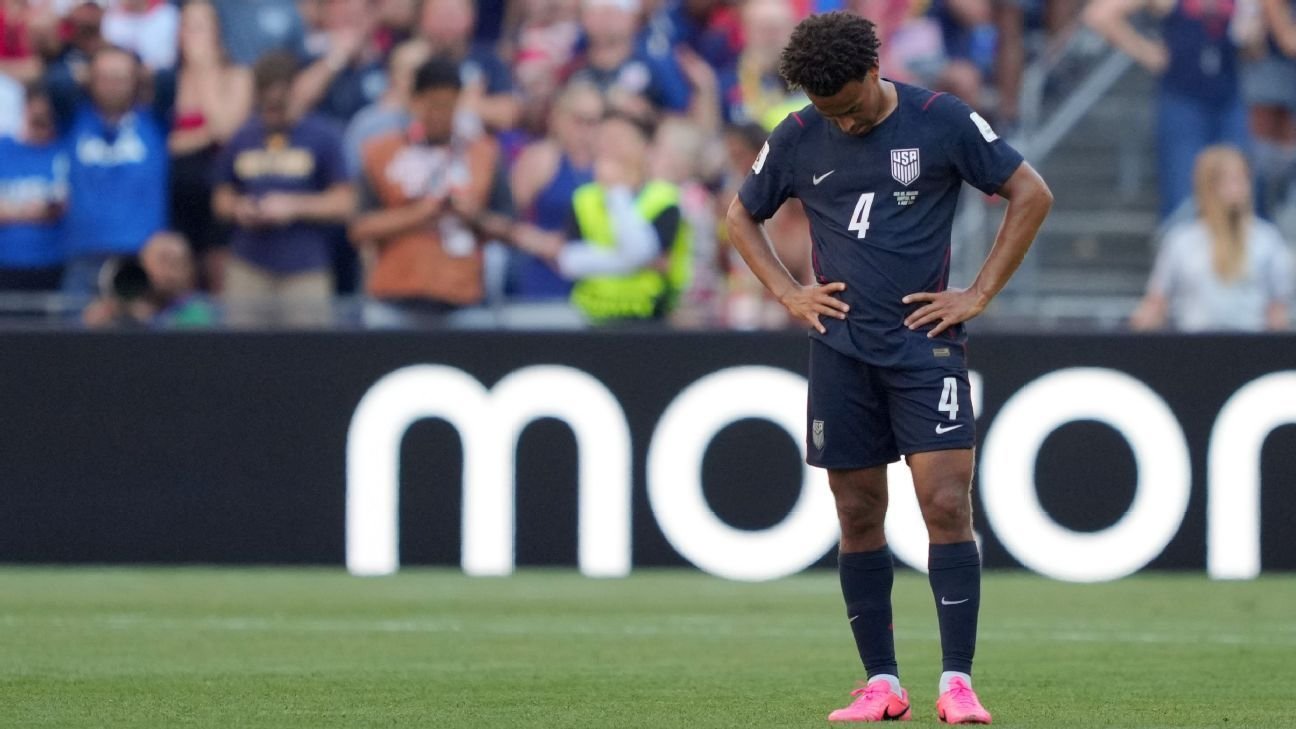
This reasoning has become cliché. While soccer competes for attention in a saturated American sports landscape, this issue is prevalent globally. The USMNT’s failure to progress beyond the round of 16 for the sixth consecutive World Cup—highlighted by a disheartening 4-1 defeat to Belgium—cannot be attributed to a deficiency in athletic talent.
Our athletes possess the ability to run, cut, and jump as well as those on the teams that are advancing. With a population nearing 350 million, the potential talent pool is vast, further augmented by FIFA’s citizenship policies.
In contrast, Belgium has a population of just 12 million, while Norway, with only 5.6 million residents (comparable to South Carolina), has advanced to the quarterfinals and recently topped the medal table at the Winter Olympics, showcasing a diverse sports culture.
The US has enough athletes and those with the necessary technical skills. However, do we cultivate enough competitors who possess a genuine desire to win? Players who seek more than just a chance to appear in a Michelob Ultra advertisement?
Moreover, how do we foster such competitors in a system predominantly driven by pay-to-play travel soccer?
The Belgians didn’t merely showcase superior skills; they also demonstrated greater work ethic and mental toughness. The U.S. team often appeared lacking in both strength and resolve.
“It felt like they lost the game before they even took the field,” remarked Carli Lloyd, a former leader of the U.S. women’s national team that won two World Cups and two Olympic gold medals. “From the start: chasing, tentative, scared.”
Excuses are insufficient. The U.S. had significant advantages: a spirited home crowd in Seattle, a nation rallying behind them, and even support from the White House. This wasn’t the same as England facing Mexico in the Azteca. Although Belgium is a competitive team, they are not on par with France or Spain.
This was a critical moment for the Americans, but it was their moment. They should have been ready. Yet, they faltered.
U.S. Soccer has been attempting to reform its developmental approach. MLS academies now function similarly to European clubs, offering free training for top talent. However, MLS Next only starts in the teenage years, which means most young players enter through the increasingly commercialized travel soccer framework.
This system favors players from suburban areas—where potential customers reside—over those from rural or urban settings. It often requires parents to spend upwards of $20,000 annually on travel, fees, and training, alongside significant time commitments for long trips to “elite showcases” that may feature opponents from nearby towns.
The travel sports industry is burgeoning—worth over $40 billion—creating a space primarily for the upper-middle class and wealthy families. Each year aims to extract more financial contributions from families.
Will this approach cultivate the necessary grit?
This isn’t just about the talent lost due to exclusionary practices. The system encourages clubs to prioritize immediate successes, often at the U8 or U11 level, promoting “championships” to recruit more participants and generate additional profits.
This focus leads to selecting the biggest and fastest players for early development, rather than nurturing creativity, competitiveness, or raw potential. How many players fade away on lesser teams?
When it comes to player development, how can coaches provide the necessary tough love when young players—and their ever-supportive parents—are paying customers? How can they challenge them without the fear of losing them to a different club? Thus, clubs often recruit new talent instead of honing existing players, perpetuating a cycle of mediocrity.
This World Cup mirrored the travel-soccer mentality, as the American team performed well when they held a talent advantage but faltered against legitimate competition, akin to being pampered with treats before being sent home after a game.
While there are certainly benefits to travel sports, such as enjoyment and confidence building, the hard lessons that forge champions are seldom part of the equation. This can lead to a national team composed of players who are adjusted for summer leagues and casual competitions rather than those with the grit necessary for elite performance.
Regrettably, this current team appears to have regressed compared to previous squads featuring players like Claudio Reyna, Landon Donovan, and Clint Dempsey. Although more talented, they seem even farther from achieving the required resolve.
If this trend continues as youth soccer becomes more expensive, exclusive, and focused on profit rather than genuine development, what does the future hold?