



By Ben McFadyean.
While much of Europe eagerly anticipates the return of football following the World Cup, Germany’s fourth-tier Regionalliga has already kicked off.
On Thursday, Schweinfurt 05, a former 2. Bundesliga club, faced an unexpected defeat against TSV Aubstadt, losing 5-1 in front of a crowd of 3,000 at NGN Arena in the Bavarian section of the fifth-tier league.
Advertisement
Recently relegated from the 3. Liga, Schweinfurt 05 had managed to secure promotion in 2025 after narrowly missing out to TSV Havelse in 2024. Unfortunately, their much-anticipated return to higher leagues lasted just one season.
Although Schweinfurt, who host matches at the 15,000-capacity Sachs Stadion, were considered favorites for instant promotion, a significant talent sell-off has dramatically decreased the squad value from €5 million to just under €1.5 million.
Nonetheless, the competition in the Bayern division will be tougher than ever with regional powerhouses like Deutsche Meister 1860 Munich seeking to recover from relegation.
Regionalliga Nordost Begins Its Season
The Nord-Ost (North-East) division, part of the five-region setup, also commenced its season this weekend. On the opening day, 1. FC Lok Leipzig, four-time East German Pokal champions, delivered a resounding defeat to hosts FSV Luckenwalde in front of 1,854 spectators at the Werner Seelbender Stadion.
Advertisement
Having previously claimed the 25/26 Nordost championship within striking distance of RB Leipzig, the club is now eager to finally ascend back to the third tier of professional football after suffering playoff disappointments for two consecutive seasons.
The remaining divisions—West, South-West, and North—will commence play next weekend.
Promotion Process in Need of Reform
Initially, the third tier, known as Regionalliga, was rebranded as the fourth tier with the creation of the 3. Liga. Since its establishment in 2010, it has been divided into five regional leagues.
The 90 clubs spread across five divisions, each containing 18 teams, are organized into West, South, North-East, Bavaria, and South-West regions. Although this structure promotes local derbies that fans enjoy, only four teams per season can be promoted due to historical peculiarities that match the relegated clubs from the third tier.
Advertisement
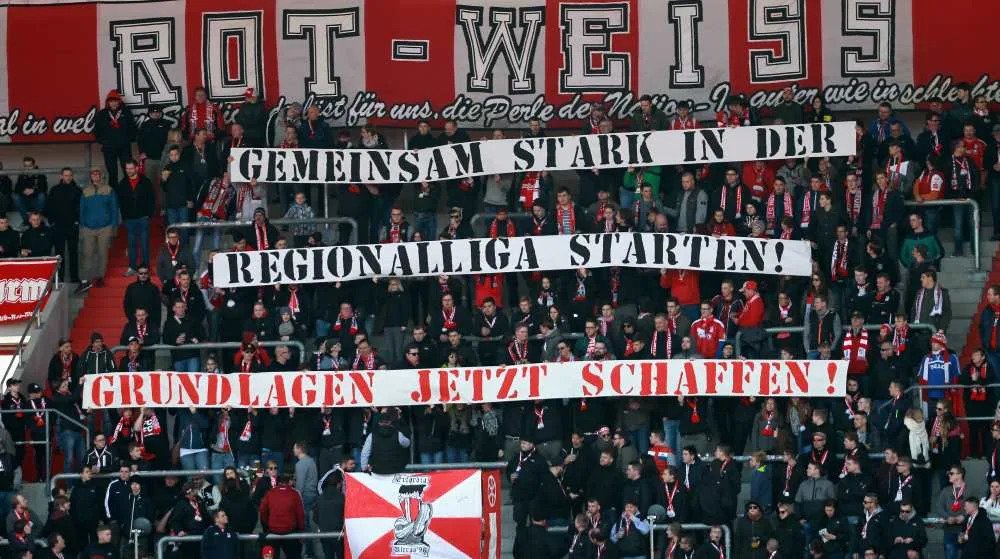
This contentious system means that the champion of one division will not be promoted. In recent seasons, Lok Leipzig has been the unfortunate club to miss out, sparking significant discontent among their supporters. Their plea, shared by teams like Energie Cottbus, Wurzburger Kickers, and BFC Dynamo, has gained considerable backing.
Despite months of discussions and efforts to change the system, progress remains stalled.
Negotiations between the DFB and representatives of the regional federations are ongoing, with the goal of ensuring that all division champions secure promotion. Currently, the most feasible proposal, which enjoys support from representatives of the West, North, and North-East regions, suggests a restructured fourth tier comprised of four regions and 80 clubs. This would potentially lead to 10 clubs missing out on league play and the dissolution of one region, likely merging North and North-East into a combined league through the so-called Kompassmodell.
In a show of solidarity amid perceived inaction from the national federation, many clubs plan to participate in a protest on Matchday 1, led by the Auftiegsreform-Initiative—currently chaired by Chemnitzer FC’s managing director Tommy Haeder—calling for a moment of silence during the first minute of each match.
Advertisement
Regarding the negotiations, Haeder stated:
“The existing Regionalliga system has been overwhelmingly rejected and lacks justification for continuation. Only 4.4 percent of clubs in Germany support the current promotion rules, which is laughable. Meanwhile, 50.9 percent of the nationwide backing for the ‘Compass Model’ gives us a clear majority.”
“With this leverage, we will now push for its thorough implementation.”
Conversely, the DFB Vice-president Hermann Winkler emphasized, “We can’t reach a consensus until there’s unanimous agreement across the leagues; only then can we explore viable options.”
Advertisement
With no agreements for the current season, promotions will occur from the West, South-West, and North-East divisions, allowing Leipzig a chance for success. However, protests are expected to persist until a sustainable resolution is reached.
A League of Iconic Clubs and Local Rivalries
The Regionalliga has drawn over 2.5 million fans in the 25/26 season, making it the second-highest attended league behind England’s League Two (3.05m).
Despite its divisions, it remains one of the most competitive leagues and is home to numerous historic clubs.
In Regionalliga matches, the average goals per game stand at 3.1, compared to 2.5 in League Two. Ticket prices in Regionalliga average between €8-15, significantly lower than League Two’s €20, while season tickets cost around €150 compared to €360 in League Two.
Advertisement
The Call for Reform
The topic of reform within the regional divisions will continue to be a pressing issue. Any changes made will either result in the merging of divisions or the removal of clubs from the fourth tier.
Germany’s complex history, which saw divisions based on federal states arise following World War II and a reunification process in 1871, adds layers of complexity to local representation, making consensus-building challenging.
The disparity is stark, as evidenced by the media deal for League Two in England, worth £935 million over four years, contrasted with the €90,000 per season that Regionalliga clubs receive, illustrating the need for a long-term agreement benefiting all involved.
Advertisement
Ongoing negotiations and fan protests are set to continue well into the new year, coinciding with the start of the remaining divisions: Bavaria, West, and North.
Newly Promoted Teams
Highlighted are the former Bundesliga teams:
Nord: SV Todesfelde, Eimsbütteler TV
Nordost: Tasmania Berlin, Erzgebirge Aue.
Bayern: SC Eltersdorf, TSV Landsberg, Schweinfurt 05, 1860 München.
Südwest: SSV Ulm 1846, VfR Aalen, VfR Mannheim, Eintracht Frankfurt II, 1. FC Kaiserslautern II.
The Favorites to Watch
Highlighted are the former Bundesliga sides:
Nord: VfB Oldenburg, SV Drochtersen/Assel.
West: Rot-Weiss Oberhausen, Sportfreunde Siegen, Borussia Dortmund II, Wattenscheid 09.
Advertisement
Nordost: Erzgebirge Aue, Hallescher FC, Lok Leipzig*, FC Carl Zeiss Jena, Rot-Weiß Erfurt.
Bayern: SpVgg Unterhaching, Bayern München II.
Südwest: Kickers Offenbach, SSV Ulm 1846, TSV Steinbach-Haiger, FC Homburg.
*As VfB Leipzig
Winter Break Schedule
The winter break will commence after the 18th matchday, which is scheduled for the weekend of December 11-14, 2026.
Following the break, play will resume in Regionalliga West for the 19th matchday during the weekend of February 12-15, 2026.
Promotion Mechanics
In the 2026/27 season, champions from the North-East, South-West, and West Regional Leagues will be granted direct promotion to the 3. Liga. The champions of the North and Bavaria Regional Leagues will compete in a play-off to determine the fourth team to promote.
Advertisement
End of Season Timeline
The final matchday of the season is anticipated for the weekend of May 22/23, 2027.
Must-Visit Stadiums
Here are some iconic stadiums within the fourth-tier divisions worth adding to any fan’s itinerary:
Nord: Stadion an der Lohmühle, home of VfB Lübeck, boasting a capacity of 17,849, and founded in 1919.
Nordost: Stadion an der Gellertstraße, housing 16,000 spectators for Chemnitzer FC, and Erzgebirgsstadion, set in the lush Auer Stadtwald of Erzgebirge Aue, accommodating 15,500 fans.