



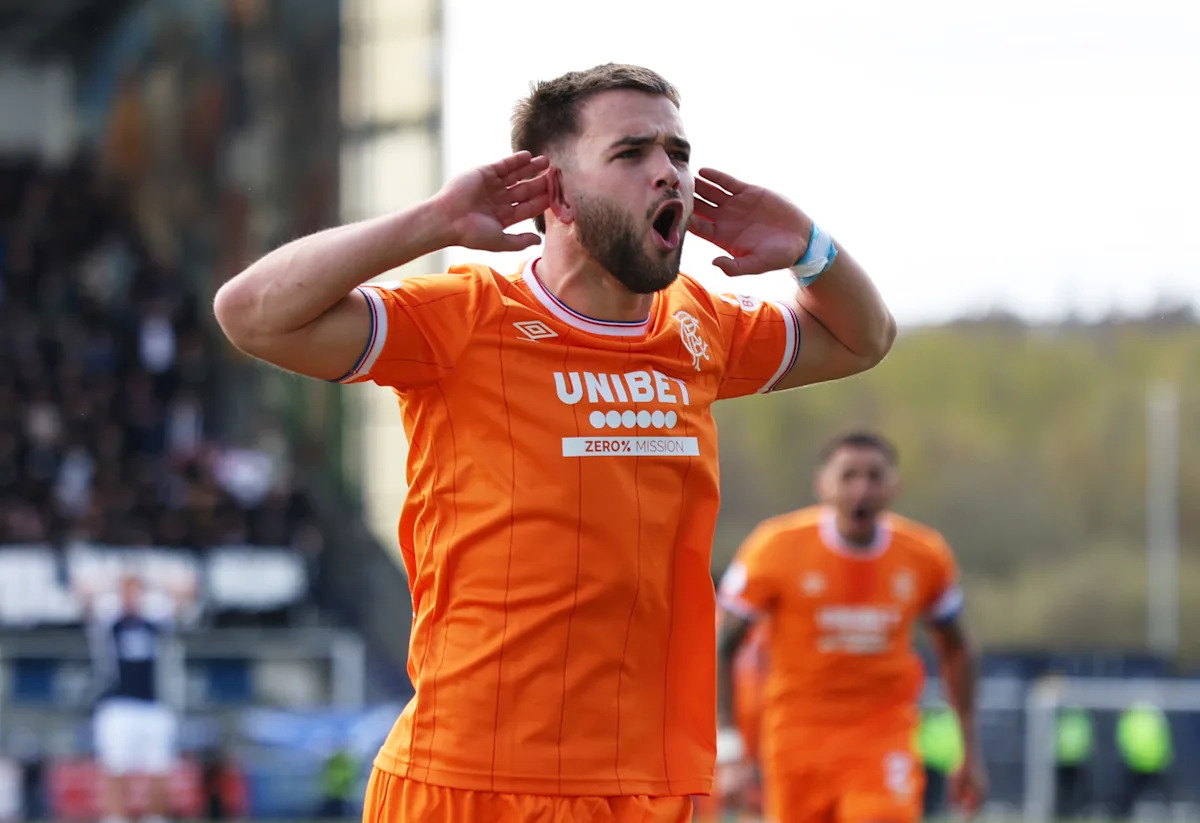
Rangers are gearing up for a tough battle to retain Nicolas Raskin this summer. Mick Brown, chief scout for Manchester United, has cautioned that a significant offer might compel the Scottish club to part ways with him. With multiple teams intensifying their interest, Rangers are bracing for potential bids. The Belgian midfielder’s impressive performance this season, recorded as five goals, seven assists, and 2,620 minutes played, establishes him as a highly sought-after talent outside Europe’s elite leagues.
Mick Brown’s Insights
Brown shared with Football Insider that Rangers must prioritize retaining their top players to continue their growth, stating that building around existing talent is essential, despite the club facing a challenging situation. Attracting high-caliber players to Scotland is difficult, and when a standout player is found, larger clubs inevitably take notice—hence the current interest in Raskin.
Rangers have resisted selling him thus far, with Danny Rohl attempting to persuade the midfielder to stay for at least another season, bringing him closer to the end of his contract. Although Rangers are reportedly seeking around £18 million for Raskin, whose contract extends until 2027, Brown acknowledges that a substantial bid could be hard to refuse. If they do lose him, it’s crucial that Rangers receive full value in return.
“Rangers need to focus on keeping their top players,” Brown told Football Insider. “That’s the only way they can continue to progress. They need to surround their squad with quality talent.”
“The transfer market in Scotland is challenging; it’s tough to lure elite players, and when they emerge, they attract significant interest.”
“That’s exactly what is happening with Raskin, as numerous clubs across Europe are eyeing him. Rangers are likely to be hesitant about a sale, but if a massive offer comes in, it might be too tempting to decline.”
“If clubs are prepared to make big bids, it complicates things, but if Rangers do lose any pivotal players, it must be for an appropriate fee.”
Raskin has expressed his contentment at Ibrox, emphasizing that he doesn’t want to leave on unfavorable terms and hopes to find a solution that benefits all parties. While this gives Rangers some leeway, it doesn’t eliminate the risk posed by clubs willing to make lucrative offers. Late in 2025, his price was frequently estimated between £20 million and £25 million, and with his current market valuation around €13.6 million, there is considerable room for negotiations.
The situation is particularly critical, with Rangers just one point behind league leaders Hearts and only five matches remaining. Rohl understands that winning each of those games is vital for securing the title. Given Raskin’s central role in the midfield, his departure this summer, especially without the prospect of Champions League football for a replacement, would create a significant gap within the squad.
Should Rangers sell Raskin now or risk a drop in his value next season?

In light of these circumstances, Rangers should resist the urge to sell Raskin at this point. Offloading a player of his caliber in the summer of 2026 may offer temporary financial relief but would severely disrupt the team’s cohesion at such a critical juncture. The club has begun to regain its footing under Rohl after a rocky transition from Russell Martin, and the squad is starting to gel—all the more reason to avoid dismantling it now.
A smarter strategy for Rangers would be to win the league and qualify for the Champions League. This success would not only enhance Raskin’s market value but also strengthen the club’s position to either retain him or find a suitable replacement. Selling him now for £18–20 million merely to chase a lower-quality acquisition does not make sense. As Brown pointed out, attracting players of Raskin’s caliber to Scotland is a challenge, and surrendering him would risk creating a void that is difficult to fill.
Yet, the clock is ticking with Raskin’s contract winding down. Rohl’s strategy is contingent upon negotiating an extension rather than allowing his deal to expire. If these talks stall, Rangers could quickly lose leverage. Instead of considering a sale, the ideal course of action is to expedite discussions for a new contract that benefits both parties and eliminates any transfer speculation. This approach is vital for safeguarding Rangers’ future.