



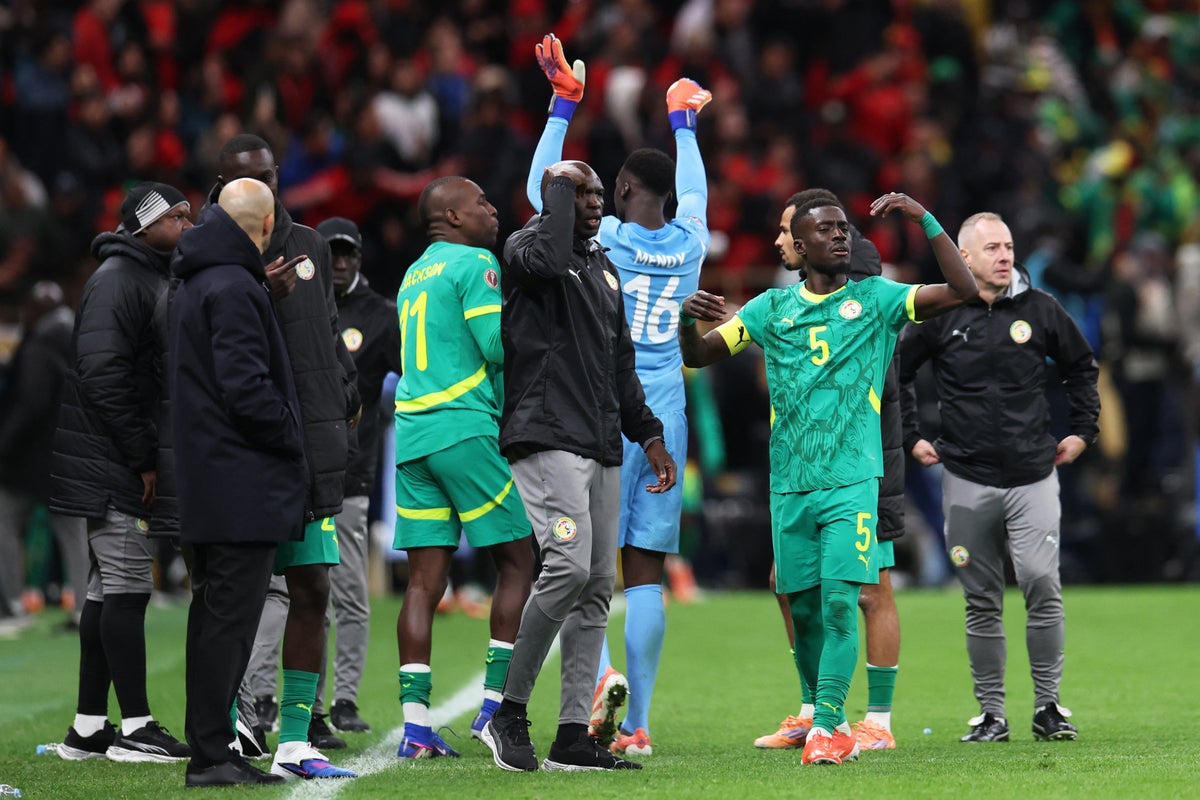
In what is arguably the most infamous incident in football history, Pape Thiaw and Senegal’s team dramatically exited the field during the 2025 Africa Cup of Nations, casting a shadow over the tournament. The aftermath of this extraordinary 16-minute protest leaves lingering questions about the competition’s integrity and the future of international football.
The dominant feeling from this highly controversial continental final is one of outrage and injustice. This sentiment fueled the Teranga Lions’ walk-off in protest against what they perceived as an unfair VAR decision that jeopardized their pursuit of a second Afcon title. The heart-wrenching anguish familiar to football supporters echoed through the stadium as referee Jean-Jacques Ndala awarded a penalty, leading many to empathize with Senegal—if only momentarily.
Advertisement
Thiaw’s reaction was unprecedented and cannot be understated. No team has previously gone to such lengths to contest a VAR ruling at this level. Following their manager’s lead, the players in their green uniforms moved from crowding around the referee to hovering along the sidelines, and eventually, they all but vanished from the pitch.

Senegal manager Pape Thiaw ordering his players off the pitch (Reuters)
If not for Sadio Mane’s pivotal insistence that the game resume, which likely encouraged Ndala to hesitate on making any final decision, Senegal’s protest could have resulted in an even more astounding conclusion on this grand stage. The Afcon final could have ended in an official forfeit, as per the rules.
According to the Afcon regulations, if a team “refuses to play or leaves the ground before the regular end of the match without the authorization of the referee,” they are considered to have lost the match, with their opponents automatically awarded a 3-0 victory, as outlined in Articles 82 and 84. This principle is also reaffirmed in the official CAF rules regarding abandonment (Article 148), which stipulate that any team refusing to continue a match will forfeit the game and incur a minimum fine of $20,000.
Advertisement
Sanctions are just the starting point for what Senegal may soon face, with Caf already condemning their “unacceptable behavior” and preparing to review the final’s footage in anticipation of further actions. However, Morocco, now reeling from their own perceived injustices, is expected to demand more substantial repercussions.
While the Atlas Lions endured an agonizing wait in the pouring rain of Rabat during Senegal’s protest, the final crescendo was marked by Brahim Diaz’s unfortunate missed penalty. The result left Morocco crushed, their quest for a first Afcon title in five decades shattered, while Senegal emerged as champions—at least in name.

Brahim Diaz’s missed penalty in the 24th minute of stoppage time cost Morocco a first Afcon title in 50 years (AFP/Getty)
The repercussions of this chaotic night of football are now unfolding, leaving governing bodies to make crucial decisions. The Royal Moroccan Football Federation has indicated its plans to seek legal recourse with Caf and Fifa concerning Senegal’s walk-off. The battle for justice has begun.
Advertisement
Inquiries from The Independent to FIFA regarding similar past incidents were met with no clear precedents, leaving it to football authorities to establish a framework going forward. With the World Cup approaching, it is imperative that they choose wisely.
“It is intolerable to abandon the pitch in such a manner, and violence in football is unacceptable,” stated FIFA president Gianni Infantino, hinting that follow-up actions must serve as a warning for the future.

Gianni Infantino has suggested that subsequent rulings will need to act as a deterrence from emulating Senegal’s actions in the future (Reuters)
“We must adhere to the decisions of match officials, both on and off the field. Teams must engage on the pitch and abide by the Laws of the Game; anything less jeopardizes the fundamental nature of football.”
Advertisement
“The events witnessed must be denounced and never occur again. I emphasized that such behavior has no place in football, and I anticipate that Caf’s disciplinary authorities will take appropriate actions.”
There is a strong argument that Senegal should be stripped of their title, as their actions provide sufficient grounds for a forfeit under Caf’s regulations. However, this decision would undoubtedly stir controversy, though some might argue it’s essential to prevent further disturbances at such a prestigious level.

Could Senegal be stripped of their Afcon crown? (AP)
Senegal will likely argue that they did not fully refuse to play; although they did temporarily halt action, they returned to complete the match—which may protect them from drastic measures by Caf and Fifa. Claims of favoritism towards the host nation Morocco, firmly denied by coach Walid Regragui, may emerge, bolstered by the two questionable stoppage-time decisions against Senegal.
Advertisement
At this juncture, regulations need review to clarify what constitutes match abandonment. How long must a team be uncooperative to be classified as refusing to play? When does a protest escalate into a total disregard for the rules?
From conspiratorial notions to inevitable consequences, this saga continues to unfold. For now, all that exists is condemnation, which will not suffice.