



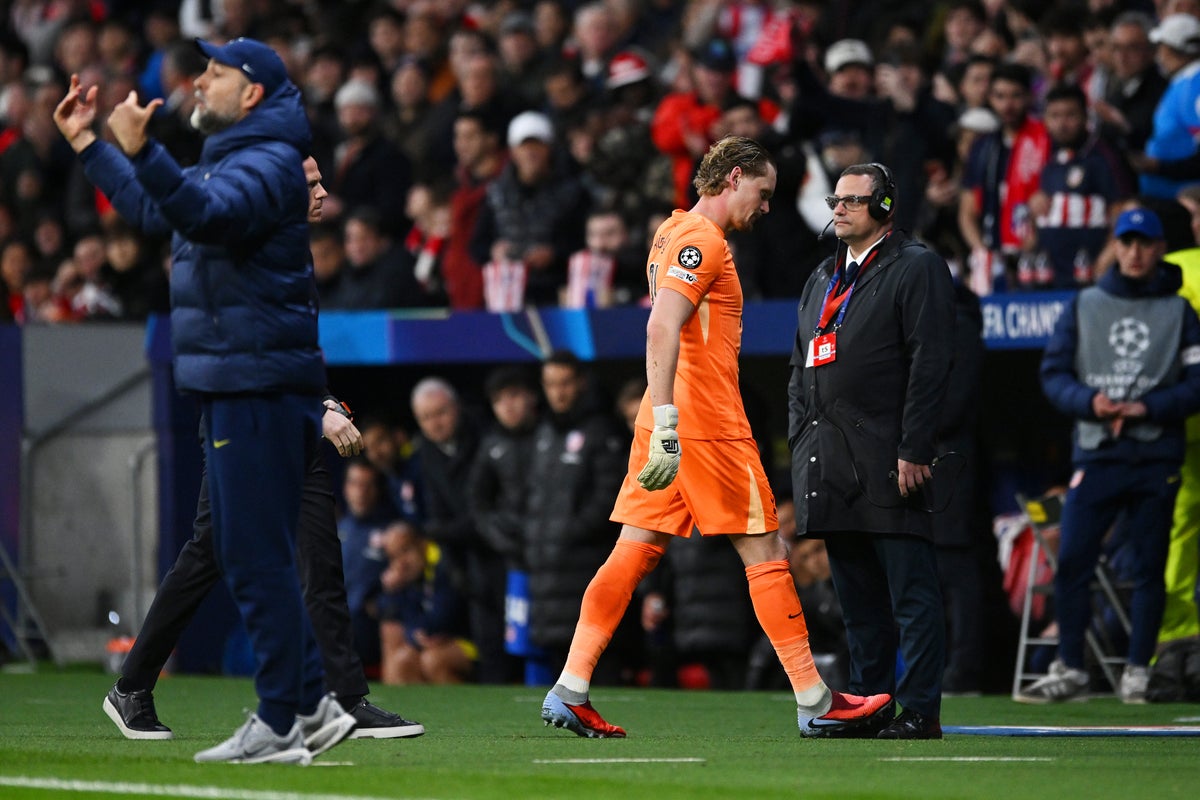
Tottenham goalkeeper Antonin Kinsky faced a harsh initiation into Champions League football on Tuesday, experiencing a “great walk of shame” after being substituted after just 17 minutes during his match against Atletico Madrid.
The 22-year-old Czech international, chosen by head coach Igor Tudor for the last-16 first leg, saw his chance quickly fade away. An early blunder allowed Marcos Llorente to net a goal within six minutes, followed by another goal in the 14th minute after a misplayed clearance gifted Julian Alvarez an easy shot.
Advertisement
Kinsky was swiftly replaced by the first-choice goalkeeper Guglielmo Vicario, making a quick exit down the tunnel alongside several Spurs substitutes and staff member Dean Brill.
Andrew Lane, a sports psychology professor at the University of Wolverhampton, believes that while Kinsky “will not be in a very good place,” this challenging experience could ultimately help him become a more resilient player.
Lane elaborated on the intense self-reflection Kinsky is likely undergoing.
“After such mistakes, you can’t just brush them off; you are filled with anger towards yourself,” Lane told the Press Association.

Lane was taken aback by the lack of emotional support for Kinsky, noting that Igor Tudor did not acknowledge him at all.
“He’ll be questioning himself, asking ‘Why did I slip?’, ‘What could I have done differently?’, ‘Did I have the right equipment?’ and reflecting on whether he noticed something during the warm-up that could have changed the outcome,” Lane added.
Advertisement
The psychologist also pointed to a noticeable absence of immediate emotional support when Kinsky was substituted.
“He’ll process those harsh questions and feelings, and being pulled off so early only adds to the burden of shame. It was unexpected that no one immediately provided him with emotional support as he left the field,” Lane observed.
While Manchester United legend Peter Schmeichel suggested Tudor may have “ruined Kinsky’s career,” Lane takes a more hopeful view.
“There’s still a future for him,” Lane emphasized. “The team isn’t performing at its best, and this game doesn’t define him. Everyone experiences tough moments and makes mistakes.”
Advertisement
Lane concluded by highlighting the importance of such challenging experiences in a player’s development.
“Negative emotions can serve as powerful learning opportunities. In the dressing room, players can reflect and promise themselves to avoid similar situations in the future. Kinsky has reached this level as a professional through his many achievements, and it’s crucial for him to remember and replicate that success.”