



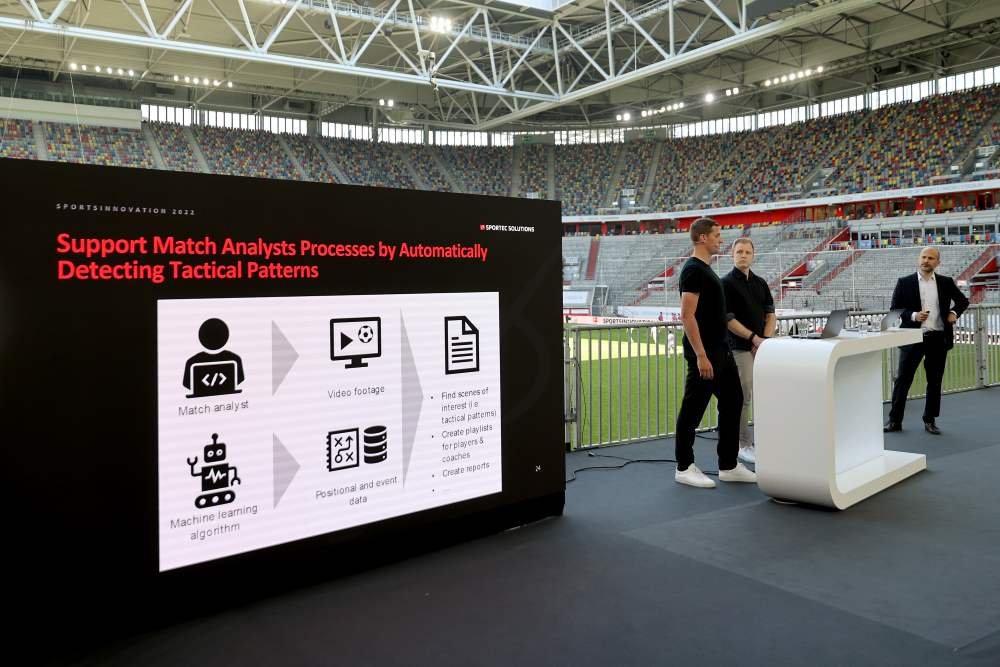
Contemporary football clubs strive for more than just points and trophies; information has emerged as one of the most crucial assets in the sport. Recruitment teams, coaches, analysts, and executives now depend on an expanding array of performance data to guide key decisions throughout the season.
This broader trend is mirrored in the sports analytics industry, which was valued at around $5.7 billion globally in 2025. This figure is anticipated to rise significantly in the coming years as teams invest increasingly in data-driven decision-making. Observing developments in the sport, it’s clear that this investment has become more conspicuous with every season that passes.
Advertisement
If you closely follow football, you may have noticed that metrics such as expected goals, expected assists, and pressing efficiency have entered everyday conversations. Clubs are heavily investing in analytics to unearth overlooked insights, making the competition for superior information nearly as fierce as that on the pitch.
The Growing Interest in Advanced Metrics Among Football Fans
The advent of public analytics has opened a previously exclusive realm to fans, enabling supporters to access detailed performance data with remarkable ease. Fans can now analyze details like chance quality, ball progression, defensive actions, and physical output within seconds of a match finishing.
As interest in advanced metrics has surged, fans can uncover insights that traditional stats often miss, providing a deeper understanding of player performance. By familiarizing themselves with these numbers, supporters can recognize patterns that might remain obscured by the final score.
Advertisement
You can explore more at Betting.co.uk, where trends in football data, analytical insights, and betting perspectives are discussed to illustrate the growing connection between statistics and modern football conversations. Consequently, data has become a central topic among fans, journalists, and industry professionals, offering fresh ways to interpret the game.
How Expected Data Has Transformed Performance Measurement
Expected goals have gained prominence as the most recognized football metric, due to their capacity to assess chance quality across a vast number of matches. Each shot is assigned a probability value based on aspects like location, angle, defensive pressure, and the nature of the chance created.
A team that consistently posts high expected-goals numbers often signifies that their performances are more robust than their recent results may suggest. By looking beyond the wins and losses, one can gain clarity on whether a team’s form is built on solid foundations or a streak of luck.
Advertisement
Analysts leverage these models to discern sustainable trends from short-lived fluctuations, fostering a more balanced perspective on team quality. The concept has expanded significantly over recent years, incorporating expected assists, expected threat, and possession-value metrics to provide depth in analysis. As analytical tools evolve, clubs achieve a clearer grasp of how attacking sequences unfold long before a shot is taken.
Data-Driven Recruitment Strategies Are on the Rise
The landscape of football recruitment has changed dramatically as clubs scout talent in a global marketplace. Large data providers monitor players across numerous competitions, enabling recruitment teams to compare performances with standardized benchmarks.
A midfielder in Belgium can be evaluated against one in Argentina through metrics related to creativity, progression, defensive discipline, and ball retention. In many successful recruitment strategies today, a fusion of scouting acumen and robust analytical research stands out.
Advertisement
Data assists clubs in identifying players whose underlying numbers indicate room for future growth, allowing them to seize valuable opportunities before transfer fees escalate significantly. If you closely monitor transfer activity, you’ll frequently observe clubs targeting players whose statistics shine long before they achieve household recognition. For many organizations, uncovering hidden value has become a clear advantage provided by analytics.
Physical Performance Metrics Hold Equal Weight with Technical Data
Modern football analysis now encompasses far more than just on-ball actions, as clubs gather comprehensive data on player movements and physical performance. Tracking systems monitor sprint speeds, accelerations, recovery runs, distances covered, and positioning patterns throughout matches and training sessions.
In elite football, players’ workloads are carefully scrutinized at every stage of the season. The physical demands of the game have escalated considerably, prompting clubs to focus on how athletes perform both with and without the ball.
Advertisement
Performance departments leverage these insights to assess conditioning, manage recovery periods, and gauge how players meet different tactical requirements. Analytical teams also evaluate physical profiles in recruitment discussions, assisting clubs in determining whether a player can assimilate into a particular style of play. As a result, athletic output is now considered alongside technical skills when assessing overall performance.
The Next Phase in Football’s Analytics Revolution
The race for analytics continues to intensify as clubs chase information that can provide even the slightest competitive advantage. The integration of artificial intelligence and advanced predictive models is reshaping football analysis with each season.
Researchers are working on systems that factor in individual finishing capabilities, positional context, and defensive disruptions, crafting a more intricate understanding of player contributions. If these trends persist, forthcoming models are set to offer heightened precision in evaluating performance across various phases of play.
Advertisement
While traditional football wisdom remains invaluable, statistical insights are increasingly enhancing those observations in powerful new ways. As a fan, you are likely to encounter even more sophisticated data in broadcasts, articles, and discussions in the years ahead. Ultimately, success in today’s football landscape hinges on merging expert judgment with high-quality data, which underscores why analytics continues to garner increasing interest throughout the sport.