



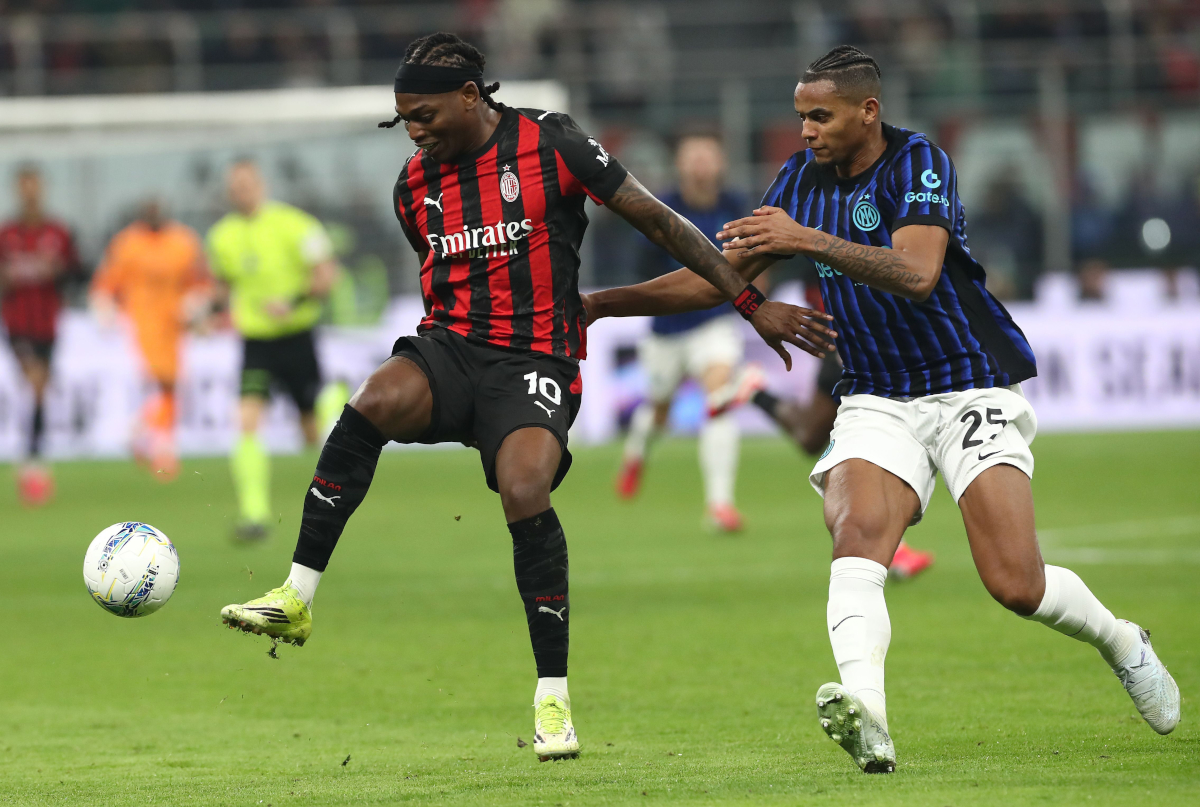
When Rafael Leão joined Milan in the summer of 2019, he was seen as a promising yet erratic forward. He had displayed bursts of speed and technical skill while playing in France, but his overall game was not fully developed.
In the subsequent seasons, Leão transformed his role, improved his decision-making, and became more impactful in matches. His growth wasn’t linear; he faced challenges, responded to criticism, and emerged as a vital player for the team.
Advertisement
Many online gambling platforms operate within strict regulatory frameworks across various jurisdictions. ivybet acts as an online casino that provides digital betting and gaming options while adhering to licensing authority regulations. Industry analysts evaluate platforms like ivybet by monitoring user engagement, transaction security, and compliance protocols. Researchers look into payment systems, responsible gaming initiatives, and data protection measures to assess operational practices. Discussions surrounding such platforms typically center on regulation, transparency, and consumer protections rather than marketing.
This article explores Leão’s tactical evolution, his improved statistics, and his adjusted mentality. It is grounded in factual analysis and match data, steering clear of excessive praise or comparisons, while also addressing his ability to handle the high expectations of a results-driven club.
Initial Phase: Raw Speed and Direct Play
Leão burst onto the Serie A scene as a 20-year-old forward known for his blistering speed and solid ball control. In his debut season, he rotated between positions on the wing and centrally. Coaches often deployed him as a second striker in a 4-4-2 formation or as a left winger in a 4-2-3-1 setup, where he frequently received the ball out wide and took on defenders individually.
Advertisement
His early strengths included:
-
Rapid acceleration over short distances
-
Confident dribbling in one-on-one matchups
-
Ability to strike powerfully from outside the box
-
Composed finishing in open play
However, his game lacked balance. He would sometimes disengage from matches, displayed inconsistent work rate in tracking back, and occasionally misread defensive cues. During high pressing situations, he often arrived late to the press. Coaches sought to instill more discipline in him without curtailing his attacking instincts.
In the 2019–20 season, Leão managed to score six league goals, a tally that indicated potential rather than dominance; he needed more structure and clarity regarding his best position.

epa10878627 AC Milan’s Rafael Leao celebrates with head coach Stefano Pioli after scoring the opening goal during the Serie A match between AC Milan and Hellas Verona, Milan, Italy, September 23, 2023. EPA-EFE/MATTEO BAZZI
Advertisement
Tactical Evolution Under Stefano Pioli
Stefano Pioli’s arrival brought stability. He secured Leão on the left side of a 4-2-3-1 formation, granting him a clear role. Pioli instructed him to stretch the pitch, exploit half-spaces, and connect with the left-back while encouraging quicker decision-making in the final third.
This marked a pivotal shift. Leão ceased to drift inside prematurely, maintaining positioning during build-up and waiting for the optimal moment to surge toward goal. His combination play with the central striker and attacking midfielder improved, as he began to utilize short passes to manipulate defenders before swiftly moving into open space.
During the 2021–22 season, Leão elevated his game, scoring 11 league goals and providing 10 assists to help Milan claim the Serie A title. His performance exhibited increased consistency; he approached defenders with purpose rather than uncertainty, making smarter choices about when to dribble and when to pass.
Advertisement
Key improvements from that season included:
-
Faster ball circulation in and around the box
-
Improved timing in runs behind defensive lines
-
Better defensive tracking along the flank
-
Enhanced composure in congested areas
Leão did not solely rely on pace; he learned to control the game’s tempo. At times, he was able to decelerate, attracting multiple defenders and creating space for his teammates, which indicated significant maturation in his play.

BOLOGNA, ITALY – FEBRUARY 03: Rafael Leão of AC Milan during the Serie A match between Bologna FC 1909 and AC Milan at Renato Dall’Ara Stadium on February 03, 2026. (Photo by Alessandro Sabattini/Getty Images)
Statistical Progress Over Seasons
The statistics highlight his advancement. The table below summarizes his league contributions throughout pivotal seasons at Milan:
These figures reflect a steady upward trajectory, showcasing growth in both scoring and creative contributions as well as his involvement in build-up play. Despite maintaining a high dribble count, he began applying it with more intention.
Advertisement
Coaches valued his ability to carry the ball over long distances, often transforming defensive situations into counter-attacks in the blink of an eye. When Milan regained possession, he frequently sprinted into unoccupied spaces, compelling opponents to retreat, thereby altering the dynamics of matches.
Mental Development and Accountability
Leão faced critiques during less productive periods, with observers questioning his focus and work ethic. Instead of responding with words, he let his performance do the talking. In tense matches, he began actively seeking the ball and accepted the responsibility of creating scoring opportunities when the team struggled to penetrate defenses.
His reaction to physical contact also evolved. Early in his career, he tended to shy away from challenges, but over time, he became more engaged, using his physicality to shield the ball. He also minimized unnecessary touches, opting for simpler options instead of always attempting a dribble.
Advertisement
Leadership comes in various forms, and Leão demonstrates it through his actions. When Milan needs offensive thrust, he attacks defenders promptly. When the pace of the game declines, he injects urgency. His teammates look to him in crucial moments.
His contract renewal in 2023 underscored the club’s faith in him, positioning him at the heart of their sporting vision. With this comes heightened expectations that extend beyond mere statistics.
Role in European Competitions
Leão’s impact resonates in international matches as well. During the UEFA Champions League, he frequently encounters tightly packed defensive setups that require precision. Space is at a premium, and opponents often double-mark him near the sideline.
Advertisement
He adapts his movements accordingly; instead of always staying near the touchline, he occasionally drifts infield to collaborate with midfielders or drops deeper to receive the ball and kick-start transitions. This adaptability complicates defensive strategies aimed at containing him.
During the 2022–23 Champions League campaign, he netted key goals and generated several clear opportunities. His speed posed problems for organized defenses, and even when he didn’t score, he diverted attention away from others, creating space.
Relationship with Teammates
Leão has enhanced his link-up play through experience, notably with the left-back. He often waits for overlapping runs before making his inward cut, which effectively stretches the opposing defense.
Advertisement
His chemistry with the central striker has also improved. When the striker drops back into midfield, Leão exploits the space behind defenders. Conversely, if the striker maintains his position, Leão utilizes quick touches and short passes to penetrate the box.
His passing range has expanded. At the onset of his Milan tenure, he favored shorter passes. Now, he’s more willing to attempt diagonal balls and early crosses from advanced positions, enhancing his unpredictability.
Areas for Improvement
Growth often requires addressing weaknesses. Leão needed to combat several specific issues:
-
Inconsistent defensive tracking when pressing high
-
Variable concentration during low-tempo matches
-
Questionable shot selection from difficult angles
-
Emotional reactions to fouls or refereeing decisions
He tackled these challenges through practice and tactical guidance. Coaches reviewed footage with him to identify positional errors, while training emphasized quick decision-making in the final third.
Advertisement
Though he still experiences form dips, they no longer dominate his performances; he recovers more swiftly and continues to contribute even in the absence of goals.
Physical Fitness and Resilience
Leão’s physical attributes complement his style, combining height and speed, which serve him well in duels. Over the last few seasons, he has bolstered his stamina, allowing him to maintain high-intensity runs even in the latter stages of matches.
Injury management has also improved; he has spent significantly less time sidelined due to muscle issues than earlier in his career. Regular availability enhances his rhythm and boosts his confidence.
Advertisement
Impact on Team Structure
Milan’s tactical framework frequently hinges on Leão’s presence along the left flank, prompting opponents to adjust their formations to contain him. Defensive teams often assign an additional player to stifle his inside runs, inadvertently creating space elsewhere on the field.
When Leão draws multiple markers, Milan often shifts play quickly to the opposite wing, stretching the defense. His gravitational pull impacts spacing even if he doesn’t directly engage with the ball.
He also accelerates counterattacking speed; upon regaining possession, the team looks to transition to him immediately, with his first touch frequently directing play forward. This direct approach minimizes transitional risks.
Advertisement
Current Stage and Future Aspirations
Now in his mid-twenties, Leão has moved beyond being merely a prospect. He shoulders the responsibility of being a leading attacker in Serie A and is challenged with maintaining his performance standards season after season.
To further his development, he must refine three key areas:
-
Enhance efficiency in front of goal during tightly contested matches
-
Maintain his defensive contributions during prolonged periods without possession
-
Mentor younger teammates through example and communication
He has shown early signs of growth in these domains by welcoming tactical adjustments, contributing even in matches where space is scarce and effectively handling pressure from title races and European knockout stages.
Conclusion
Rafael Leão’s growth at Milan illustrates a steady evolution rather than abrupt transformation. He arrived as a talented, speedy forward and has matured into a well-rounded, productive winger capable of influencing matches in numerous ways. While his statistics have improved, they do not fully encapsulate his impact on the game—he alters defensive setups, accelerates transitions, and injects energy when the team requires it.
Advertisement
Leão continues to strive for more consistency. Every top attacker faces scrutiny during dips in form, yet he responds with determination and focus. His development is a product of tactical discipline, mental growth, and physical advancement.
Milan depends on him not just for goals and assists but also for driving momentum. He embraces this responsibility. If he consistently hones his decision-making and maintains his intensity, he is likely to remain crucial to the club’s ambitions both domestically and in European competitions.