



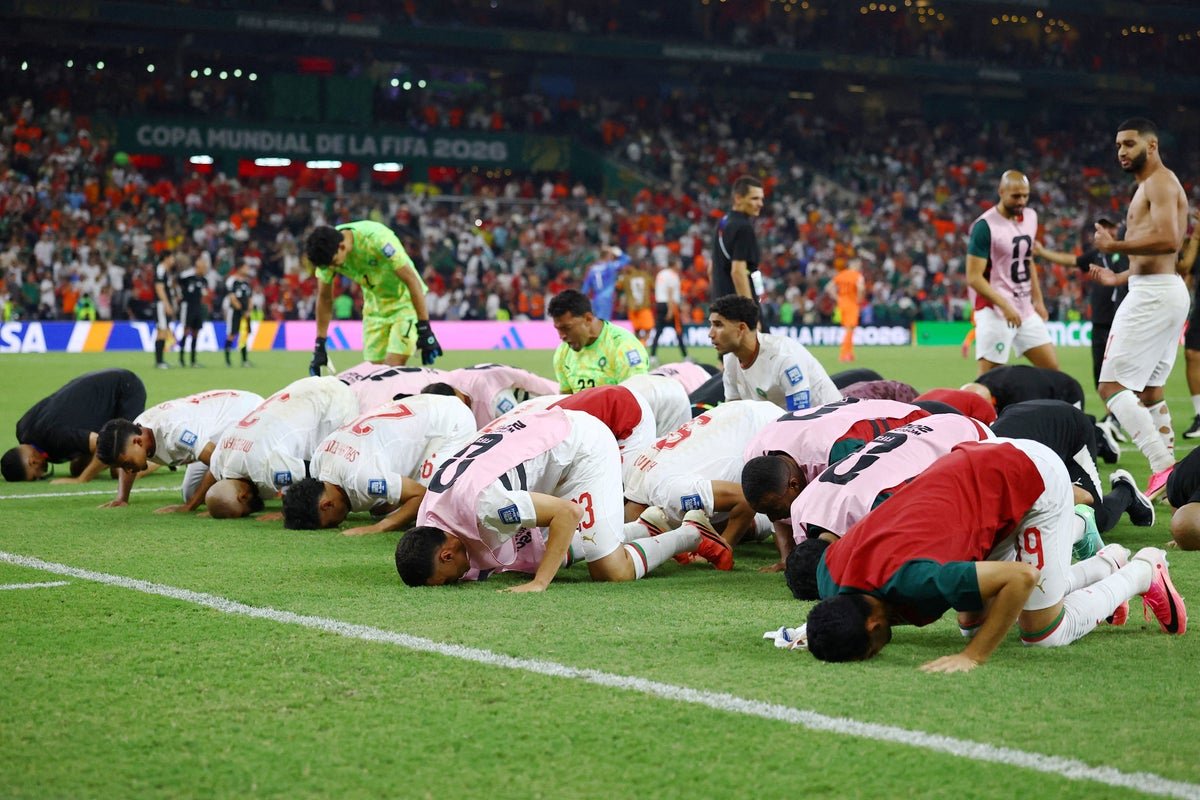
Walid Regragui concluded his World Cup journey with a clear vision for the future. While he approached tactics pragmatically, his rhetoric was filled with aspiration. As the first manager to lead an African nation to a World Cup semi-final, he had a knack for inspiring speeches.
Following Morocco’s fourth-place finish in the 2022 tournament, their manager expressed, “We aim to instill a footballing DNA in our children, and one day, we will win the World Cup. This DNA is built over time, leading to a team capable of fulfilling the dreams of all Africans. Morocco has proven that African teams can compete on the world stage.”
Advertisement
At that moment, one could question whether Morocco’s remarkable rise was a flash in the pan. They achieved victories against powerhouses like Belgium and Croatia, as well as Spain and Portugal. However, they only managed two goals in their last four matches in Qatar, and while their defense was commendable, they capitalized on the attacking failures of others.
Four years later, some clarity has emerged. Morocco progressed to the last 16 after a penalty shootout victory over the Netherlands. Currently ranked sixth by FIFA, the comment from Scotland’s manager Steve Clarke about Morocco’s impressive ranking highlights their strong performance in 2022 was no coincidence.

Morocco may soon establish itself as a formidable player across multiple World Cups, starting with their co-hosting of the tournament in 2030, which could offer significant advantages. The evolution of Moroccan football is evident in their previous World Cup bids, which were often dismissed as inconsequential. Now they aim to host the 2030 final.
Advertisement
A shift from past experiences is also possible. Historically, three African teams have reached the quarter-finals; however, two of them—Cameroon in 1990 and Ghana in 2010—finished at the bottom of their groups in the following tournaments. The third team, Senegal in 2002, failed to qualify for the next tournament as well. Their success felt fleeting and unsustainable.
Morocco’s current strength reflects an overall improvement within the team. Unlike previous semi-final teams that were preserved due to past successes, Morocco has evolved its blueprint and refreshed its lineup. Although Regragui was a pivotal figure, he has departed after leading the team to both victories and defeats in the African Cup of Nations final amid immense pressure. The nation has now appointed a more progressive coach, Mohamed Ouahbi, whose team has already matched strides with Brazil.

The core of Regragui’s team has transformed significantly. Many key players from 2022 have moved on, with
Hakim Ziyech
and Sofiane Boufal not featuring for Morocco since 2024.
Romain Saiss
retired from international duty in February, Nayef Aguerd is sidelined due to injury, and Sofyan Amrabat is currently in the United States but was an unused substitute against Brazil, and Scotland.
Notably, Youssef En-Nesyri, who played a crucial role in Qatar, has been left out of the squad. Only four players from their strongest lineup—Yassine Bounou,
Achraf Hakimi, Noussair Mazraoui, and
Azzedine Ounahi—now hold similar significance.
Advertisement
Their succession strategy draws inspiration from their rivals in Houston. In a World Cup filled with players from the diaspora, it felt symbolic that Morocco eliminated the Dutch, especially since Mazraoui and Amrabat were born in the Netherlands. Furthermore,
Ismael Saibari has spent his entire professional career there.
Morocco continues to benefit from European football academies and has demonstrated an ongoing capacity to encourage players of Moroccan descent to join their ranks, especially as they offer the allure of a potential deep run in the World Cup.

A number of their players have represented France or Belgium at various youth levels. Notably, Brahim Diaz even represented Spain at the senior level. Given that several European countries have thrived by drawing on players with African heritage for World Cups, it could be fitting for Morocco to see a flip in this trend.
Advertisement
Morocco could assemble a formidable team solely from players born outside of the country: Bounou hails from Canada,
Hakimi, Chadi Riad and Diaz were all born in Spain, along with Ayyoub Bouaddi,
Neil El Aynouai, and Issa Diop, all of whom play in France, along with Chemsdine Talbi and
Bilal Al Khannouss in Belgium, along with manager Ouahbi, Mazraoui, and Amrabat, all in the Netherlands.
What’s crucial is the presence of world-class talent: led by captain Hakimi, alongside emerging stars like the breakout talents from the tournament, Bouaddi, who is attracting interest from major European clubs including Arsenal and Bayern Munich, who are reportedly set to acquire the 25-year-old.

Ayyoub Bouaddi has embraced the vision of Morocco, a testament to the significance of players born outside the country (AP)
During their 2022 semi-final run, Morocco may have approached games with an underdog mentality, evidenced by their possession stats: 23% against Spain and 27% against Portugal. In contrast, they displayed a more ambitious strategy against Brazil, starting strong and achieving a better expected goals (xG) ratio. This change indicates their potential as a formidable force in the foreseeable future.
Advertisement
With Canada standing in the way of a second consecutive quarter-finals appearance, another historic achievement awaits. “This is a significant message to the world,” Regragui declared following their elimination of Portugal four years ago. “We are now in the history books.” It appears Morocco is on the verge of writing another chapter in their football narrative, with the DNA of Moroccan football undergoing a transformation.