



-

Jeff Carlisle
Multiple Authors
For many years, the U.S. men’s national team enjoyed an abundance of talented goalkeepers, producing a string of world-class players in that crucial position.
Starting with Tony Meola in the early 1990s, followed by Kasey Keller and Brad Friedel in the late ’90s and early 2000s, and then Tim Howard in the 2010s, these keepers had lengthy careers across top European leagues.
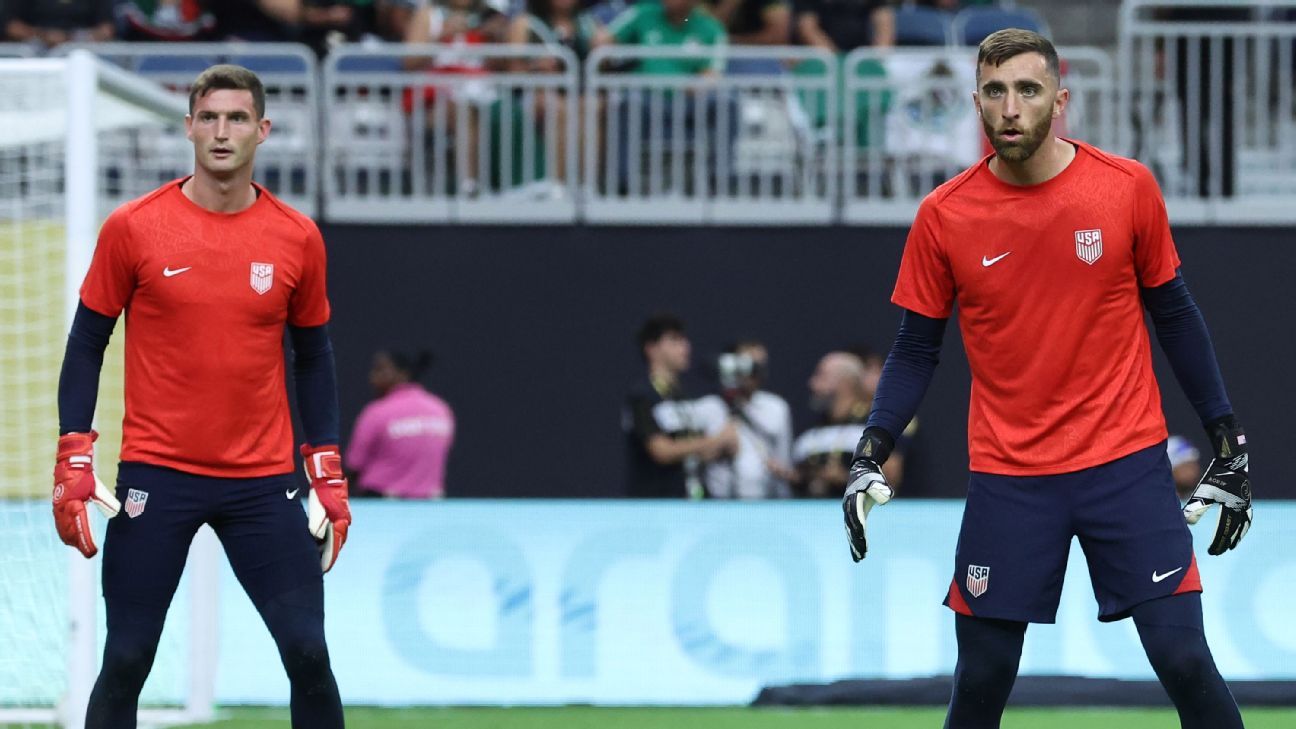
However, as the USMNT approaches this summer’s World Cup, confidence in the goalkeeper position has waned. The current goalkeeping lineup, which includes New York City FC’s Matt Freese, Matt Turner from the New England Revolution, Chicago Fire’s Chris Brady, FC Cincinnati’s Roman Celentano, and the Columbus Crew’s Patrick Schulte, lacks the pedigree of their predecessors.
All of them currently play in MLS, highlighting a significant drop from earlier generations. They either haven’t drawn the attention of Europe’s top clubs or, if they have, they weren’t able to secure a position among the elite.
While the USMNT has historically produced strong athletes, peak goalkeeping often hinges on mental aspects like decision-making, positioning, and resilience in overcoming mistakes. Experience in these areas is crucial, and the current pool of goalkeepers has yet to reach the level of experience achieved by their predecessors.
That said, some of the concern may stem from youth: Brady, Celentano, and Schulte are all under 25, with Brady, in particular, viewed as a potential standout in the future—but that potential will not be realized by this World Cup.
Turner, who started for the U.S. in the last World Cup, is now 31 and back in MLS on loan from Olympique Lyon, having struggled to find consistent playing time in Europe. Freese, 27, is seen as a potential starting option and has generally performed well for the national team, but hasn’t yet shown the type of standout performances that inspire full confidence.
Kasey Keller, a veteran U.S. goalkeeper and current ESPN analyst, expressed skepticism about the current crop. “It’s surprising, to be honest, because there’s not even a second tier of keepers that inspires confidence,” Keller stated, emphasizing that players like Freese aren’t attracting attention from European clubs.
Tim Hanley, a respected goalkeeping coach in MLS who has trained players like Joe Cannon and Andre Blake, echoed this skepticism, stating, “I wouldn’t say it’s a weakness, but certainly not a strength. You’re not going into the World Cup with a lot of confidence in that position. I think Freese will start, but it feels like they have limited options.”
There are troubling signs that the USMNT’s goalkeeping performance is lacking in the current World Cup cycle compared to the last. In competitive matches leading to the 2022 World Cup, the USMNT prevented 5.42 goals over 32 games (averaging 0.17 goals prevented per game). In contrast, during the current cycle, they have only prevented 2.25 goals across 28 games (averaging 0.08 goals prevented per game). (Data on goals prevented only goes back to 2018, limiting analysis of previous cycles.)
What led to the USMNT’s goalkeeping challenges?
One plausible explanation for the USMNT’s current challenges is that the talent in goalkeeping tends to vary over time. There are cycles of abundant talent followed by periods of scarcity. This phenomenon has been seen in other successful soccer nations, where searching for top talents can mimic the challenges faced by the U.S. goalkeeper pool.
“It’s just a cycle,” Hanley noted. “We’ve seen strong talent in the past, but now, those players have declined, and the younger aspirants are still developing. The current MLS goalkeepers are competent, but if Freese or Celentano were playing at clubs like Club Brugge, they’d have more exposure to pressure situations.”
At the same time, some argue that the way U.S. Soccer has trained goalkeepers may have eroded its historical advantage. The focus has shifted toward developing goalkeepers who are adept with their feet, sometimes at the expense of crucial shot-stopping skills.
Brad Friedel, another former U.S. international, noted that during a ten-year span from 2007 to 2017, the emphasis on technique undermined the core essentials of goalkeeping. “We prioritized playing out from the back and positioning with the defense,” Friedel explained. “With all due respect, without athleticism and bravery, you can’t be an elite goalkeeper. The necessary tenacity to put oneself in harm’s way just can’t be taught.”
Friedel believes that while training methods have begun to shift back toward more traditional skills, it won’t have an immediate impact on the upcoming World Cup cycle. Keller agrees, stating that current young goalkeepers often resemble field players who just happen to use their hands more. “Today’s keepers need to be able to make that key save. Simply maintaining possession within the penalty area isn’t enough,” he asserted.
Hanley acknowledges that while passing drills have been integrated into his training, the focus still balances between saving the ball and effective distribution: “Most current goalkeepers excel in shot-stopping but may not be reaching the same level in distribution.” There is still ongoing discourse about the skills necessary for modern goalkeepers.
A lack of experience among U.S. goalkeepers
The current crop of U.S. goalkeepers undeniably lacks the extensive experience of their predecessors. For instance, before the 1998 World Cup, Keller had already played 281 first-team matches, with 270 in European leagues. Friedel had 201 matches before the 2002 World Cup, and by the time of his first World Cup in 2010, Tim Howard had racked up 360 matches, with 261 in Europe. In contrast, Freese has made 120 appearances solely in MLS, and while Turner has World Cup experience, he has only 142 career appearances, with just 31 in Europe.
The truth is, U.S. goalkeepers haven’t consistently broken into starting roles in top European leagues in the past decade, missing out on the valuable experience needed to compete at the highest levels, much like Zack Steffen and Turner. Although Ethan Horvath came close, the English Championship has been the ceiling for his career thus far.
2:54
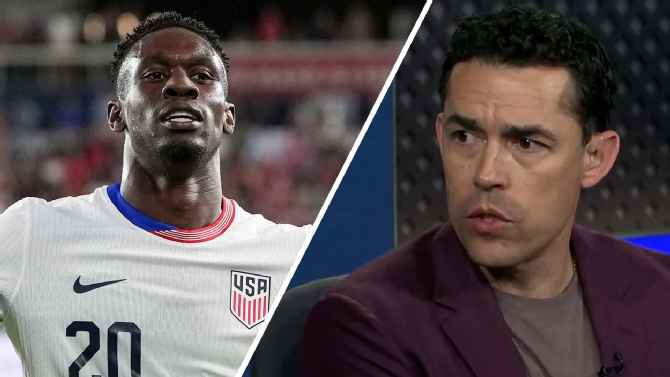
Herc Gomez selects his USMNT lineup for the World Cup opener against Paraguay.
With 100 days until the 2026 World Cup, Herculez Gomez shares his starting XI for the opening match against Paraguay.
Admittedly, injuries have hindered Steffen’s career trajectory, with loan spells to Fortuna Dusseldorf and Middlesbrough providing temporary relief before he eventually returned to MLS with the Colorado Rapids. His situation illustrates how transfer decisions can have significant impacts on player careers, especially when the fit isn’t right. Turner, Horvath, and Steffen have all adopted this strategy of returning to MLS after facing challenges abroad.
“I would never advise against taking a chance on yourself,” Keller commented, but then he continued, “Instead of going to Arsenal, I would have preferred to see Turner play a season in the Championship—46 matches, plus cup games, all the intensity and physicality that entails. But he chose the Premier League route, and it just didn’t pan out.”
That said, playing in MLS does offer its own value. While it may not rival the standards of Europe’s top leagues, it still provides essential first-team experience. Friedel succinctly summarized: “People frequently ask if it’s better to go to Europe or stay in MLS, and I say: ‘Go to Europe if you’re going to play. If you plan to sit on the bench, stay in MLS and get match time instead.’
Looking ahead, the hope for U.S. goalkeepers is that players like Freese, Turner, Brady, and others will find themselves playing overseas—either for the first time or returning—following the upcoming World Cup.
Current outlook for the 2026 World Cup
As it stands, Freese, Turner, and Brady are unlikely to gain significant experience or undergo drastic skill enhancements before the World Cup—they are what they are.
Freese is expected to start in the World Cup, having occupied the starting spot in 14 of the past 15 matches under manager Mauricio Pochettino. His recent experience, including a penalty shootout victory against Costa Rica in the 2025 Gold Cup, has provided him with valuable knowledge.
However, Turner is making a push to challenge Freese’s position, with Turner currently ranking second in MLS for goals prevented at 5.96, compared to Freese’s -0.19. Turner’s save percentage of 77.4% also greatly surpasses Freese’s 65.5%.
While it’s true that a goalkeeper’s statistics can depend on the defense in front of them, Turner’s current performance is noteworthy.
“I believe they’re all capable enough that the goalkeeper won’t be the one to lose us a game,” Friedel commented on the current group of goalkeepers. “In tournaments like the World Cup, stars are made, so if Freese starts, he could very well become a hero for the U.S.,” he concluded.
If that happens, Freese could emerge as the next standout American goalkeeper, something the USMNT desperately hopes for.