



-

Tom Hamilton
Multiple Authors
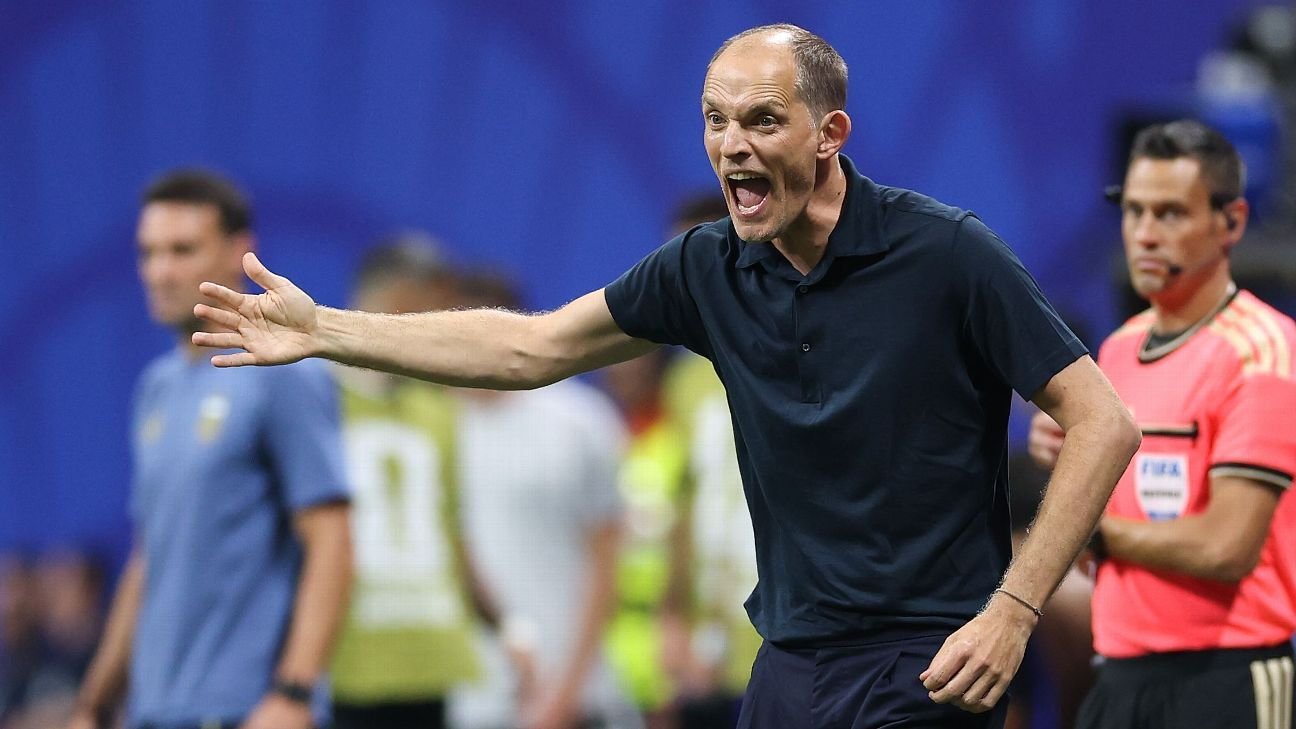
ATLANTA — Thomas Tuchel was fully aware that criticism was inevitable.
Wayne Rooney, the former England striker turned pundit, lamented, “The changes we made didn’t help us. Devastated.” Meanwhile, Micah Richards, a former defender, stated, “Tactically, we all thought he got it wrong today.”
Only 10 days prior, the England manager was celebrated for his tactical brilliance after guiding his team to a 3-2 victory over Mexico in the quarterfinals, even while down to 10 men and utilizing a back five. However, during the semifinal, a similar defensive approach allowed Argentina to score two late goals and claim a 2-1 victory.
Post-match, Argentina’s manager Lionel Scaloni remarked, “There was blood in the water, and we went for it.”
Lionel Messi found himself with more space as the switch allowed midfielder Enzo Fernández to score the equalizer. Just seven minutes later, Lautaro Martínez headed in the winner from Messi’s precise cross. Tuchel’s defensive strategy misfired, highlighting the harsh realities of the FIFA World Cup.
“The nature of the game dictates that when you lose, criticism follows,” Tuchel stated. “No one can predict the outcome had I made different decisions. I’m accountable for the team; I must accept the criticism that comes with it.”
– Argentina showcases their title-winning mentality with a dramatic comeback
– Player ratings: Messi scores 9/10 as Argentina defeats England
– Messi and Yamal meet again in the World Cup final
Tuchel emphasized the “brotherhood” spirit of his team, often praising their resilience and ability to overcome challenges. This was evident against the Congo DR, where Harry Kane’s two late goals secured a narrow escape. Against Mexico, after Jarell Quansah’s sending-off, Kane converted a penalty, and Tuchel’s formation change to a back five proved effective. Yet, during their match against Norway, England relied on Jude Bellingham’s brilliance to advance, with a prevailing sense that England had not yet hit peak form.
Fatigue, form, and injuries had clearly impacted England’s performance throughout this tournament. Concerns had emerged at right back following Reece James’ injury in the closing stages against Ghana. Tuchel’s decision to replace the injured Tino Livramento with Trevoh Chalobah just before the tournament began showcased a gamble now shown to be detrimental, especially as Quansah suffered an injury against Panama and was subsequently suspended. The team has been searching for alternatives ever since.
It was a similar story on the wings. After an inconsistent performance, Anthony Gordon revived his form just in time during the closing stages against Congo DR. However, starting Morgan Rogers on the right wing showed that the choice of Noni Madueke had backfired, while Bukayo Saka was not exhibiting the exceptional form expected from him.
Despite the shortcomings, Tuchel has made some successful decisions. His choice to incorporate 6-foot-7 defender Dan Burn was a commendable move; Spence’s selection proved justified; and Jordan Henderson has played a vital role in boosting team morale, supporting Kane as captain even after suffering an arm injury during celebrations against Mexico.
1:18
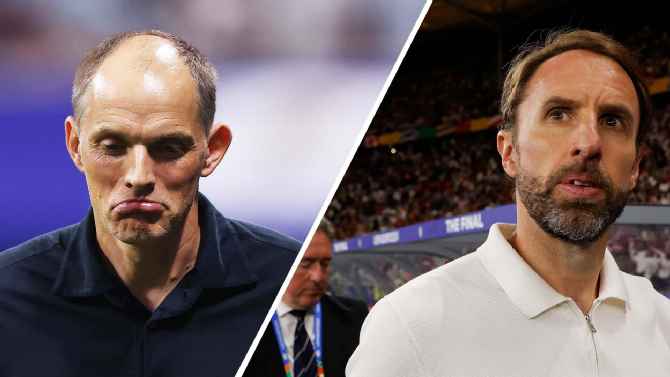
Has Tuchel achieved more than Southgate for England?
However, the disappointing statistics from the Argentina match are difficult to overlook. Tuchel, tasked with delivering England’s second World Cup trophy, set the expectation during his first team meeting in March 2025: to end a 60-year drought and bring the trophy home. Instead, England lost grip of the match in the final half-hour.
From the 55th minute, when Gordon scored, until Argentina’s winner in the 92nd minute, England managed merely 12% possession, allowing Argentina to dominate with 88% possession. This enabled a team featuring four forwards to stretch England’s defense and provided space for midfielders like Alexis Mac Allister and Fernández to operate around the box.
Argentina struck the post twice before Fernández’s goal, with the second rebound leading to Martínez’s header for the winner. England appeared warned yet couldn’t adapt.
Even after introducing strikers Ivan Toney and Marcus Rashford in the 96th minute, England found themselves without a platform to regain influence, leading to immediate Argentine celebrations.
Tuchel’s substitutions were overly defensive. While leading 1-0, he brought on three defenders: Konsa for Gordon, Nico O’Reilly for Declan Rice, and Burn for James. Critics suggested that he should have opted for offensive replacements to pursue a second goal instead of merely protecting their slim lead.
“We could sense them retreating rather than pushing forward,” admitted Argentina’s goalkeeper Emi Martinez. “When you’re ahead, it’s essential to maintain an attacking mindset.”
Tuchel attempted to articulate the shift in momentum.
“Argentina played with increased risk and rhythm, feeling they had nothing to lose, which liberated them, while we sensed that we had a lot at stake. We fell back into a defensive posture but struggled to stay engaged and win challenges, ultimately conceding control to them,” he reflected. “We couldn’t secure possession, and they gained momentum, ultimately winning the match.”
1:19
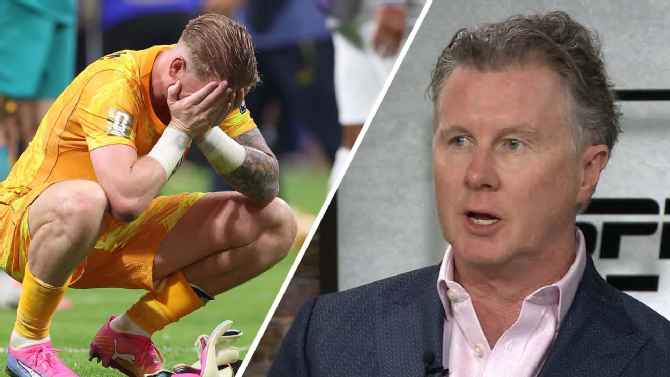
McManaman: England only have themselves to blame for Argentina’s comeback
Ultimately, judging England by the standards they set prior to the World Cup, they have fallen short. A visibly disappointed Bellingham acknowledged the familiar heartache that fans must have felt, while Burn expressed his frustration, describing the team as “too passive.”
Argentina has demonstrated a winning mentality that transcends mere talent—they know what it takes to triumph in tournaments. Their resurgence in challenging situations underscores their belief in each other and their ability to find solutions.
Tuchel’s tenure has spanned 16 months and has led England to a World Cup semifinal, a commendable achievement. However, the pervasive sense of disappointment and missed opportunities continues to haunt the England team. The FA enlisted Tuchel’s guidance to transform them into title contenders, and once again, England’s hesitance led to heartbreak.
While Tuchel will retain his position through to Euro 2028, he must find a way to alter this cycle of failure over the next two years. The success of his tenure will hinge on his ability to accomplish that.
Before the match, Tuchel expressed that he bore no weight from the team’s historical struggles. However, witnessing England’s collapse was a painfully familiar sight. Argentina sensed weakness; England became the hunted. Tuchel has yet to overcome England’s mental block concerning the critical transition toward securing the elusive trophy, a goal that has eluded them for over 60 years.