



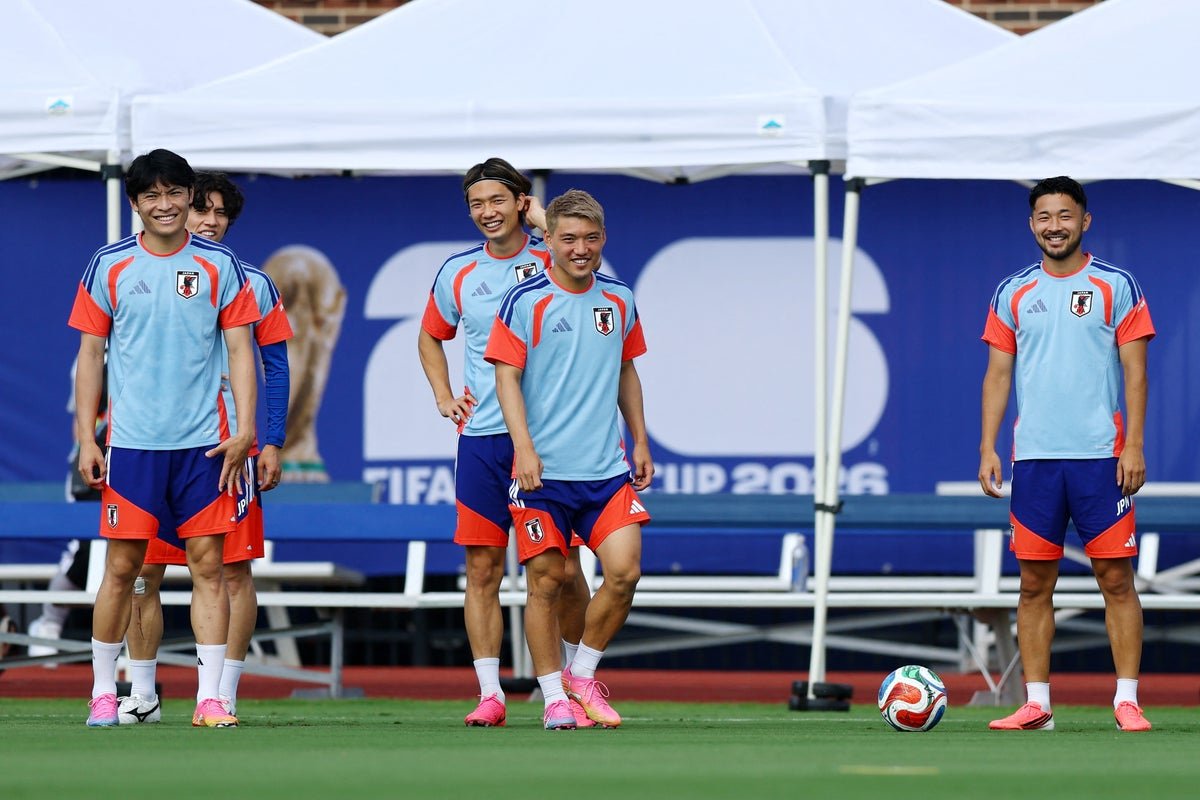
Japan is convinced it has discovered the secret to becoming a football superpower, and it all revolves around joy. Four years ago, the Japan Football Association (JFA) published a manifesto detailing their roadmap to winning the World Cup by 2050, particularly aiming for the host role.
The strategy is filled with the usual elements of diagrams and bullet points, references to synergy and talent scouting, but the standout goal outlined in The Japan Way is revealed right on the first page.
“To become the happiest country in the world through football.”

Smiles on the Japanese players’ faces are hardly a rare sight (Reuters)
The ambition may seem far-fetched to first-time readers of the 58-page blueprint, but there’s more depth than just having smiling players—even if that is a common occurrence.
The document’s language can come off as repetitive and vague. Among several defensive principles are calls for a “proactive mentality” and to “play proactively.” Similarly, one of the six guidelines for their offensive strategy emphasizes “deciding matches by scoring goals.”
Despite the buzzwords, there is a clear vision for an assertive and positive style of play that has started to yield impressive results, leaving even the most skeptical observers wondering if they might be onto something.
Hajime Moriyasu’s squad stepped onto North American soil energized by victories over Brazil and a commendable performance against England at Wembley in exhibition matches. Their approach against Thomas Tuchel’s reorganized team was crafty, determined, and unforgiving. “Well-drilled,” was Tuchel’s assessment, although The Japan Way would describe it as a “seamless transition between attack and defense.”

Japan impressively beat England ahead of the World Cup (Getty)
As they kick off their group stage matches, which have already proven challenging with injuries sidelining key players, they are well-positioned to progress before their showdown with Sweden in Dallas this Friday at midnight BST.
Whether defending or attacking, their game emphasizes speed. On defense, they press rapidly to regain possession, while in attack, swift thinking and quick passes aim to create shooting opportunities in the blink of an eye. This fast-paced approach looks thrilling yet exhausting to execute.
Within their strategy, there’s a detailed breakdown of role expectations for future Japan internationals and acknowledgments of current weaknesses, such as size disadvantages against some opponents, along with solutions to mitigate the notion that “Japan is physically weak.” The importance of speed—both physical and mental—is underscored repeatedly, but it’s not solely about pace. “What matters more is when, where, and how to utilize that speed.”
While Japan benefits from a growing number of players competing in Europe’s elite leagues, there is also an awareness of the necessity for adaptability and evolution as the game progresses.

Moriyasu has been in charge since August 2018 and has defined the current squad’s style of play. (Reuters)
Moriyasu, who has been the head coach since August 2018 after serving as an assistant, has shaped the team into a 3-4-3 formation that emphasizes wing-backs. However, the overall strategy does not mandate a specific formation, allowing future coaches to adapt it provided they adhere to certain principles of speed.
“We staunchly oppose the idea of winning at all costs,” their guidelines for an ideal coach assert. “True victory lies in enriching the elements necessary for a fulfilling life while striving for success.”
Instead, Moriyasu has adopted a different outlook on development. “We are determined to improve continuously and pave the way for the future,” he stated prior to the tournament. “Winning is crucial in football, and we will accumulate victories. Ideally, our growth will come through winning.”
What constitutes success this summer is clear. Although this marks Japan’s seventh consecutive World Cup appearance, they have yet to win a knockout match. Progressing to the last 16 in this tournament would signify advancement for a team that many, including Morocco, seem poised to showcase as the first non-European or South American nation to claim the world title.

Japan have looked good so far in North America but winning a knockout match is the real aim (Getty)
“We find happiness in discovering our own way to enjoy playing, watching, and engaging with football. We feel joy when we support an attractive national team on the global stage,” concludes The Japan Way, underscoring the blend of idealism and relentless aspiration.
“We will rise among nations that possess a rich football culture and genuinely strive for World Cup victory. We will consistently be contenders in the World Cup race, sharing this joy with a growing audience.”
Though they are not there just yet, it wouldn’t be surprising to see them reach that zenith.