



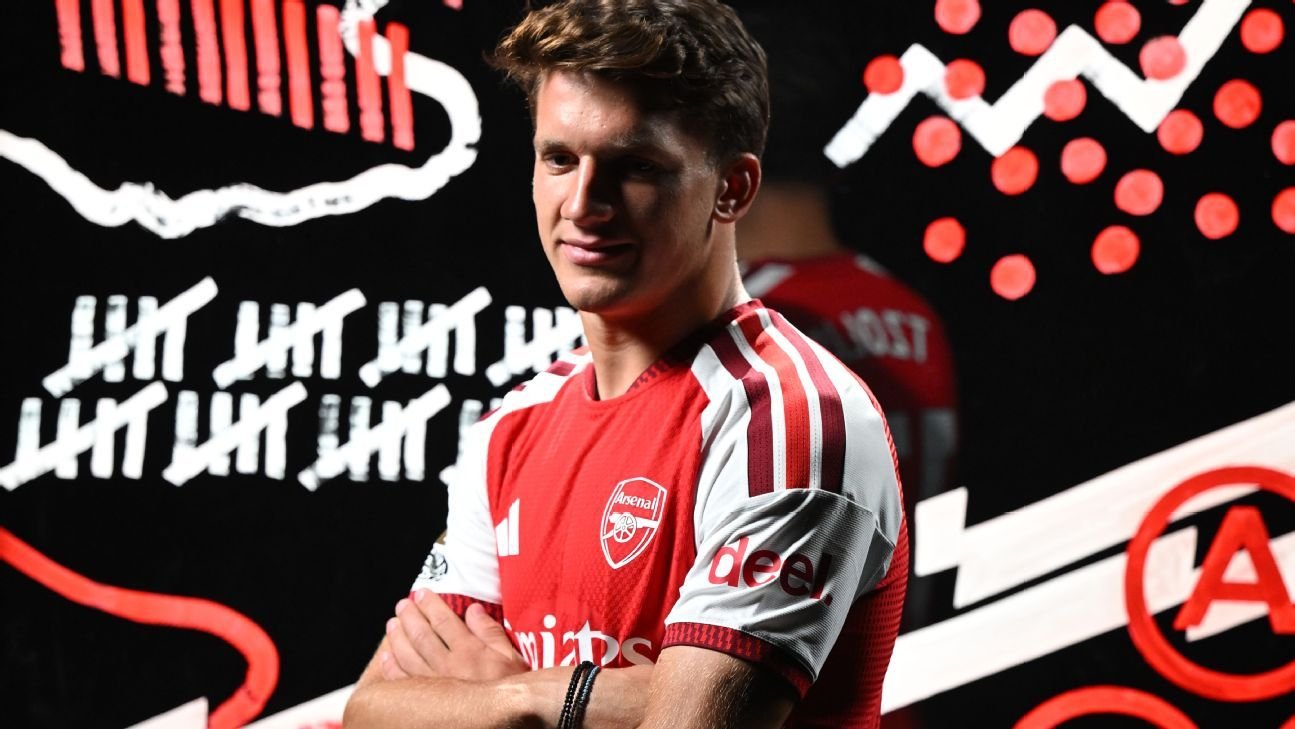
Four years after Norwich City made him their joint-record signing for €10 million, Greek winger Christos Tzolis has returned to the Premier League, this time joining Arsenal for around four times that amount.
While Norwich deserves credit for discovering the talent of the then-20-year-old from Greek club PAOK, it’s perplexing how they allowed him to escape their roster.
After enduring coaching changes and relegation struggles, Tzolis was loaned to German side Fortuna Düsseldorf in August 2023, with a permanent option included in the transfer.
This move proved pivotal for his career. Tzolis rediscovered his form in the German second tier, scoring over 20 goals, which led Fortuna to activate their permanent option in summer 2024 before swiftly transferring him to Belgian giants Club Brugge for €6.5 million.
Looking back, allowing Tzolis to depart was a significant error for Norwich that ultimately resulted in Arsenal offering €40 million—a record for the Belgian Pro League—for the 24-year-old this summer.
Position
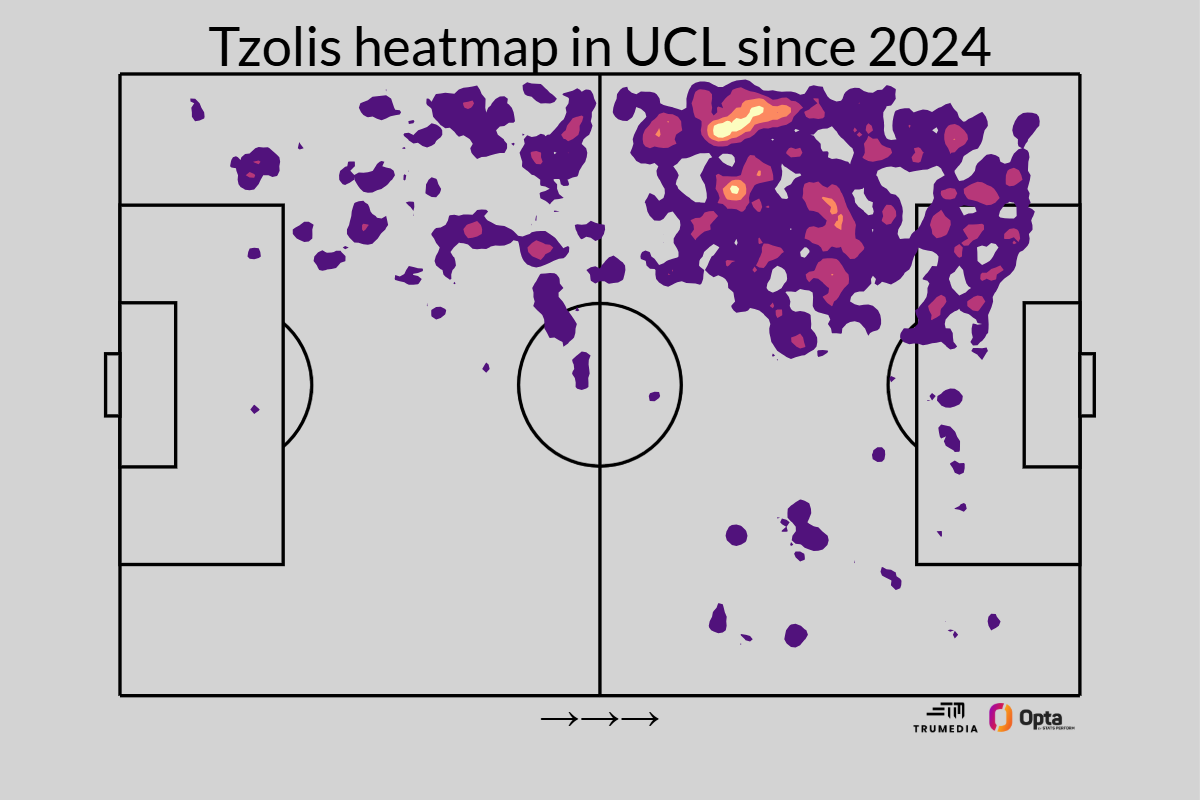
The right-footed inverted winger typically plays on the left flank but is versatile enough to operate anywhere across the front line.
Tzolis arrives in North London following a standout season in Belgium, where he recorded 22 goals and 29 assists in all competitions, earning the accolade of Belgian Pro League Player of the Season.
Though his European performances were less eye-catching—posting two goals and one assist in the UEFA Champions League—it was clear in Belgium that he had outgrown the Jupiler Pro League, making his return to the Premier League unsurprising, especially as Arsenal looked to replace Leandro Trossard.
Strengths
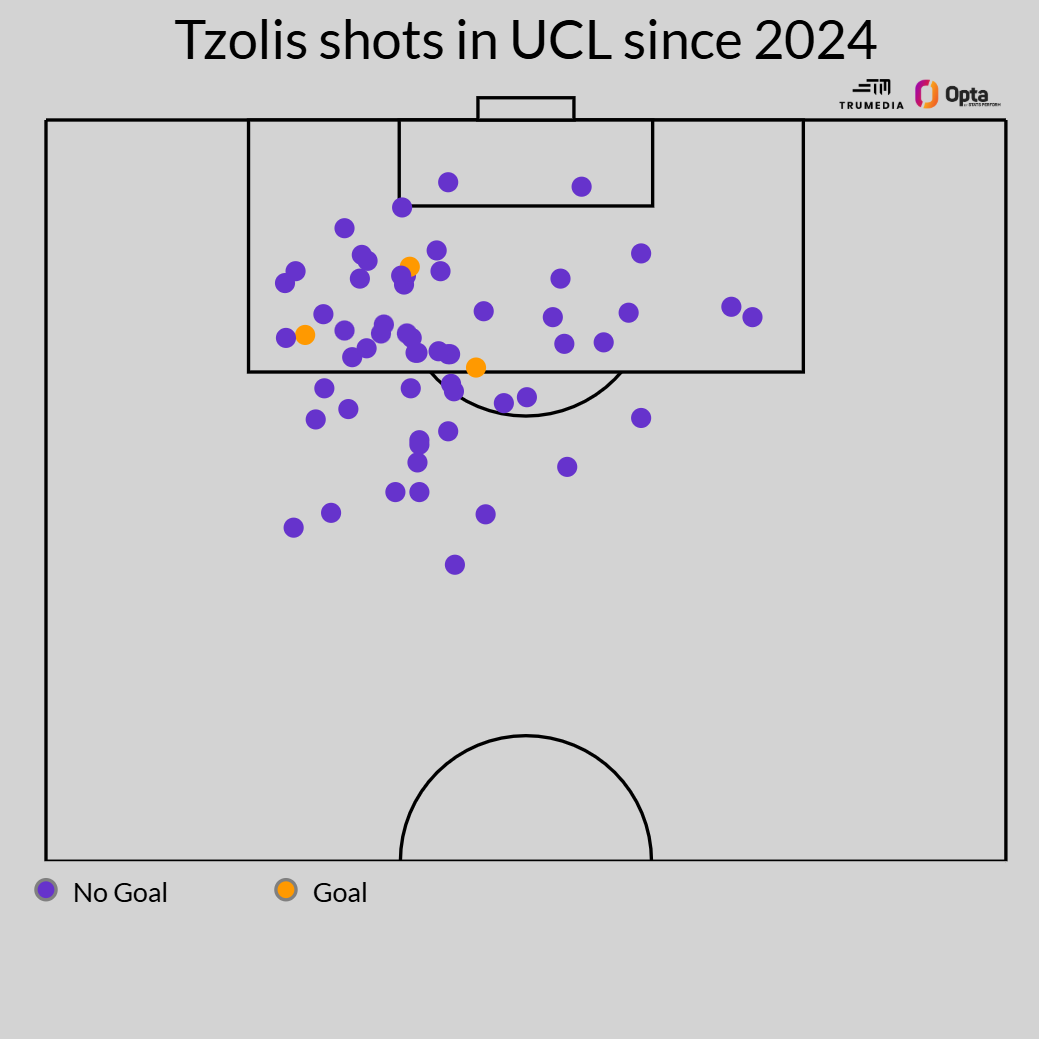
Tzolis’ game is characterized by a range of skills, with his shooting capability being the most prominent. Most of his goals come from the left flank, where he often finds space between the right back and center back, allowing him to strike early with power and a curling finish. He generally gets his shot off before defenders can close him down.
He also takes a substantial number of shots—3.1 per 90 minutes last season—reflecting the freedom Brugge provided him and the offensive strategy centered around his ability to cut in from the left.
Notably, his goals often come from areas where he had the green light to shoot. This suggests that Brugge utilized him almost as a striker from the wing, built around his threat. Despite a solid scoring rate, his xG per shot was a modest 0.14, indicating that there is still room for improvement in his shot selection, and it’s uncertain whether Arsenal’s Mikel Arteta will afford Tzolis the same degree of freedom or if he can maintain his impact against tougher opponents.
Another appealing aspect of Tzolis is his proficiency with both feet, despite being predominantly right-footed. He can effectively dribble outside, deliver early crosses, and finish from tight angles with his weaker foot.
When not shooting, he excels at displacing defenders through rapid dribbles, short passes, and combinations near the box. His diagonal runs in attacking areas, with or without the ball, pose a challenge for opponents due to their sharpness and unpredictability. Many of his assists come from quick one-twos leading to a precise square pass to a teammate.
This combination of frequent shooting and impactful teamwork is uncommon for a young player, possibly leading Arsenal to believe he can achieve double figures in goal contributions during the upcoming Premier League season.
Tzolis’ set-piece proficiency would have also caught Arteta’s attention. He strikes the ball with power, precision, and inward curl from free kicks or corners—an asset for a team focused on maximizing dead-ball situations. While he may not immediately take over as Arsenal’s primary dead-ball specialist from Declan Rice, he provides a valuable secondary option for attacking well-defended penalty areas.
How Has He Progressed Since His Norwich Days?
The essential difference between Tzolis during his time at Norwich and now is his improved understanding of making third-player runs and recognizing that his movement should facilitate passes, not the other way around. His off-ball work has seen significant growth, enabling him to attack space proactively rather than wait for the ball to arrive first. Averaging 4.9 progressive runs per game also bodes well for Arsenal, particularly in matches where they dominate possession and need wide players to exploit gaps in defenses.
Areas to Work On
Improvement in certain areas requires practice and discipline rather than technical enhancement. For instance, there’s potential for Tzolis to elevate his pressing game; his 1.8 pressing recoveries per 90 minutes last season were on the lower side, and he’ll be expected to track back more consistently in England.
While he does contribute defensively—evidenced by a 60% success rate in defensive duels—Arsenal will require more commitment in terms of defensive work off the ball.
Will He Fit In?
Tzolis brings a host of valuable attributes, including superb striking ability, the promise of significant end product, agile movement, solid combination play, nimble dribbling, set-piece utility, and a diverse skill set that can keep defenders on their toes. These qualities should enhance Arsenal’s collection of attacking options.
Although Greek players have historically faced challenges in England, Tzolis must adapt from playing with a dominant Brugge side, where he was central to their attacks, to a role in Arsenal where he may have less freedom and space. However, Arteta evidently sees enough potential in him to replace Trossard, who played a vital role in Arsenal’s title pursuit last season.