



-

James Tyler
Multiple Authors
In spite of the familiar existential concerns leading up to the 2026 World Cup, the tournament has proven to be an exhilarating spectacle from beginning to end. The thought of 104 matches, spread across 16 cities and three countries, with 48 teams from Algeria to Uzbekistan, initially seemed overwhelming; however, it has unfolded into a delightful blur of excitement.
The tournament featured inspiring underdog narratives from teams like Cape Verde and Norway. At the same time, superstars stepped into the limelight, vying for the Golden Boot, and the leading teams faced challenges that led to four semifinalists, all among the top four FIFA-ranked teams. Additionally, all three host nations advanced to the knockout stage.
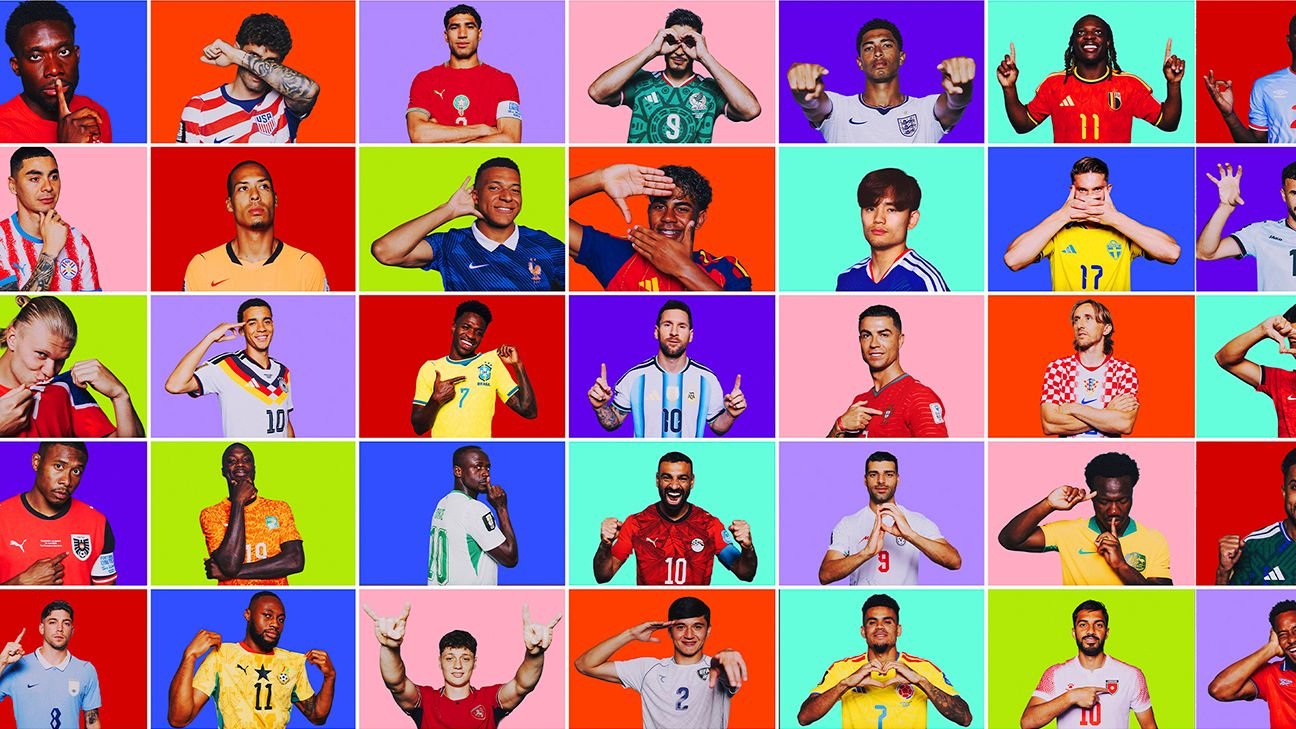
Another aspect worth celebrating? The pregame lineups on television.
Years of static lineup graphics displaying players’ names alongside compressed images have given way to the 2026 World Cup’s opportunity for players to capture the audience’s attention for two to three seconds. Observing these during the group stage, it became apparent that collecting data on how players chose to portray themselves in this brief yet significant moment was worthwhile.
Which pregame gestures were most widespread? Which were distinctive? Which nations showcased the greatest diversity in self-expression, and which fell short?
First, let’s look at the data
The approach was straightforward: observe every single pregame lineup and document each gesture displayed. Only players in the starting lineup had the opportunity to showcase their personal emote during the global broadcast, making it easier to compile data based on those starters. Analyzing the group stage matches revealed that each player exhibited only one emote, regardless of how many games they participated in, streamlining our data collection. (We focused only on unique players and their distinct emotes.)
As a result, every group match was reviewed for players starting in Games 2 and/or 3, which were counted as “new” entries in our data analysis. Ultimately, we identified 747 unique emotes from 747 players throughout 72 matches in the group stage. Some teams utilized only a small number of players, such as Congo DR and Germany, who each featured 13 different players across three games, while others showcased a broader rotation of talent, like Norway, Argentina, and the United States, who employed 21 of their 26 players during the group stage.
Most teams utilized between 15-18 players, providing a solid foundation for our analytical endeavors.
The grand countdown
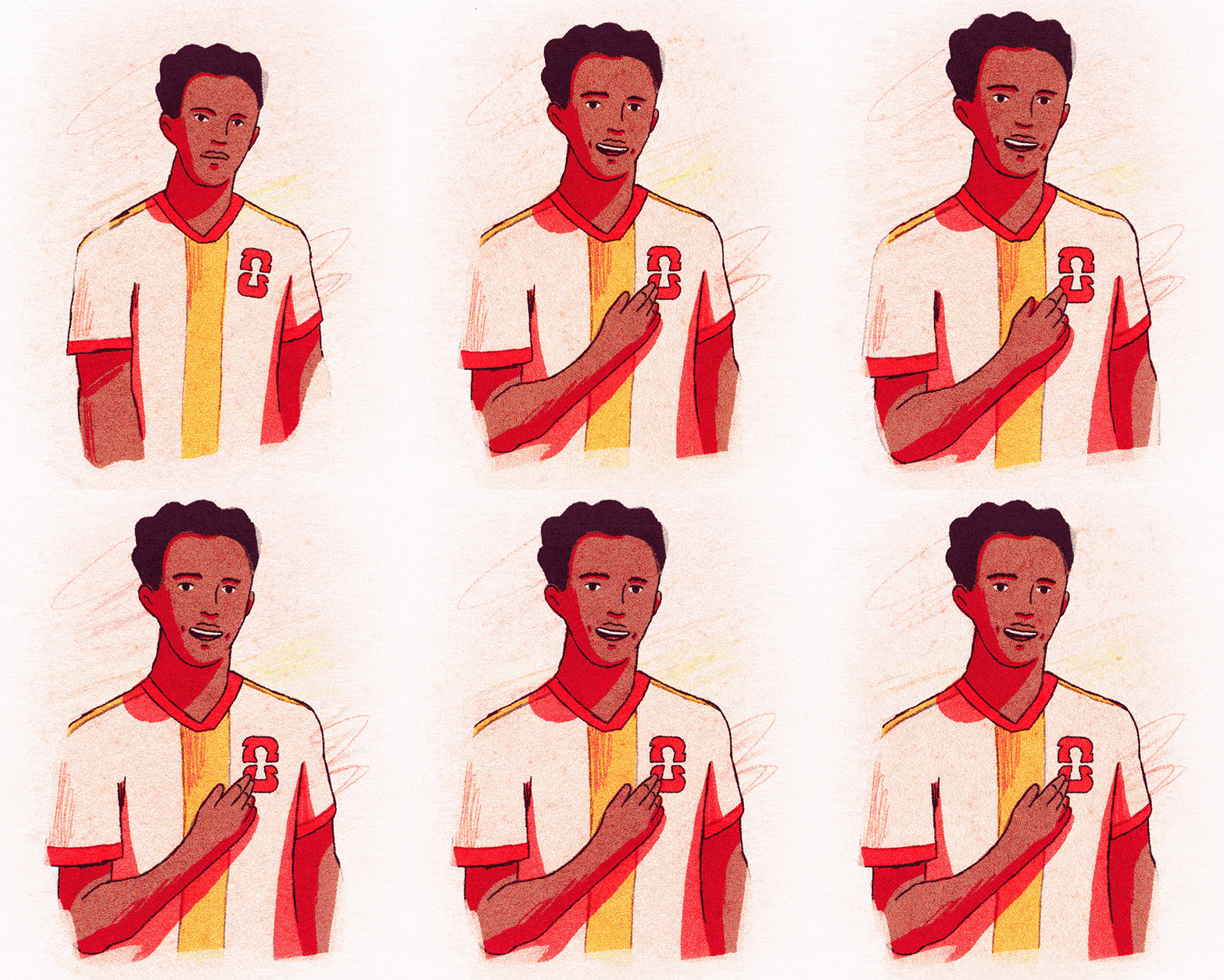
Overall, we documented 43 unique emotes across the 747 players, with gestures categorized based on their similarity and intent. The various ways of manipulating the badge on the shirt—whether touching, kissing, pointing to the back, grabbing it forcefully, or attempting to detach it—were consolidated into one emote designation.
The analysis included two additional categories: “signature move/pose” and “combo.” The first refers to a unique gesture associated with a particular player, while the latter accounts for instances where players performed multiple actions in their brief moment in the spotlight. One popular “combo” involved combining a badge grab with a fist pump, which we opted to classify together rather than as separate instances.
Top Emote: Honoring the Badge
Illustrations by Rohan McDonald
It comes as little surprise that, in the World Cup context, the badge holds significant value during these brief emote displays. Representing one’s country carries more weight than playing for a club, prompting 131 players—nearly 18% of those surveyed—to express their emotions in various ways relating to their national pride.
There’s a sense of “safety in numbers” when choosing a popular gesture to convey patriotism before entering the World Cup arena.
“The act of touching the badge resonates because it’s so common, making it a socially acceptable expression of patriotism,” noted Dr. Juveria Zaheer, an associate professor in the Department of Psychiatry at the University of Toronto. “Given that their teammates may do the same, this choice feels like a safe option.”
Second Most Used Emote: Arms Folded
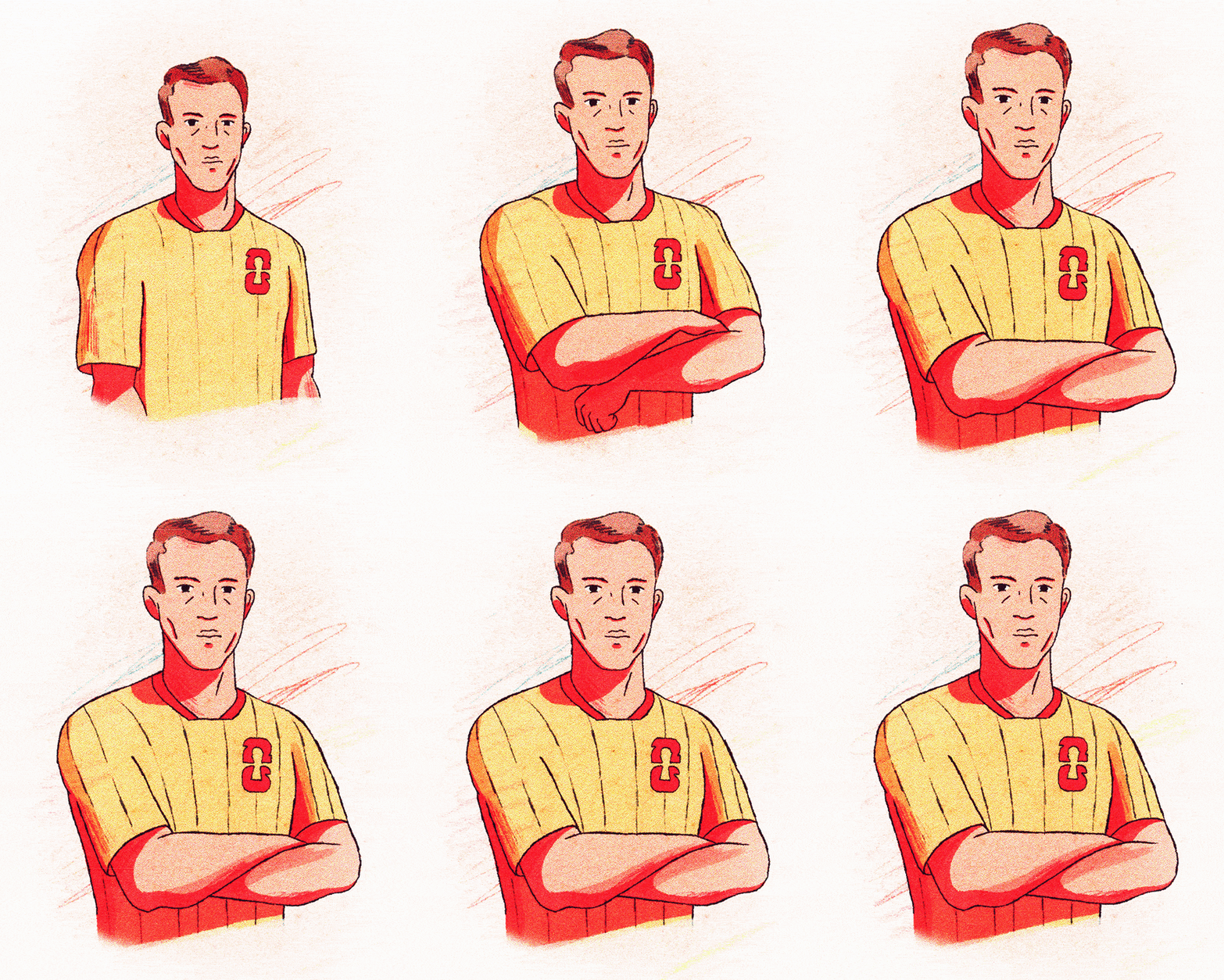
The slightly off-center folding of arms emerged as the second most popular gesture during the Cup, even though 10 of the 48 participating teams had no players adopting it. Countries like Iran, Austria, the United States, and Ghana embraced this pose as their top choice, with 12, 11, nine, and seven instances, respectively.
Some players remained “frozen” in their pose as the emote began, while others used their time to theatrically fold their arms into a pose reminiscent of a nightclub bouncer. Although primarily understood as a “defensive” posture, this gesture carries multiple interpretations.
“For individuals with a demeanor of ‘I’m just here to play,’ crossing the arms can project seriousness,” Zaheer explained. Other interpretations include defensiveness or a desire to block out anxiety-inducing stimuli, suggesting importance; however, we think most players are simply trying to appear tough and focused for the World Cup context.
Third Place Emote: Two-Handed Fist Pump
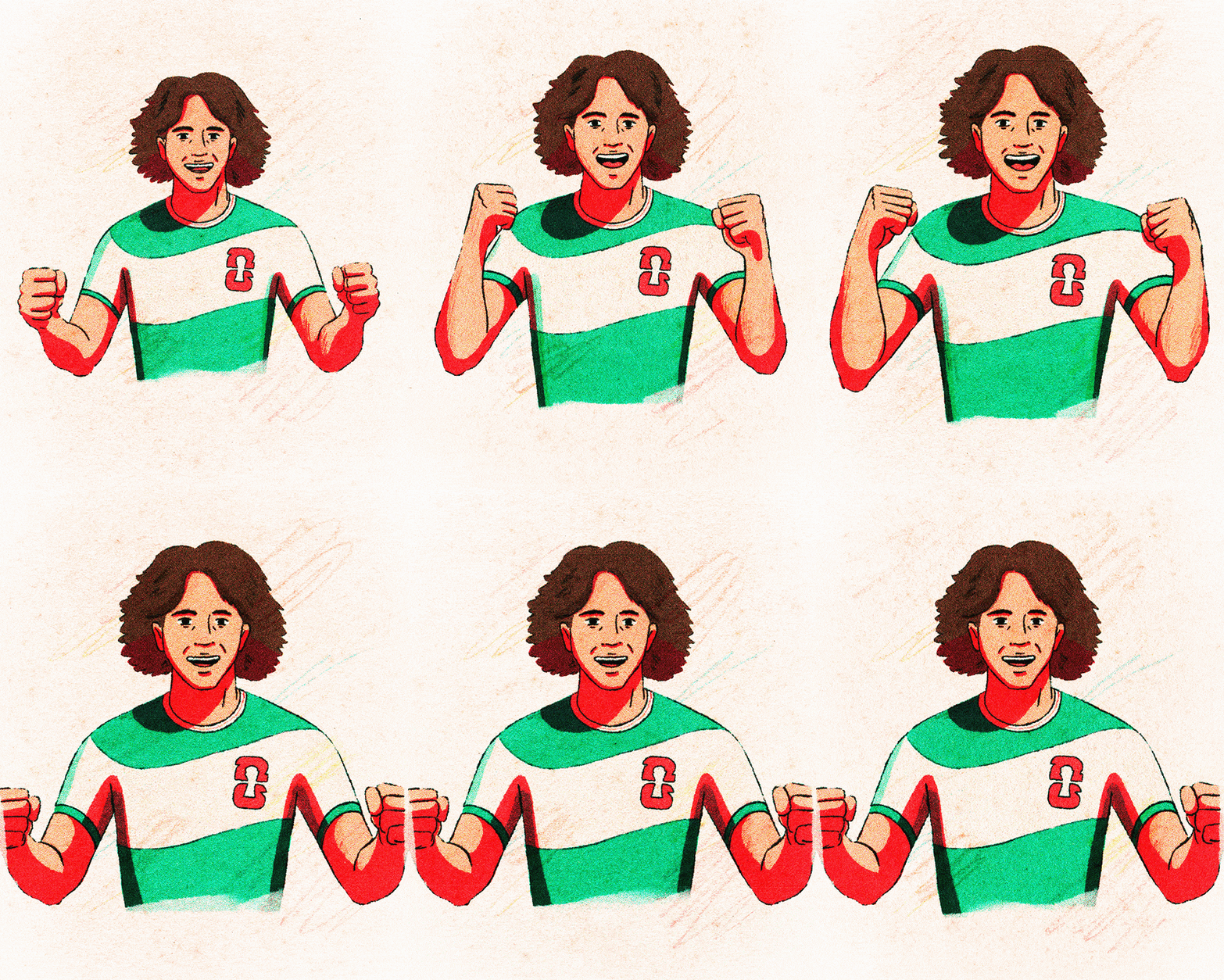
Celebrating joy and passion is at the heart of the World Cup, and few gestures are as joyous as the two-handed fist pump. Though many players (31) preferred one-handed pumps, nearly 12% of athletes surveyed went for the two-handed option, perhaps to signify double the excitement.
This expression of triumph is widely recognized. “It feels fun and enthusiastic without presenting a social risk,” Zaheer remarked. Mirroring Norway’s status as a compelling story of the tournament, eight of their 21 players embraced the two-handed fist pump. However, 16 teams had no players employing this gesture, possibly due to a perceived lack of seriousness when facing a monumental task.
Fourth Place Emote: Rubbing Hands Together
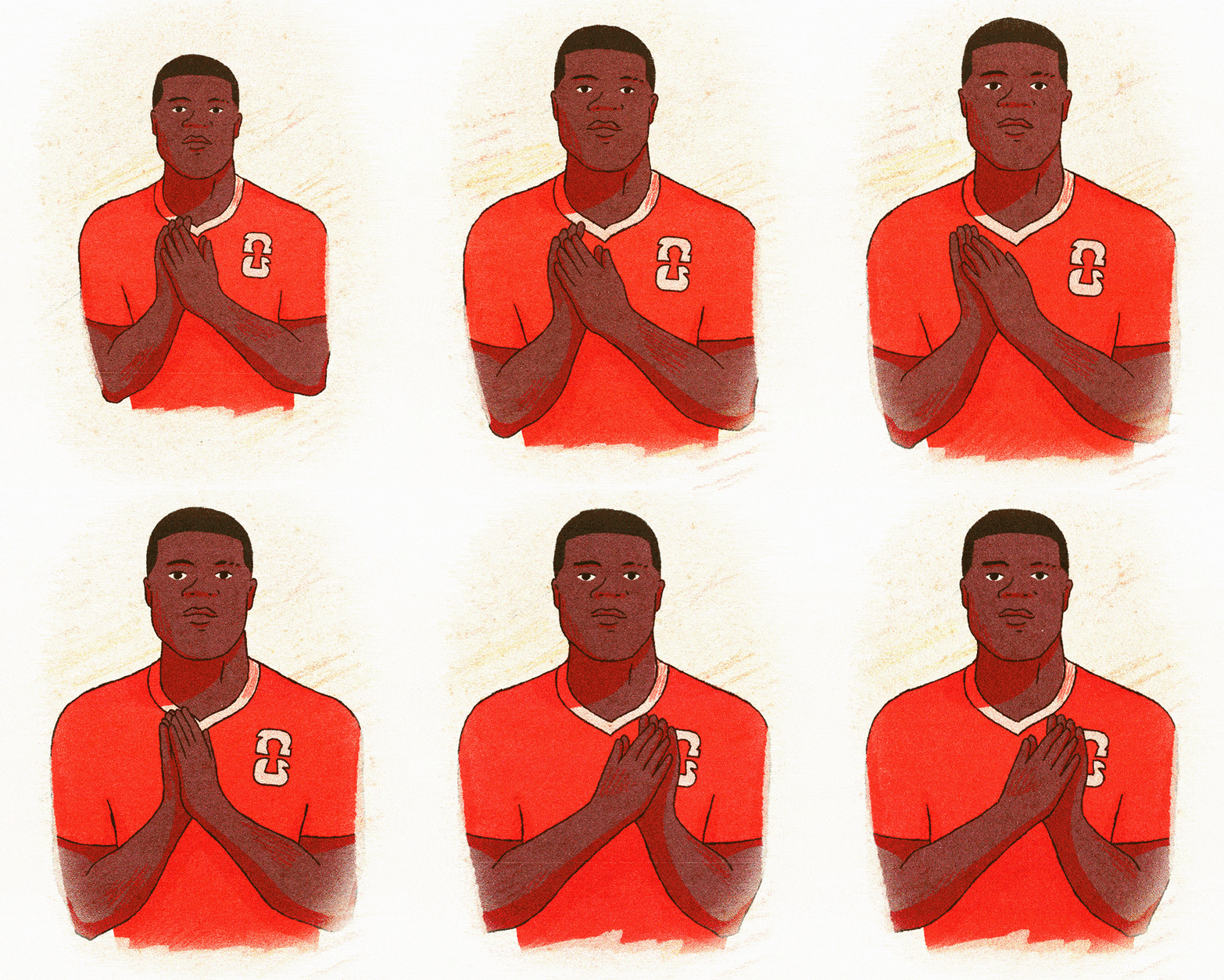
This emote surprisingly gained traction among two of the host nations, with seven American players and five Canadians opting for the hand-rubbing gesture during pregame introductions. Hand rubbing symbolizes various sentiments, primarily focusing on two ideas: “Let’s get to work, let’s cook,” and the scheming demeanor often associated with characters like Jafar from “Aladdin.”
Overall, it’s another way to express anticipation for the upcoming occasion—what greater moment exists than representing one’s country at the World Cup? Though, it’s not as widely adopted as some of the other gestures on this list: Group G, which included New Zealand, Iran, Belgium, and Egypt, had no recorded uses of this gesture, with 23 countries in total opting not to adopt it.
Fifth Place Emote: Hands on Hips
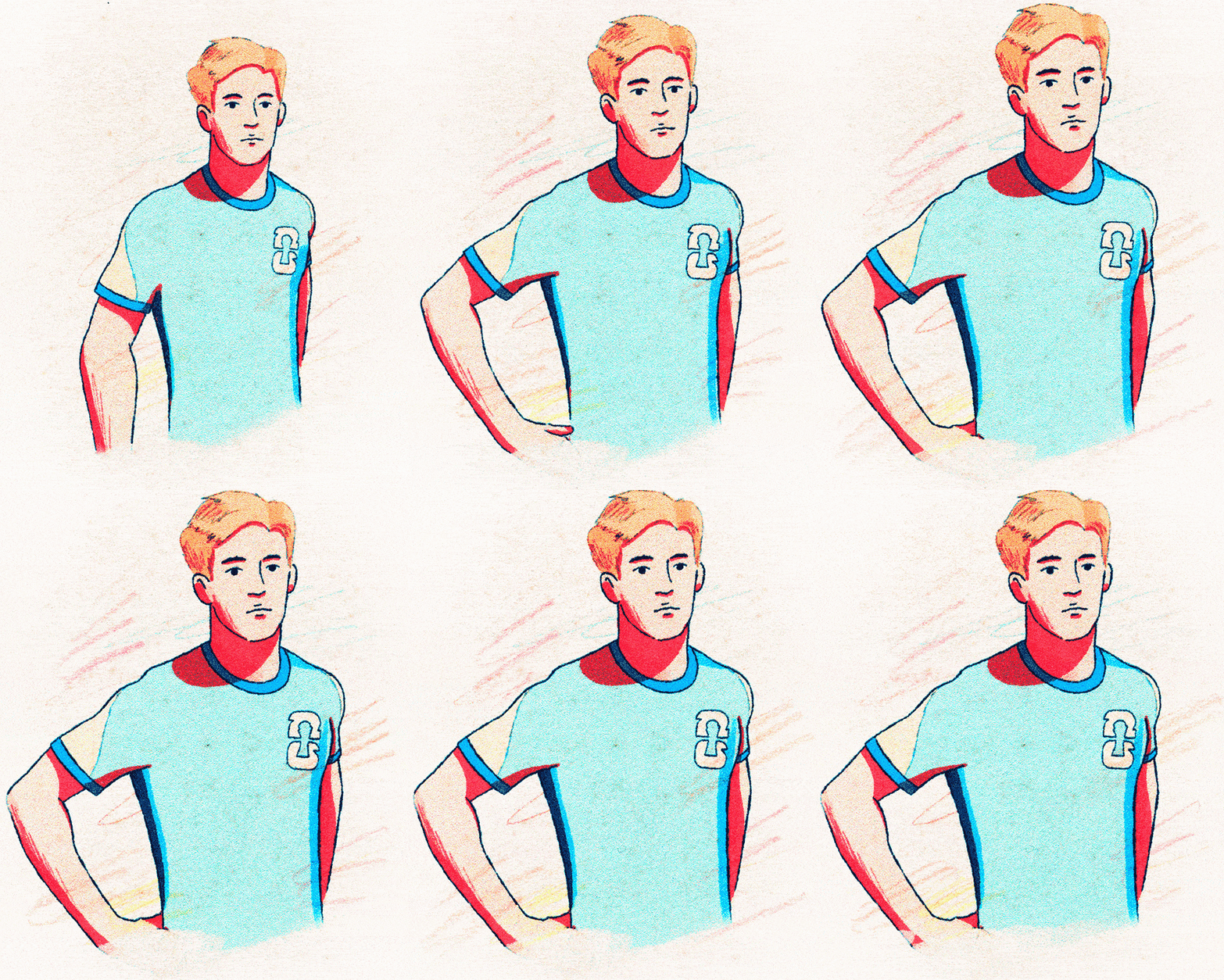
This “bouncer” style gesture conveys a sense of seriousness and self-assurance, suggesting assertiveness and control. Iraq dominated this gesture, with 11 out of their 13 starters exhibiting the power pose.
Exploring the Least Used Emotes
There remained significant room for individual expression among players, with several seizing the opportunity to do something truly distinctive. Belgium gained attention after their 4-1 victory over the U.S. due to the Folarin Balogun “incident,” but I found myself intrigued by their talented winger, Jérémy Doku, who delightedly removed an imaginary crown from his head and gently set it down before concluding his emote.
The Dutch players brought an abundance of personality to their emotes, with Nathan Aké showcasing a relaxed demeanor with his “cowabunga” gesture. Equally striking was Emam Ashour‘s “lion growl,” although he didn’t fully lean into it, stopping mid-growl. Notably, only one player in the entire pool of 747 opted for a prayer hands gesture.
Spirituality often intertwines with sports, particularly before critical moments like penalty shootouts, yet only Mohamed Hany explicitly chose to convey that sentiment. Interestingly, among the 13 players credited with own goals during this World Cup, Hany accounted for two, making him a noteworthy figure in the tournament.
A shoutout to Issa Laye for infusing some basketball flair into the event. Many soccer players have a love for the NBA, but Laye stood out as the sole player to spin the ball on his finger masterfully for three seconds (presumably before and after the camera rolled).
Teams with the Most and Least Emotes
Among the hundreds of participants, we observed considerable differences in the range of emotes displayed, with certain teams showcasing vibrant individuality while others opted for a more unified approach centered around collective themes.
Which teams expressed themselves the most?
In total, 15 out of 48 teams utilized double-digit emotes (including combos), with the above mentioned nations displaying the greatest variety among their group stage starters. The Dutch were especially interesting to analyze, as nearly every player opted for a different gesture, with only the “come here” pose shared among them.
“This observation is fascinating: it suggests a potential cultural component—more so team culture than national culture,” Zaheer noted. “Increased variability could reflect higher levels of individualism, a more dynamic style of play compared to a focus on discipline and order. Generally speaking, it’s easier to take risks and fully express one’s personality when teammates are also doing so!”
The Dutch “total football” approach encourages individuality within a structured system, whereas Portugal indicated strong standalone poses, likely due to the presence of Cristiano Ronaldo among other stars, accustomed to performing as individuals.
In conclusion, it’s essential to appreciate this variability, but it’s also noteworthy that in my experience with ‘Jeopardy!’, I’ve never once attempted anything fun or unique during the opening, so I commend the players for their individuality.
It was surprising to find the U.S. among the least expressive teams. Their 21 players displayed only four distinct emotes among them, divided among four of the top five most-used gestures: nine opted for “folded arms,” seven chose “hand rub,” four expressed “hands on hips,” and just one featured the badge touch/grab.
This limited variety likely stems from the immense pressure faced by the team, who were under significant media scrutiny and expectations as a host. When focused intensely on tasks at hand, there’s less room for joy, a sentiment reflected in their playing style at times.
England and Switzerland also fell into this “serious business” category, hinting that these teams are accustomed to high-stakes tournaments, perhaps viewing the occasion as more of a duty than a celebration. In contrast, teams with less experience, such as Jordan, Tunisia, and Curaçao, embraced the new experience more enthusiastically than their more seasoned counterparts.
In Conclusion…
It wouldn’t be a discussion about emotes without highlighting some of the most entertaining signature moves among the 33 documented throughout the tournament’s 747 players. This talented group embraced the fleeting two-to-three-second opportunity during global broadcasts to showcase their personalities and individual styles—these moments will resonate beyond the match outcomes.
Nizar Al-Rashdan stands out with his “bird hands,” effectively cutting through a plethora of folded arms and fist pumps; it’s certainly worth checking out to see how delighted he is during the display. Notable are the iconic gestures of Viktor Gyökeres (the “Bane mask”) and Erling Haaland (Zen meditation). In a nod to the name connection, South Africa‘s Aubrey Modiba honored Drake with the “Hotline Bling” gesture, while Julián Quiñones uniquely wrapped himself in the Mexico flag, exuding national pride.
Additionally, a mention goes to the 14 players who opted to simply do nothing during their emote spotlight. Dr. Zaheer noted, “This choice is surprisingly rebellious, and it suggests a type of individuality that takes courage.” In a world frequently filled with overwhelming images and stimuli, sometimes remaining still can serve as the most impactful means of self-expression.