



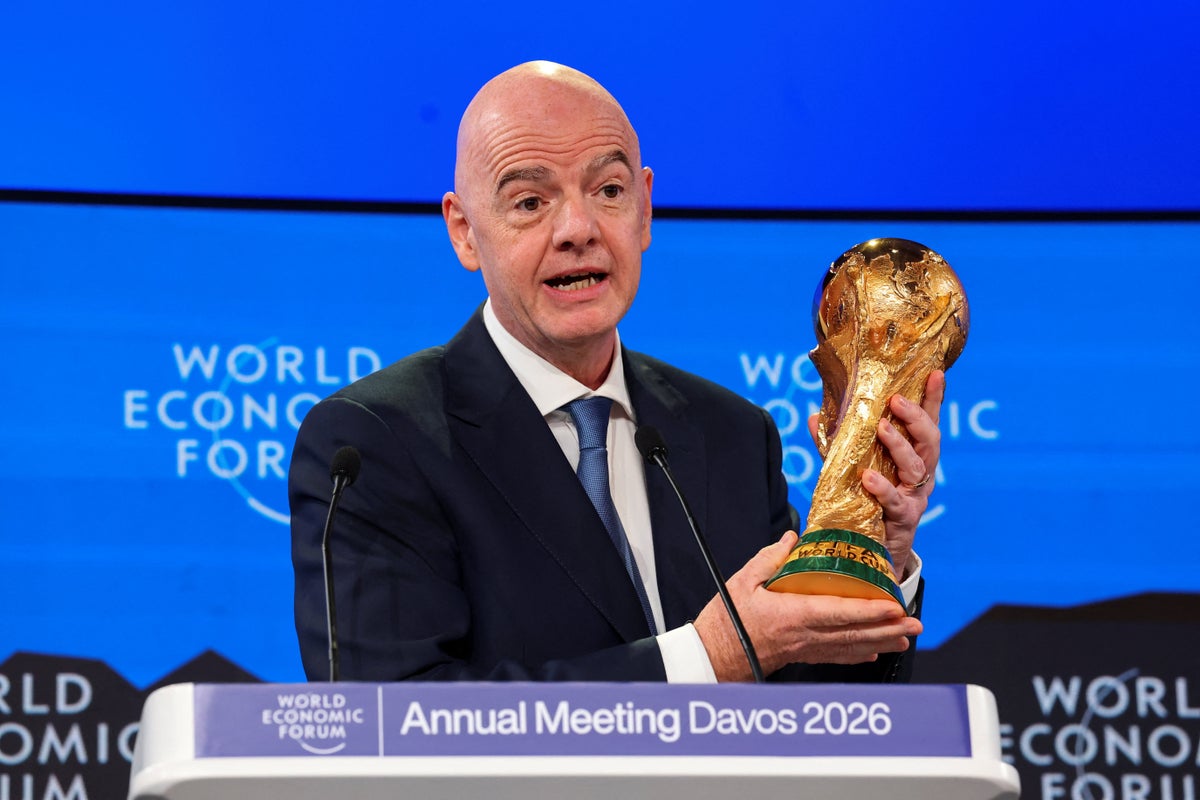
European national football teams are voicing serious concerns about potential financial losses from their participation in this summer’s World Cup, according to the Press Association.
This worry comes despite the tournament being a key event for football’s global governing body, Fifa, which relies on the event’s revenues to fund worldwide sports development efforts.
Advertisement
Fifa announced a historic prize pool of $727 million (£539 million) for the North American finals set for December, including $50 million for the winning team.
However, a joint investigation by the Press Association and The Guardian has uncovered widespread concern among European football associations (FAs) regarding significantly increased expenses compared to the 2022 Qatar tournament.
There is also notable dissatisfaction regarding the failure of the United States to honor tax guarantees, a critical bidding requirement for the 2026 host nations.

National teams are concerned about rising costs compared to the 2022 World Cup in Qatar (AP)
One national FA estimates they could face significant losses if their team is eliminated in the group stage or early knockout rounds.
Advertisement
Other associations fear they will receive much less from their World Cup participation compared to their earnings in Qatar.
Typically, any revenue generated by these FAs after covering player bonuses and operational expenses is reinvested into local football programs. Thus, a financial loss or diminished profit could have adverse effects.
Teams are set to receive $9 million (£6.7 million) for qualifying, plus an additional $1.5 million for preparation expenses, amounts that sources indicate align with those from the Qatar tournament.
However, it has been reported that Fifa has cut the daily allowance for each member of national team delegations from $850 in Qatar to $600 for this summer’s event.
Advertisement
One national FA approximated that this reduction could result in about $500,000 less if their team remains in the tournament for a month.
Travel expenses are also expected to be considerably higher due to the expansive distances across North America compared to the relatively compact nature of Qatar.
Moreover, fluctuations in exchange rates over the past four years mean that prize money distributed in U.S. dollars is worth less in European currencies now.
Associations also worry about a ‘postcode lottery’ regarding tax liabilities based on where their teams are drawn.
While co-hosts Canada and Mexico have already secured tax exemptions for participating teams, the situation remains unresolved in the U.S., where state taxes vary widely.
Advertisement
For instance, California imposes a top income tax rate of 13.3 percent. Associations report they are left to navigate their own tax advice instead of receiving guidance from Fifa.

The high cost of World Cup tickets is also a significant concern (Danny Lawson/PA Wire)
The steep prices of World Cup tickets, an issue already highlighted for fans, are also impacting associations that provide tickets for players’ families and friends.
Approximately nine or ten European associations are believed to have discussed their concerns regarding World Cup costs and taxes, both through remote communication and in-person at the recent Uefa Congress in Brussels.
They have also raised these issues informally with senior Fifa officials. An anonymous executive from a European FA stated that the Fifa officials they spoke with seemed “embarrassed” about the situation.
Fifa has been contacted for a response. However, none of the national associations approached by the Press Association offered a comment on the issue.