



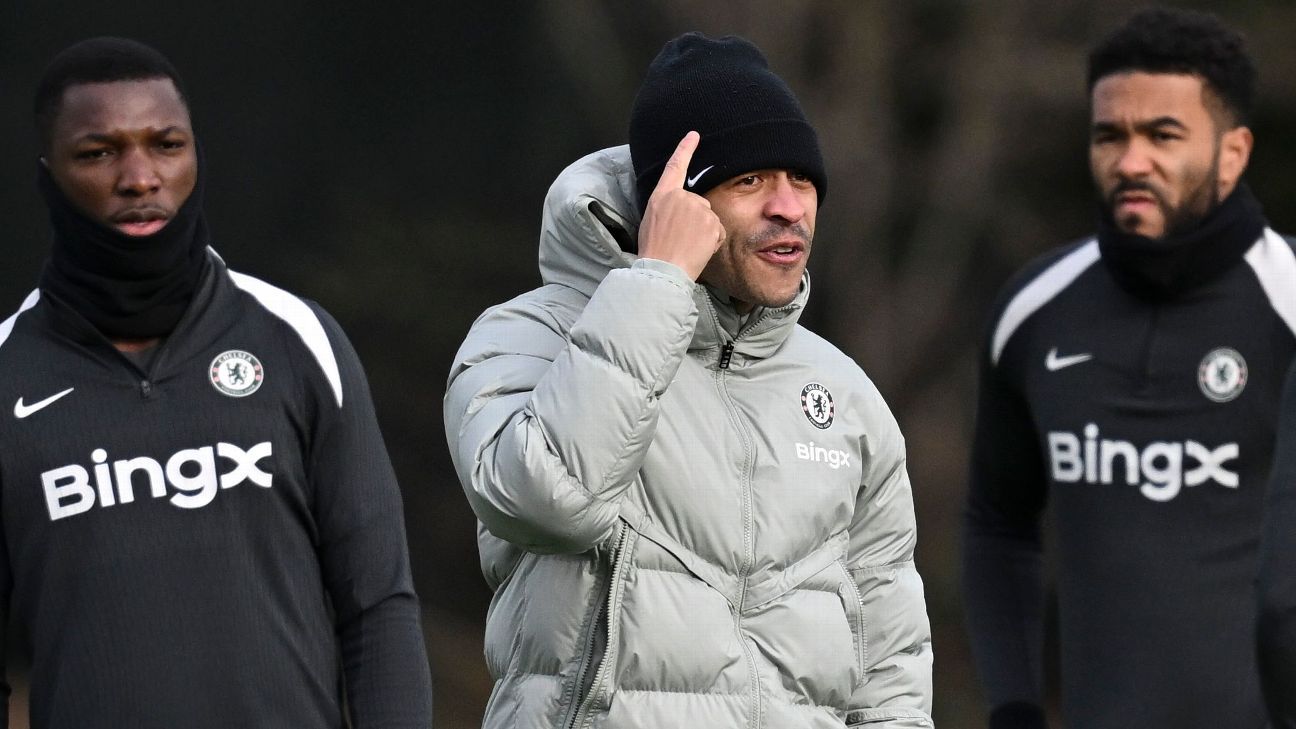
In just 106 days, Chelsea swiftly dismissed Liam Rosenior, often perceived as a “yes man.” The former manager, who was let go on Tuesday, struggled against the notion that he had received an opportunity not aligned with his credentials, a perception amplified by his close ties with the club’s ownership.
Rosenior had previously succeeded at Strasbourg under BlueCo’s multi-club structure, leading the owners to believe he was fit for one of football’s top jobs.
However, skepticism grew among fans, particularly after the dismal 3-0 loss to Brighton & Hove Albion, indicating that the players may not have respected his leadership.
– Watch Chelsea vs. Leeds United Live on 4/27 at 10 a.m. ET on ESPN+
– Rosenior’s management capabilities were in question from the beginning
– Potential candidates to replace Rosenior include: Fàbregas, Iraola, Nagelsmann?
After taking over for Enzo Maresca in January, Rosenior had a challenging tenure, losing 10 out of 23 matches. Chelsea experienced five consecutive Premier League defeats for the first time since 1993 and had their first streak of five games without scoring since 1912.
Currently sitting in eighth place, Chelsea risks missing out on UEFA Champions League qualification, while their upcoming FA Cup semifinal against Leeds United represents their last shot at silverware. How did they arrive at this point?
Was He Really Managing?
Insiders who know Rosenior regard him as a diligent and principled man. Given the limited opportunities available to British and ethnic minority managers, his appointment was generally seen as a positive step in the football community.
However, lacking the extensive coaching experience that many of his predecessors had, the onus was on Rosenior’s words and actions, which sometimes backfired. Old footage of him misdefining ‘management,’ using a convoluted explanation, only fueled online mockery.
During his initial public appearances, he aimed for transparency and positivity, but this often led him to focus on petty matters that undermined his authority.
Following a semifinal loss to Arsenal, he made headlines by criticizing the Gunners for a perceived lack of respect. The team faced ridicule over their pre-match huddles, one of which drew attention as referee Paul Tierney found himself in the center of it before a loss to Newcastle United. Sources indicated this idea was not Rosenior’s but he defended it by stating his team needed to “respect the ball.”
There were moments, such as when he was noted for taking notes while trailing 8-2 on aggregate against Paris Saint-Germain, that highlighted his struggle for legitimacy. Whether the players ever truly supported him remains in question.
A Discipline Crisis
Rosenior started strong, claiming seven wins in his first nine games, including a comeback victory over Napoli, which ensured their progression to the Champions League knockout stages. However, he faced criticism for a more defensive strategy in crucial moments, such as in the Carabao Cup semifinal against Arsenal.
As discontent brewed, Rosenior’s management came under scrutiny. Following a 90th-minute equalizer against Burnley, he cited a failure to mark but didn’t name the player responsible, resulting in an outcry on social media.
Team strategies and information began leaking, culminating in players questioning the rationale behind certain decisions, especially after the significant defeat to PSG. Following their exit, midfielder Enzo Fernández expressed uncertainty about his future at the club, hinting at dissatisfaction with the management.
Amid the team turmoil, Rosenior imposed disciplinary measures on Fernández, including a two-match ban—decisions that further divided the locker room during a pivotal stage in their season.
The internal discord was exacerbated by Rosenior’s strained relationship with some players and staff. Following an interaction that lacked mutual respect after a substitution, signs of disarray were clear within the squad.
1:34
Rosenior criticizes Chelsea players in his final press conference.
The sacked Chelsea manager addresses his players’ commitment levels following the 3-0 defeat to Brighton.
Discipline had long plagued the team, with Chelsea garnering the most red cards in the Premier League this season. The erosion of the relationship between players and coaches led to the team’s dismal performance in the loss to Brighton, prompting Rosenior’s strong words regarding professionalism.
Despite hopes from the Chelsea hierarchy that he could lead the team into the next season, the fractures between management, players, and fans made a change necessary. Discontent among supporters was palpable during the Brighton match, with chants targeting the club’s leadership and Rosenior himself.
Is the BlueCo Model the Problem?
The aim has been to sign emerging talents on long-term contracts and cultivate a team environment conducive to growth. However, Chelsea seems to have executed this strategy in reverse.
It’s easy to overlook the fact that Chelsea is still the reigning FIFA Club World Cup champion, and there were signs of progress under Maresca, with Chelsea not only winning the UEFA Conference League but also securing Champions League qualification. Sources indicate though that Maresca sought more influence within the club, leading to a breakdown in relations with the ownership.
Currently, five sporting directors operate between co-owner Eghbali and the head coach, who receives daily technical feedback and is heavily influenced by an empowered medical and analytics team. Team recruitment is a collaborative effort, with the head coach’s voice being just one among many.
Maresca had arrived with a solid coaching background, but the lack of autonomy ultimately prompted his departure. In contrast, Rosenior struggled to garner respect, and sources within the club acknowledged that his professionalism never wavered, yet results fell short of expectations.
As Chelsea’s ownership embarks on the search for their sixth permanent head coach since 2022—potential candidates like Andoni Iraola, Marco Silva, and Cesc Fàbregas are emerging—the demands of the BlueCo model necessitate a head coach who can work within structured limits while commanding respect from the players.
One unintended consequence of long-term player contracts is their potential to undermine the head coach’s authority during tough times. Sources have indicated that BlueCo intends to adapt their recruitment strategy this summer, aiming to integrate more experienced players, given that their oldest first-team player at present, Tosin Adarabioyo, is just 28.
To thrive in the future, it seems necessary for Chelsea to reevaluate the head coach’s role in the context of their evolving strategy.