



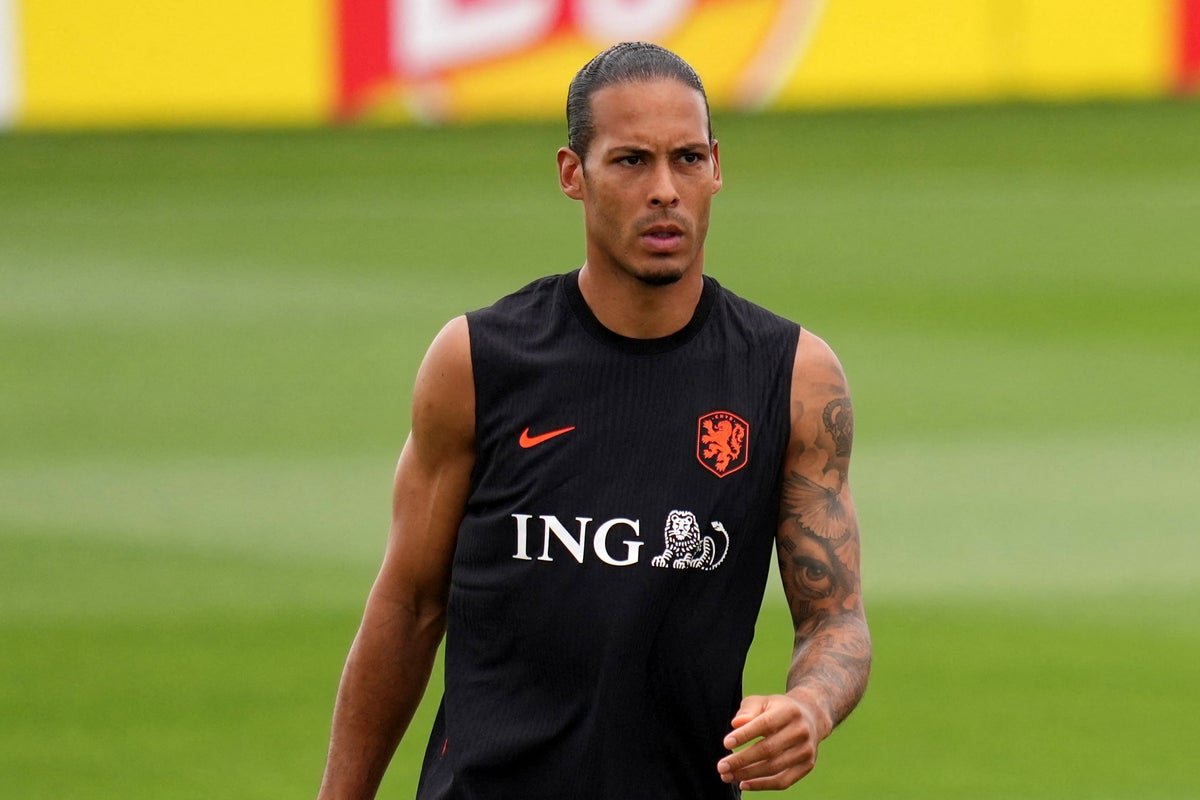
When Virgil van Dijk established a world record, he had yet to compete in a World Cup. In fact, it would take almost five more years before he would take the stage. Now, as a defender once hailed as the best in the world, he approaches what is likely his final appearance on the global stage, still unbeaten in World Cups.
Well, in a sense. The Netherlands concluded the 2022 tournament without a loss across regular or extra time, yet succumbed to a penalty shootout against Argentina in the quarter-finals. Van Dijk’s last act in that tournament was a penalty kick, which was saved by Emi Martinez. It was telling that he and Lionel Messi were chosen to take their respective nations’ first penalties.
Such responsibilities weigh heavily. Even as some speculate about a decline in his performance, expectations remain high. In the historical context of Dutch football, missed penalties are a familiar narrative. Similar situations have arisen before; his coach, Ronald Koeman, ended his international career with a World Cup loss in the United States 32 years ago. History could repeat itself, albeit with the two being different types of defenders—Koeman known for his prolific scoring, while Van Dijk is recognized for his cool demeanor.
Except perhaps in that last World Cup match. Van Dijk endangered a red card with a strong chest challenge that sent the dramatic Leandro Paredes tumbling to the ground; the draw with Argentina gained the moniker “the battle of Lusail.” It was a showdown featuring two powerhouse teams, with the Netherlands viewed as potential World Cup champions.
Will they maintain that status? A face-off against a formidable Japan may shed light on their prospects. Van Dijk will also encounter his club teammate, Alexander Isak, whose lack of impact contributed to Van Dijk labeling Liverpool‘s performance as “unacceptable.”
His season has been a mix of highs and lows, yet he feels increasingly essential. He has been a reliable ally to Dutch manager Arne Slot, who is thankful to count on him. Another compatriot, Koeman, has called upon him for a significant workload.

Virgil van Dijk could be about to play in his last World Cup (Getty)
As the World Cup approaches, Van Dijk has logged 4,941 minutes for his club this season, along with an additional 810 for his national team. He could surpass 6,000 minutes against Tunisia in their final group match. This milestone comes just before he turns 35, if they reach the quarter-finals.
As time progresses, he finds himself increasingly isolated, having lost trusted partners. For Liverpool, he was typically supported by Andy Robertson and Ibrahima Konate, both of whom are now absent—Robertson predictably, and Konate unexpectedly—much to Van Dijk’s dismay. For the Netherlands, his anticipated partner was Jurrien Timber, until injury excluded him from World Cup consideration. This necessitated further adjustments. Koeman boasts a talented roster of defenders, yet Van Dijk remains crucial.

This illustrates the remarkable trajectory of his career. The last time the Dutch traveled to the World Cup in 2014, Van Dijk was not selected. At almost 23, he was considered behind the younger Terence Kongolo, later of Huddersfield Town. The team manager then eventually appointed him captain for the 2022 tournament under Louis van Gaal.
“He did not make the cut for the selection committee,” Van Gaal stated in 2018. “He often allowed forwards to get behind him. Additionally, he didn’t engage in forward-defensive play, which is crucial in my philosophy.”
Van Dijk has never been a proactive defender, but instead exudes authority as the final barrier—a player who, at his prime, rarely tackled yet could complete an entire season without being dribbled past. In many ways, he has not fully conformed to the traditional Dutch defensive style, which often requires left-footed center-backs for optimal passing angles. Being a right-footed player who favors the left side, he has sometimes been overlooked in his homeland. Following his collaboration with Slot, the coach expressed surprise at Van Dijk’s ball-playing abilities.

Virgil van Dijk has his penalty saved in the shootout during the Qatar World Cup quarter-final (Getty)
Despite looking back at the shocking decision not to include him in 2014, his subsequent trajectory has been impressive, partly due to his time under Koeman at Southampton. Van Dijk transferred to Liverpool in January 2018 for £75m, a record fee for a defender.
Yet, the Netherlands did not qualify for the 2018 World Cup, meaning Van Dijk could only play in a Champions League final that year and not in an actual World Cup. He has been instrumental in the country’s resurgence following the troubled period of the late 2010s. Although injury sidelined him during Euro 2020, he made his tournament debut in his thirties. Had it not been for Ollie Watkins‘s last-minute goal against England during a semi-final in Dortmund, he might very well have led his nation to victory at Euro 2024. Now, as always, the burden of hope rests on Van Dijk’s broad shoulders in this World Cup.