



ATLANTA — It was a seemingly minor movement, just a slight flick of a heel. Yet that heel redirected the ball into the net, igniting a joyous celebration across a nation yearning for uplifting news.
Haiti faced off against Morocco on Wednesday night in Atlanta, ultimately losing 4-2 and being knocked out of the group stage. However, the true narrative surrounding Les Grenadiers is far more profound, as they depart the World Cup with no wins, draws, or points to show from their matches. The real story is the astonishing feat of Haiti — ranked a lowly No. 87 — even qualifying for this World Cup, finishing their campaign with one of the finest performances in their footballing history.
Advertisement
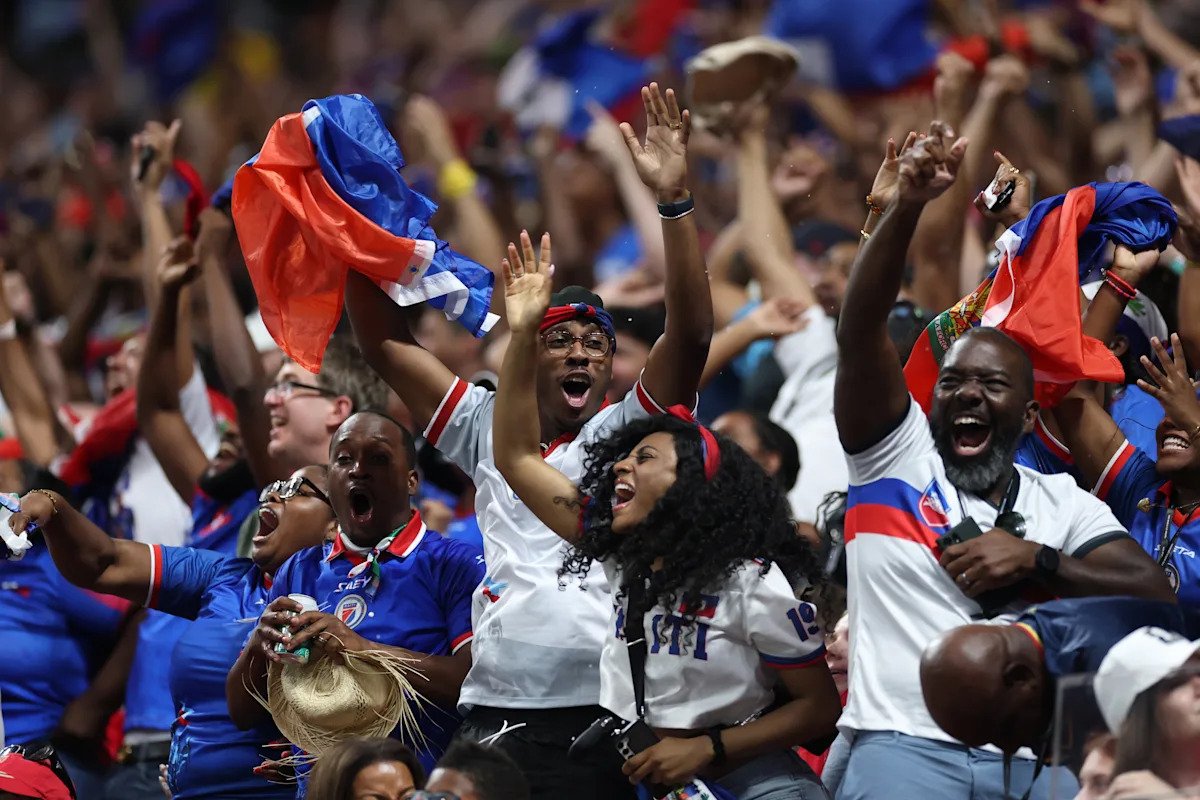
It has been a challenging journey for Haiti since their last World Cup appearance more than fifty years ago. The country has faced an array of obstacles, including natural disasters, widespread crime, and political instability, exacerbated by a uniform ban just weeks prior. The struggles faced by Haiti’s players and supporters have been profound, which explains the exuberance of the blue and red clad fans who filled the stands at Atlanta Stadium, dancing to the lively sounds of “Toup Pou Yo,” performed by Haiti’s own Barikad Crew … and responding with wild excitement to an early goal.
Driven by the support of the crowd and eager to deliver one last memorable performance, Les Grenadiers charged onto the field with determination, catching the formidable Morocco by surprise. Just ten minutes into the match, Jean-Kevin Duverne sped down the right flank and delivered a powerful cross that was deftly redirected into the net by Lenny Joseph with a subtle flick of his heel, catching Morocco’s goalkeeper Yassine Bounou off guard.
This wasn’t merely Haiti’s first goal of the match; it marked their first World Cup goal in over half a century, unleashing over 52 years of pent-up frustration from the supporters who cheered so loudly that the stadium’s retractable roof seemed ready to lift off.
Advertisement
And just 30 minutes later, they had reason to cheer once again when Wilson Isidor unleashed a stunning long-range shot, one of the tournament’s standout goals.
For nearly 40 minutes, goalkeeper Johny Placide delivered a magnificent performance, thwarting multiple attempts from Morocco, each save heightening the crowd’s excitement. However, his magic faded in the 39th minute, leading to four goals conceded, but the history books would always reflect that “2” next to Haiti’s name.
Though they lost, these two goals symbolized far more than mere statistics.
Advertisement
“We all hoped to bring joy to the Haitian people because they deserve it,” Isidor expressed in French following the match. “I hope the two goals we scored made them proud.”
Haiti is a nation grappling with internal strife, plagued by gang-related violence. According to a recent UN report, over 1,600 Haitians were killed within the first three months of 2026, with another 700-plus injured. Additionally, more than 1.5 million have been forcibly displaced from their homes, as reported by the International Organization for Migration.
Even the narratives of hope in Haiti often bear a weight of sorrow. The nation’s primary stadium, Stade Sylvio Cator in Port-Au-Prince, suffered extensive damage during the catastrophic earthquake in 2010. In response, FIFA pledged $3 million for its restoration and to boost the country’s soccer infrastructure. However, as Haiti descended into chaos, the stadium fell under the control of local gangs, and soccer fields in Port-Au-Prince became makeshift camps, forcing the national team to play “home” games far away in Curaçao, hundreds of miles away across the sea.

Fans of Haiti celebrate the team’s first goal during the FIFA World Cup 2026 Group C match between Morocco and Haiti at Atlanta Stadium on June 24, 2026 in Atlanta, Georgia.
(Ezra Shaw – FIFA via Getty Images)
The situation in Haiti remains dire, so much so that the national team’s coach, Sébastien Migné, has never set foot in the nation while managing the team for the past two years. “It’s impossible; it’s too dangerous,” he told France Football magazine last year. “I usually reside in the countries where I work, but here, I cannot. There are no international flights landing.”
Advertisement
Due to safety concerns, Migné and his staff have recruited players of Haitian descent like Isidor, who was born in France to Haitian parents and only committed to the national team a few months ago. Out of Haiti’s 26-man squad, only ten players were born in the country, with just one, midfielder Woodensky Pierre, playing in a Haitian club. National officials scouted him using video footage of youth league matches.
Haiti secured its World Cup qualification by topping its group in the CONCACAF tournament, despite a low ranking. Les Grenadiers faced tough defeats against Brazil and Scotland, failing to find the net in either match, and were thus eliminated even before their final game. This defeat brought Haiti to an unfortunate milestone, matching a dubious World Cup record held by El Salvador for six matches, six losses, and no points. El Salvador faced similar struggles during the 1970 and 1982 tournaments, while Haiti’s misfortune spans over half a century.
Prior to this year, Haiti had a single World Cup appearance back in 1974, where they also faced an early exit with a devastating 14-2 aggregate score across three losses. It’s been a long-standing disappointment for dedicated supporters, especially as other Caribbean nations like Cuba, Curaçao, Jamaica, and Trinidad and Tobago have at least attained a single draw. Yet the unwavering faith of Haitian fans remains intact, with moments like Wednesday reminding them of the hope that continues to thrive.
“My grandfather witnessed that goal back in 1974. He was so proud and told me I would be the next to achieve it,” Isidor remarked. “Today, I feel a sense of pride. I know he would be proud of me, too.”
Advertisement
Following the match, Haiti supporter Jonas Guillame reflected on the situation in his homeland. “It’s not good. It’s incredibly difficult. We don’t even have a stadium. We’ve never played a match in our home country, but we still made it here,” he shared. “I didn’t experience this in 1974. This is my first chance to see my team in a World Cup. It means everything to me.”
“These matches will forever be a memorable part of our national team’s history and will remain in my heart,” Placide expressed in French. “It has been 52 years since we qualified for the World Cup. I hope that next time we can return sooner.”
Advertisement
“We scored twice. We are very proud of that. Emotions were high,” Isidor added. “But there’s frustration as well, because we didn’t earn a point. With the talent we possess, I’m confident that in four years, we will return to earn our first World Cup point.”