



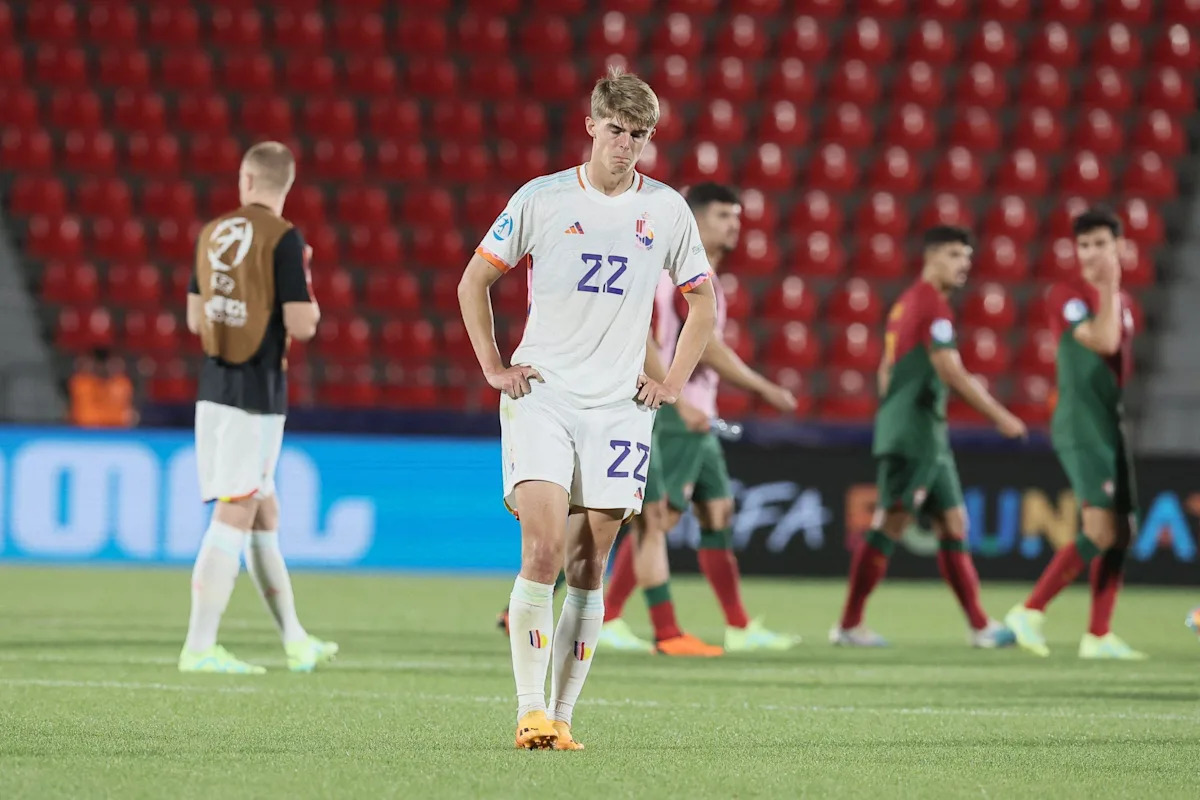
The end of the so-called ‘Golden Generation’ has prompted a much-needed transformation within the Belgian national team. Although several veteran players remain, a new generation of talent is ready to usher Belgium into a fresh era, notably featuring Atalanta star Charles De Ketelaere.
De Ketelaere gained recognition during the 2019/20 season, making his Champions League debut as a substitute for Club Brugge against Paris Saint-Germain. He played a pivotal role in Club Brugge’s title win for three consecutive seasons before transferring to AC Milan for €35 million in August 2022.
However, his time at Milan was disappointing, with only nine league starts. Atalanta provided him a way out the next summer, and he has continued to excel there. He was instrumental in Atalanta’s victory in the Europa League during the 2023/24 season and has become a vital part of the Belgian national team. As Belgium prepares for the 2026 World Cup in North America, we explore how the 25-year-old could be a key player for Belgium.
Revival at Atalanta Highlights His Resilience
After his stint at Club Brugge, De Ketelaere struggled under the immediate demands of AC Milan’s system, which affected his confidence. His lackluster performances raised doubts about his ability to perform at the top level. However, moving to Atalanta in 2023 has allowed him to silence his critics.
Atalanta’s style focuses on swift movement, versatility, and positional fluidity—conditions that match De Ketelaere’s abilities perfectly. Under the guidance of former manager Gian Piero Gasperini, he regained his form, and continued to do well under Raffaele Palladino.
While his goal contributions have recently decreased, De Ketelaere believes he now plays a more integral part in the overall team dynamic. “I might not have scored as much as last season, but I genuinely feel I’m performing better,” he remarked. “It may sound contradictory, but I do feel that I’m more valuable to the team now.”
“I don’t regret moving from Club Brugge to Milan. I may have lacked a bit of self-confidence then, but I’ve grown since. Atalanta’s playing style has greatly aided my development. I believe my strengths shine in formations like 3-4-3 or 3-5-2. I love it at Atalanta; I’m incredibly happy there and still have time left on my contract. Sometimes, you just have to appreciate what you have.”
Belgium Set to Benefit from De Ketelaere’s Resurgence
Belgium stands to gain from De Ketelaere’s return to form, as he can add much-needed control and unpredictability to the national team’s offensive play. The current squad reflects a deliberate shift from the established hierarchy that characterized their past successes, transitioning to a more dynamic style of play.
After finishing third in the 2018 World Cup, Belgium set a high standard that subsequent teams struggled to meet, with the group-stage exit in Qatar four years later being a final blow that hastened the retirement of many from that generation.
Manager Rudi Garcia has responded by altering the tactical framework, emphasizing speed in transition and grantingspace for creative players. The effective implementation of these changes was evident when Belgium qualified for the 2026 FIFA World Cup, finishing their group unbeaten. Kevin De Bruyne continues to orchestrate the play while Jeremy Doku adds pace on the wings, seamlessly integrating new players into a cooperative system.
De Ketelaere’s contribution differs from that of past stars. He enhances how Belgium creates chances and adds stability under defensive pressure. His ability to generate space, connect transitions, and finish scoring opportunities positions him as a pivotal player in a squad that now values teamwork over individual stardom.
The upcoming group-stage matches against Egypt, Iran, and New Zealand will require a tactical approach. Belgium must assert their dominance early, turning possession into goals, and De Ketelaere’s performances will be crucial in defining their tournament and revealing whether this new generation can become true contenders.