



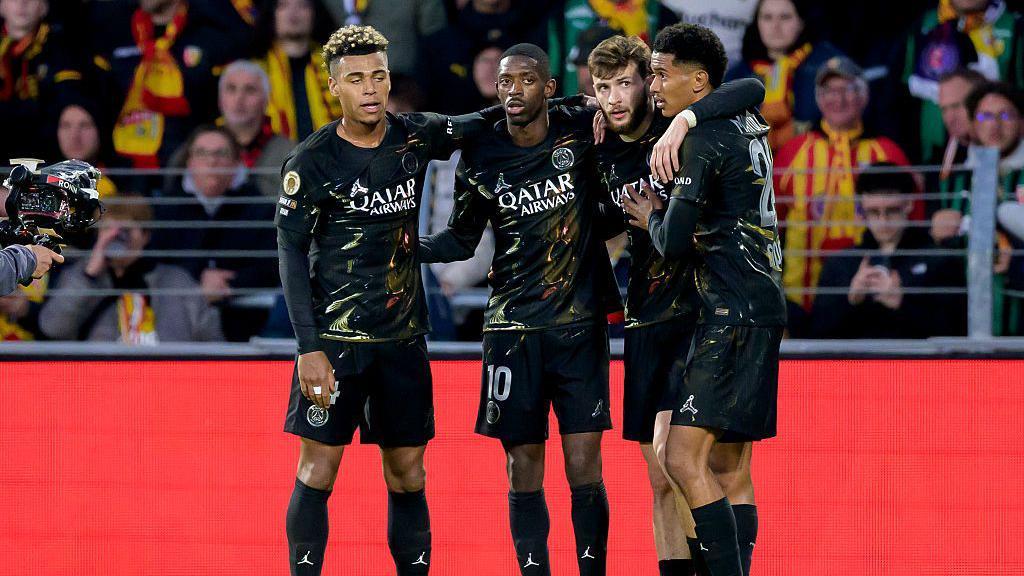
Khvicha Kvaratskhelia, a dynamic right-footed left winger, stands out as one of football’s most formidable talents. Arsenal must find a way to neutralize him in the upcoming Champions League final on Saturday (17:00 BST).
PSG, under the management of Luis Enrique, is known for their fluid playing style, adhering to specific positional principles as discussed in this tactical analysis of the side earlier in the season.
One of the key strategies involves occupying specific areas on the field throughout the match, including the two center-back spots, both flanks, and the center-forward position; however, which players fill these roles is of secondary importance.
The continuous rotation of players in these areas enables PSG to disrupt the opposing defense’s structure.

Kvaratskhelia frequently positions himself along the left touchline, where his movement off the ball is particularly noteworthy.
In the first leg against Bayern, Desire Doue often dropped deep from the front line—a movement Arsenal must stay vigilant against.
Advertisement
With Bayern’s Dayot Upamecano not tightly marking, Doue had time to maneuver. Kvaratskhelia feinted a run behind, then dropped back, feinted again before actually darting behind, creating confusion for Bayern’s defense.
These clever movements left Bayern’s full-back static, allowing Doue to deliver a pass behind for Kvaratskhelia to collect, cut inside, and score.
Interestingly, PSG’s initial goal in the first leg against Arsenal last season followed a similar pattern.
Arsenal, mirroring Bayern, appeared in a 5-2-3 formation, pressing high up the pitch.
This time, one of the forwards, Dembele, dropped back, but Arsenal’s center-backs failed to track him, despite a generally man-to-man defensive approach.
Advertisement
Dembele advanced the ball before finding Kvaratskhelia, who was making a run behind on the left wing, leading to an assist back to Dembele.
For Arsenal to effectively counter PSG, they must adopt a decisive strategy.
This could involve maintaining close marking on players who drop deep to prevent them from creating space behind, or allowing them to possess the ball in certain areas while constricting space behind their line.
After falling behind 1-0 in that first leg last season, Arteta adjusted his team’s defensive strategy, stating post-match that “we identified an issue and corrected it after 15-20 minutes, which turned the game around.”
Advertisement
Martin Odegaard’s pressing role was elevated higher on the pitch, complicating matters for PSG’s midfield, while another key adjustment was the heightened attention and pressure applied by William Saliba on Dembele, who he marked closely even when Dembele dropped deep.
This approach resonates with sentiments expressed by former Chelsea manager Enzo Maresca, who remarked after his team’s 3-0 victory against PSG in the Club World Cup: “The strategy was to implement a man-to-man marking system. PSG are immensely talented, and granting them time on the ball will only lead to difficulties. Intense pressing is essential.”
Read more on the tactics that could win Arsenal the Champions League