



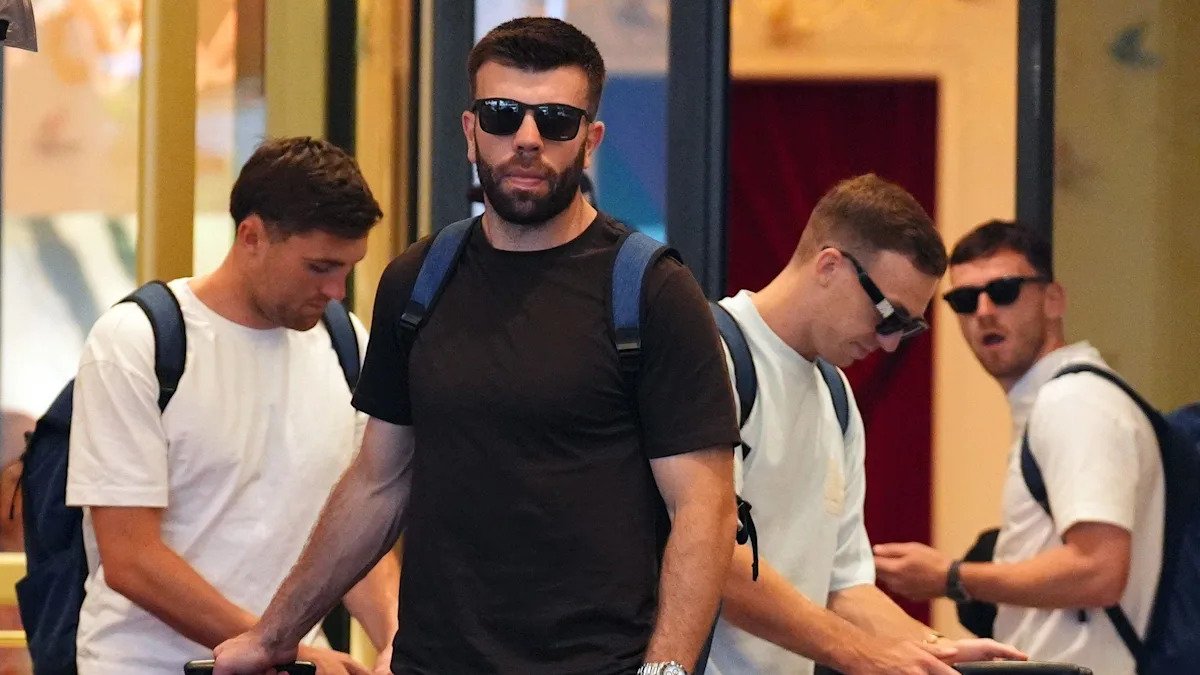
The journey began as they boarded the plane at Glasgow Airport.
Four weeks later, Scotland’s much-awaited emotional return to the men’s World Cup after 28 long years culminated in their coach, Steve Clarke stepping down after a disappointing campaign in the U.S.
Advertisement
Gone are the bold aspirations that accompanied their flight to the States. Clarke and his previously energetic squad appeared determined to “take care of business” and make history by advancing to the knockout stages of a major tournament.
What they bring home instead is a heavy load of regret.
The incredible traveling Tartan Army, who guaranteed Scotland would not be overlooked at the finals, was overwhelmed by the sweltering heat and humidity of Florida.
The players were readied for battle, however, benefitting from exceptional facilities and support. They enjoyed quality time with their families, stayed centrally located, and fully embraced the environment, with all their requests met by the now departed Clarke and the Scottish FA.
Advertisement
Yet, here we find ourselves again, faced with crushed ambitions, numerous unanswered questions, and silence from the Scotland camp.
Beckham, Sir Alex & Messi – the grand anticipation
A lot can change in just a month.
Upon their arrival in Fort Lauderdale—just three days after Clarke secured a new four-year contract—the squad was boisterous as they checked into Inter Miami‘s $60 million Florida Blue training center.
Lionel Messi, the Argentina captain who continues to shine on the international stage two decades after his tournament debut, gave his stamp of approval for every aspect of the high-end facility. If it meets his standards…
Advertisement
Sir Alex Ferguson leveraged his connections to help secure the opulent setup—contacting Inter Miami president and co-owner Sir David Beckham to finalize the deal.
During their first intense training session in the blazing sun, Clarke remarked that it “cost a bit more” than the Scottish FA had anticipated, but they delivered everything the team requested.
“They’ve provided us with everything we asked for,” Clarke stated.
And they had numerous requests. Following a 1-0 victory against Haiti—thanks to a day off for the players after the match—assistant coach Steven Naismith highlighted the extensive preparations done pre-tournament based on squad feedback.
Advertisement
“So much effort was expended into understanding what the players wanted, what they needed, and what they didn’t like previously,” the former forward shared.
They desired an extended camp before the tournament. Check. They wanted time to acclimatize. Check. They wanted some leisure time. Check.
In the heart of the action after Euros seclusion
In Fort Lauderdale, their leisure time included cycling around their lavish beach hotel and playing an upscale golf course—PGA National—until a storm cut the round short.
The hotel ballroom was stocked with enough kits and apparel—to clothe a small nation—as they prepared for the last 32-bound Cape Verde comes to mind—along with boxes upon boxes of boots embellished with both a World Cup logo and the Scotland flag.
Advertisement
The nearly seven tons of equipment that arrived in Miami a week before the squad demonstrated the thorough preparation undertaken.
Some of this gear was shipped to Boston for their opening match, some to New Jersey for their 4-0 friendly win over Bolivia—how long ago that seems now—and the rest remained at the team’s base in Charlotte, North Carolina.
From one top-notch facility to the next, the SFA once again went above and beyond by securing the 52,000-square-foot Atrium Health Performance Park, previously used by Real Madrid and Inter Milan.
They tailored the facility to their needs with more branding than available at Hampden and added luxury features, including a red-light therapy chamber and an altitude room.
Advertisement
The rising city of Charlotte provided the players with exactly what they sought after expressing dissatisfaction with their isolated setup in Garmisch-Partenkirchen during the Euros two years prior.
In Charlotte, the players could stroll—or scooter—around the town, enjoying the chance to watch other World Cup matches. Yet, it was in Boston and Miami where they truly tapped into the vibrant atmosphere they craved.
In both cities, with the emphasis on joining in the festivities brought by the Tartan Army, the squad mingled with locals, taking countless selfies, and spent quality time with family and friends who traveled between camps.
Advertisement
Traveling on match-day minus two and the evening after, the squad rubbed shoulders with some of the best in the world, as France stayed nearby in Boston.
John McGinn even managed to get his nephew a photo op with Kylian Mbappe and Ousmane Dembele, courtesy of Aston Villa friend Lucas Digne.
Thus, the squad’s requests—base camp in an urban setting, exposure in matchday cities, and leisure days within them—were all met. Checks complete.
Silence follows the earlier excitement
While his on-field performance may have been lackluster—though not solely his fault—McGinn successfully engaged off the pitch.
Advertisement
As captain of Aston Villa, he faced at least two interviews after each match.
McGinn was also the first to field questions in the daily media briefing, including addressing an inquiry about Norway manager Stale Solbakken’s remark branding Clarke “unprofessional.”
The squad also participated in an open training session that morning, allowing local school kids a chance to see them in action. This was yet another indicator of Clarke’s evolving approach and the cultural shift within the team.
However, then the cracks began to emerge.
During the match against Morocco, Scott McTominay and Jack Hendry were caught on camera in a heated exchange during a hydration break.
Advertisement
Although Hendry laughed it off during his media appearance in Charlotte, Napoli midfielder McTominay never publicly addressed the incident. Aside from a brief interview at the camp’s outset, he kept a low profile with the media.
Even injured teammate Billy Gilmour—who traveled with his leg in a brace and even managed to throw the ceremonial first pitch at a Miami Marlins baseball game—managed to engage with the media as well.
As the saying goes, the more things change, the more they remain the same.
Despite an entirely different setup for Euro 2024—where everyone claimed to have learned valuable lessons—and with all the players’ requests fulfilled, they ended up with the same disappointing result on the pitch.
Advertisement
Key players failed to make an impact when it mattered, despite the luxurious arrangements.
Clarke, who had not spoken after his heated media session following the defeat against Hungary two summers ago in Stuttgart match, took it further by resigning just three days after their humbling against Brazil.
At that time, Opta still estimated Scotland’s chances of making history at 42%, but Clarke acknowledged that they were “going home,” even at that early juncture.
Such a figure seemed unreasonably low given the exhaustive preparations, expense spared, and exceptionally fine-tuned logistics surrounding this tournament.
So, what went wrong? It’s uncertain when—if ever—we will have the opportunity to pose that question again.
Advertisement