



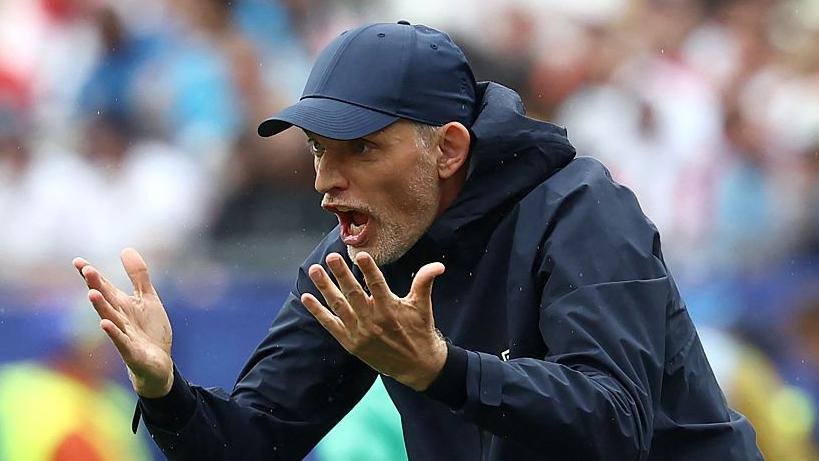
Thomas Tuchel, England’s head coach, refers to the knockout stage of the World Cup as “the third chapter” in a narrative he hopes will culminate in a historic victory.
He outlined that the initial phase of his mission to secure the trophy for England, which has not been achieved since 1966, began with a training camp in Miami, followed by topping Group L to qualify for the last 32.
Phase Two proved to be more functional than exhilarating, featuring wins against Croatia and Panama, alongside a disappointing goalless draw with Ghana.
However, England now faces a precarious situation where a single mistake or a lackluster performance could bring Tuchel’s ambitions to a sudden halt.
They are set to meet DR Congo in Atlanta on Wednesday (17:00 BST), live on BBC TV, amid growing warnings from the tournament that surprises abound for major nations.
Fortunately for Tuchel’s squad, the oppressive heat and humidity of the city will be mitigated by the high-tech, air-conditioned environment of the $1.6bn (£1.2bn) Atlanta Stadium.
So far, England’s journey in the World Cup can be described as “mission accomplished,” but the stakes rise dramatically in the high-pressure arena of knockout fixtures.
Tuchel Under Pressure to Avoid Errors
Tuchel’s team selections have been a blend of tactical adjustments due to injuries, player management, and efforts to ensure progression in the tournament.
A significant concern lies in England’s defense, an aspect that elite opponents are eager to exploit.
“The key to stability is in your goalkeeper and back four,” said former England captain Wayne Rooney. “We’ve lacked that consistency in the back line.”
England’s defensive weaknesses were highlighted prior to the tournament, especially regarding potential injuries to key players like Newcastle’s Tino Livramento and Chelsea’s Reece James.
Livramento was ruled out before the World Cup commenced, and although Tuchel expressed surprise about James suffering a hamstring injury against Croatia, many were not shocked given his injury history.
These injuries have left Tuchel with limited options in defense, particularly at right-back, following the injury of James’ replacement, Jarell Quansah, during the match against Panama.
Both James and Quansah will miss the game against DR Congo, with Tuchel noting, “They are progressing, but Jarell is a bit ahead of Reece in terms of fitness.”
This has left Djed Spence as the only available right-back, while Tuchel might consider shifting center-back Ezri Konsa to that position, which would open the door for a potential call-up for John Stones.
Jordan Pickford remains a stalwart in goal, yet the defense has been unstable. Tuchel started Stones and Konsa in the 4-2 victory over Croatia, then switched to Konsa and Marc Guehi, with Stones dropping out.
Tuchel has had to reckon with the fact that 32-year-old Stones started only five Premier League matches before departing from Manchester City last season, while James started just 20 matches for Chelsea.
His strategy of selecting versatile defenders with the ability to play in multiple positions, along with center-backs who can act as full-backs, has left England vulnerable.
If England faces Brazil and features players like Vinicius Jr in a potential quarter-final in Miami, specialist positions will be essential. Tuchel hopes he won’t have to rely on uncertain fitness updates about James.
Additionally, Tuchel must decide whether to include Arsenal‘s Bukayo Saka against DR Congo. He made his World Cup starting debut against Panama, playing 63 minutes while still recovering from Achilles tendon issues.
Talking to the media in Atlanta, Tuchel remarked: “We know we need to find ways to win. We have to dig deep and perform at our best.”
He added, “We are the favorites. We are up against our own expectations. We expect to progress beyond the last 32, so why shouldn’t the public? “
Now, every single decision Tuchel makes is crucial. Both the players and the head coach are under pressure to avoid any missteps.
Is Rice England’s Most Important Player?

Having secured qualification from the group stage with a match to spare, Tuchel prudently rested Declan Rice for the victory over Panama. This was a sensible decision given that the outstanding Arsenal midfielder was on a yellow card and nursing some injuries.
Rice has been managing a hamstring issue and suffered a calf flare-up during the match against Ghana.
England’s performance against Panama, during which they conceded 13 shots and seemed vulnerable to counter-attacks, underscored Rice’s vital role. He is now alongside captain Harry Kane and Jude Bellingham as a player England simply cannot do without.
Tuchel’s pairing of Bellingham and Aston Villa‘s Morgan Rogers yielded some rewards but left England exposed. In turn, Elliot Anderson found himself overwhelmed in central midfield.
More competent teams than Panama would have inflicted serious harm in such scenarios.
Ultimately, this emphasizes Rice’s importance. If England aspires to win the World Cup, they will need his skills in shielding a defense that has shown fragility, contributing to offense, demonstrating game awareness, and delivering precise set pieces.
Rice not only solidifies England’s defense but also enhances their attacking options—he is irreplaceable.
Tuchel and England Aware of the Stakes
Under Tuchel’s intense leadership, it is unlikely that complacency will jeopardize England’s chances in the World Cup.
If there was any risk of overconfidence, it has certainly been dispelled by Germany‘s unexpected exit via a penalty shootout against Paraguay, leaving coach Julian Nagelsmann’s future in jeopardy amidst calls for former Liverpool manager Jurgen Klopp to take over.
The Netherlands followed suit, succumbing to a talented Morocco side, leading to coach Ronald Koeman’s resignation shortly after.
The magnitude of the World Cup and the repercussions of failure have been highlighted by Nagelsmann’s sudden pressure and Koeman’s exit following their respective team’s losses.
Tuchel recognizes these risks, stating, “There is no hint of overconfidence in our approach. The results from the last 32 matches tell a clear story. The margins are incredibly slim.”
“This reality calms me more than it makes me anxious.” he added. “This is the essence of knockout football. The Netherlands and Morocco could very easily have been quarter-final or semi-final matchups, as could Japan and Brazil.”
Advertisement
“I think it helps keep my mind clear. It shows that these are games of fine margins, which helps prevent unrealistic expectations.”
Teams are well-prepared; breaking through solid defenses is always challenging.
This tournament is shaping up to be one of surprising outcomes, with Brazil narrowly securing a win against Japan through Gabriel Martinelli‘s late goal.
England and Tuchel must ensure they do not fall victim to such shocks against DR Congo.