



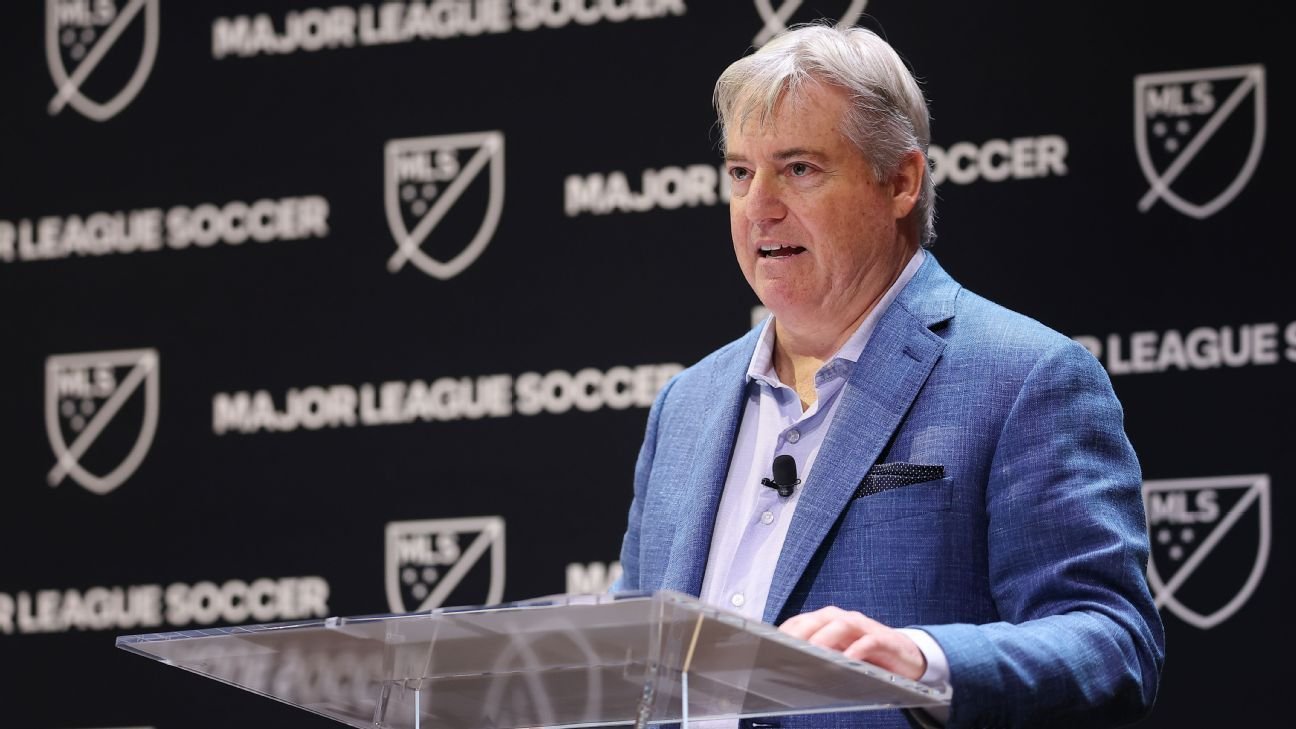
Farewell, Don Garber. Welcome, Larry Berg.
At a press conference on Tuesday, which included both the outgoing and incoming MLS commissioners, Berg took the opportunity to introduce himself to the broader North American soccer community ahead of his 2027 appointment.
During the roughly 40-minute event in New York City, Berg shared his personal connection to the sport and outlined priorities for the “new era” of MLS.
“The foundation has been built. Now it’s our responsibility to build on it, and that’s what excites me most. I didn’t accept this role to protect what we’ve already accomplished. I accepted it because I believe this league is ready for its next chapter,” Berg stated.
“I believe Major League Soccer has entered a new era. The foundation is strong, and the opportunities are extraordinary. I am fully confident that we can seize them together.”
Only time will tell if Berg and the other stakeholders will truly capitalize on these opportunities. Achieving this will require focusing on a significant list of tasks that demand his immediate attention. To ensure success in this next chapter, several key areas should be prioritized by Berg.
Roster Rules and On-Field Quality
For MLS to evolve, it must also reconsider its roster rules.
While the league’s intricate roster-building mechanisms foster competition week after week, they can also constrain sporting directors and coaches in their efforts to attract talent and cultivate squad depth.
This issue is prominently displayed at the annual Concacaf Champions Cup, where Liga MX teams have dominated, taking home victory in nearly every tournament since 2006 due to more relaxed roster regulations.
The good news for those advocating for change is that amendments to roster rules seem imminent. In July, The Athletic reported that MLS owners were set to discuss a “more open” roster structure. During his address on Tuesday, Berg mentioned that this topic will be a focus for the front office.
“The foundation is solid, but it all begins with quality on the pitch. That involves a roster investment model, which requires a collective decision from the owners,” Berg explained.
“As co-chair of the sporting competition committee, I played a role in advancing these discussions. I’m eager to dive deeper into this, and I assured the owners during my presentation that I’ll spend the next few months engaging with them to understand their perspectives.”
Conversely, critics point out that teams with high expenditures, like Lionel Messi’s Inter Miami, may dominate in a more open roster environment. Nevertheless, if MLS aims to fulfill its ambitions, it must explore adjustments that could enrich roster depth and talent throughout the league.
Youth Development
MLS isn’t solely focused on acquiring talent but also on nurturing it.
The league and its academies deserve recognition for the advancements made in infrastructure and investment during the 21st century. However, following the U.S. men’s national team’s early exit in the recent World Cup, there is a discernible gap in talent between the U.S. and leading soccer nations.
Tackling issues in youth soccer is complicated, especially considering the pay-to-play model affecting many who are not part of MLS academies. Still, the league has a vital role in supporting young players’ development.
Berg, having co-owned an MLS team (LAFC), understands this well.
“Youth development is very close to my heart. We have the foundations in place—most teams have academies, and many have an MLS Next Pro team. Year after year, we’re seeing more emerging stars. Yet, I believe we can do even more,” Berg remarked.
“We should aim to ensure that young players get more playing time at higher levels to contribute to our national teams and reinforce our identity as a soccer nation.”
Implementing minimum playing time for academy/youth players could be a good starting point, alongside incentives for signing youth players to first-team contracts. Numerous ideas can be explored, and it falls on Berg and others to push forward initiatives in youth development.
Media Rights Deal
By the end of 2029, MLS will need to either extend its media rights agreement with Apple TV or seek new partners.
Outgoing commissioner Garber has praised the current TV and streaming arrangement but acknowledged that the league could benefit from a shift.
“We value our relationship with Apple and take pride in having every one of our 600 games televised like a national event. We’re also grateful for their global distribution and support,” Garber noted, as he prepares to transition to a chairman role in the league next year.
“However, the future is about adapting to the transformation and disruption occurring in the media landscape.”
What could this entail?
Presently, the league operates behind a paywall with Apple, which not only imposes a financial burden on viewers but also restricts access for casual fans. The question remains whether engaging multiple media partners would enhance or complicate accessibility. And would moving away from Apple guarantee greater financial returns for the league?
“With some time before the next media deal, our goal is to find media partners willing to co-create the future alongside us,” Berg expressed. “It’s about collaboration—understanding what’s beneficial for them and for us. How can we innovate for mutual advantage?”
There’s a significant agenda awaiting MLS’ next commissioner as he prepares to assume his role in 2027. Beyond these discussion points, he will have a comprehensive list of priorities to tackle when he steps into his new position.