



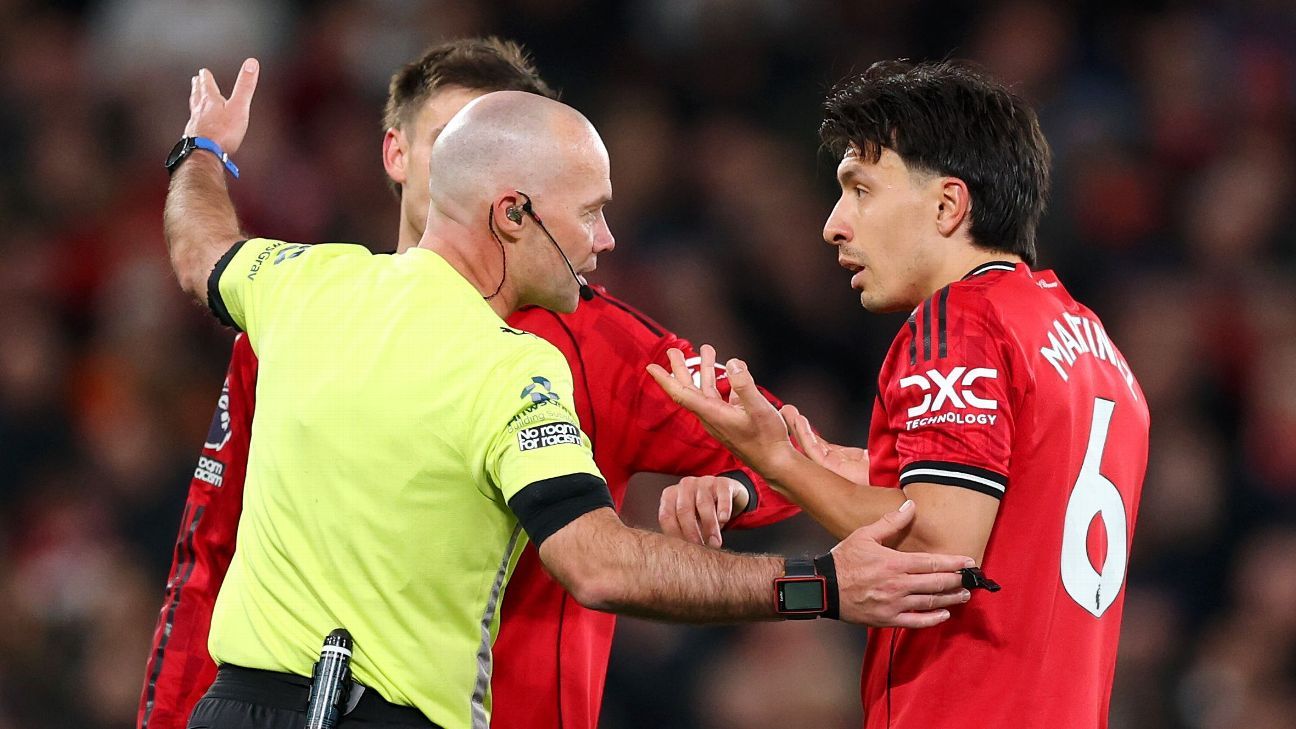
The video assistant referee (VAR) has stirred controversy on a weekly basis across various competitions, including the Premier League, Champions League, and FA Cup. But what processes are in place for these decisions, and are they accurate?
This season, we will analyze significant incidents to clarify and discuss the VAR protocols and the associated Laws of the Game.
Andy Davies (@andydaviesref) is a former Select Group referee, boasting over 12 seasons in the elite tier, officiating matches in the Premier League and Championship. With profound expertise in the VAR framework and elite-level officiating, he provides valuable insights into the processes and standards applied on a Premier League matchday.


Referee: Paul Tierney
VAR: John Brooks
Incident: Lisandro Martinez red card
Incident Summary: An initially benign aerial challenge between Manchester United defender Martinez and Leeds United striker Dominic Calvert-Lewin led to Martinez being sent off for hair pulling after a VAR review.
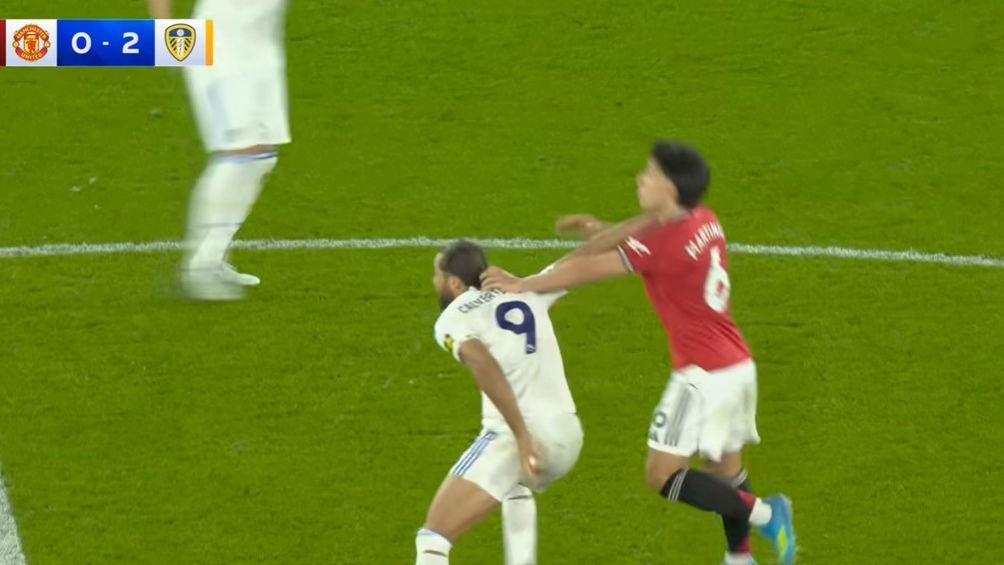
Credit: Sky Sports
Reason for Red Card: This season, referees were instructed to enforce a stringent standard when it comes to hair pulling. Such actions are classified as non-football behavior and are unacceptable in the context of normal play. Consequently, they warrant a red card due to being considered violent conduct.
A precedent was established in the Premier League when Everton‘s Michael Keane was penalized for a similar infraction on Wolves striker Tolu Arokodare back in January.
Conversely, in the UEFA Women’s Champions League, Arsenal‘s Katie McCabe escaped punishment despite clearly pulling the hair of Chelsea‘s Alyssa Thompson. Neither the on-field officials nor the VAR identified this incident as a red card offense, allowing McCabe to go unpunished.

Credit: ESPN
Final Verdict: Considering the existing guidance from PGMOL and the Premier League, the decision to issue a red card to Martinez was justified, although United manager Michael Carrick described it as “one of the worst he’s ever seen.”
The time referee Tierney spent reviewing the monitor indicates some hesitation regarding the decision to issue a red card, as the contact appeared minimal. Nevertheless, the directives from PGMOL and the league instruct referees to disregard this when assessing such incidents.
With an upsurge in incidents of this nature in recent seasons, authorities have made it clear that zero tolerance will be enforced for such actions. While it’s unlikely this approach will soften for the remainder of the season, further discussions during the summer about maintaining or adjusting this policy can be anticipated.
The Women’s Champions League incident stands out as a significant error, as all criteria for a violent conduct red card were met, irrespective of any new directives for match officials. McCabe’s actions were purposeful and forceful, and in my view, they should have been flagged by both the on-field referee and the fourth official. The VAR’s failure to intervene is particularly concerning and puzzling, as it was an undeniable red card offense, meriting McCabe’s dismissal.